
Specialized Master’s Degree in Environmental Expertise and Sustainable Development – Environmental Engineering and Management Track (EEDD-IGE)
For over 30 years, the Specialized Master’s (MS) in Environmental Expertise and Sustainable Development (EEDD) – Environmental Engineering and Management (IGE) track at ISIGE Mines Paris – PSL has trained students to guide organizations toward robust, resource-efficient, and resilient pathways.
The program, registered with the French National Directory of Professional Certifications (RNCP) under No. 39578, is available through apprenticeship and professional training contracts.
Specialized Master’s EEDD – IGE Track
Since 1992, the Specialized Master’s in EEDD – IGE track at Mines Paris-PSL, backed by ISIGE (Higher Institute for Environmental Engineering and Management), has been training the managers of the ecological transition. This one-year program combines academic coursework, field immersions, and hands-on projects to provide a systemic, multidisciplinary approach to sustainable development challenges.
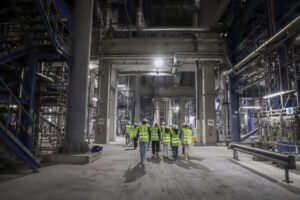
In partnership with public and private stakeholders, the program prepares students to help organizations transition toward economically robust, resource-efficient, and resilient models that align with planetary boundaries. Expert-led lectures are complemented by field visits, study trips, and professional testimonials, while group projects and in-company professional missions allow students to apply their knowledge to real-world situations.
Become an Expert in Environment and Sustainable Development
Organizations today operate in a complex economic and environmental landscape. They must decarbonize operations, anticipate resource depletion, adapt to climate change, and comply with rapidly evolving regulations—all while preserving biodiversity. To address these systemic challenges, they need professionals who can bridge regulatory, scientific, and operational gaps and develop forward-thinking solutions to design concrete actions.
This one-year program is designed for both recent graduates and experienced professionals, enabling them to turn their convictions into actionable skills for businesses or the public sector and collectively explore possible futures to contribute to the ecological transition.
The Specialized Master’s EEDD – IGE track builds on Mines Paris-PSL’s scientific excellence and generalist engineering culture. With over 30 years of experience, it has developed a vast network of institutional and economic partners. Its goal is to train the next generation of ecological transition managers, equipping them with a prospective, multidisciplinary, and operational understanding of the challenges and levers of the transition.
A Systemic Approach
To the Ecological Transition
Hosted by ISIGE – Mines Paris-PSL’s Higher Institute for Environmental Engineering and Management, the program adopts a systemic approach to the ecological transition. It explores key challenges and action levers through projects, case studies, professional missions, and study trips. The complementarity of approaches, innovative pedagogy, and diversity of contributors (researcher-lecturers, professionals) ensure the program’s high quality.
Why choose this program?
- Gain scientific expertise in environmental issues with a systemic, regulatory, and societal perspective
- Master practical tools (circular economy, Life Cycle Assessment/LCA, etc.)
- Acquire the knowledge and skills of a future ecological transition manager
Who is this program for?
- Recent graduates with a Master’s degree (engineering and management grandes écoles, Sciences Po, Master’s in economics, law, humanities, or social sciences…)
- Young professionals (Master’s degree or Bachelor’s degree with 3 years of experience)
- Career changers
Qualities and skills sought
- Dynamism, commitment, ability to convince, openness, creativity, team spirit
- Strategic vision, analytical and synthesis skills, strong general knowledge
- Strong interest in ecological transition issues
A program to learn how to
- Develop a strategic and forward-thinking vision of ecological transition challenges
- Combine global vision and territorial approach at different time scales
- Develop an economic approach that accounts for sustainability and planetary boundaries
- Lead multi-stakeholder collective projects
- Use concrete calculation tools (LCA, circularity indices, etc.)
Training Ecosystem
Mines Paris-PSL, a founding member of PSL University (ranked among the world’s best), has been training engineers and producing knowledge for 240 years to help companies tackle the challenges of their time, including ecological transition and digital transformation. Its programs, rooted in research, combine scientific excellence with active pedagogy, closely linked to the socio-economic world.
At ISIGE, research and expertise play a central role in supporting the ecological transition and societal transformations. Through a multidisciplinary approach, researchers and experts explore diverse topics such as circular economy, resource management, and climate change adaptation.
Program Structure
Two main phases
- Academic Phase (September–April): 7 months with an alternating schedule between in-person classes (17 weeks total) and work placements
- Professional Phase (from April): 5.5 months dedicated to writing a professional thesis, defended in September
Apprenticeship and Continuing Education
- Since 2016, the program has been eligible for apprenticeship contracts (professional or training contracts), allowing students to fund their education
- Also available without an apprenticeship contract (e.g., for continuing education)
Professional Mission
- Starting in April at the host organization
- Objective: Explore and analyze a strategic environmental issue, proposing innovative solutions
- Personalized supervision by ISIGE’s academic team
- Thesis writing and defense required for graduation
Course Modules
MODULE 1
Preparing for Sustainable Development Management Roles in Business
Targeted Competencies
- Understand the organization and strategies of a company around sustainable development issues.
- Know the regulatory frameworks in which the company operates.
- Explore new business models.
Content
- Institutional and regulatory context.
- Management systems and key standards.
- Sustainable development (DD), CSR strategies, and corporate reporting.
- Transition from a linear economy to a circular economy.
MODULE 2
Analyzing and Addressing Key Future Challenges
Targeted Competencies
- Develop the ability to analyze major scientific issues and approach a question systematically.
Content
- What place should we give to the living? (biodiversity, bioeconomy, biomaterials)
- What energy mix for a decarbonized society? (efficiency, renewable energy, sobriety)
- Which mineral resources for the energy transition? What responses to the scarcity of mineral resources?
- Geopolitical analysis of issues and international approach.
MODULE 3
Developing Projects with Innovative Tools and Approaches
Targeted Competencies
- Operational project management, mastery of tools (LCA, carbon footprint, etc.).
Content
- Implementation of a real-world circular economy project (e.g., red thread project in partnership with Ecosystem).
- Implementation of an eco-design approach within a circular economy framework.
- New approaches to water management.
MODULE 4
Changing Scale
Targeted Competencies
- Acquire a global vision of ecological transition issues across different time and space scales.
- Grasp complexity. Position oneself in relation to an issue, be sensitive to foresight, and know how to communicate.
Content
- How to respond to climate change? (Mitigation or adaptation)
- From global to local, from individual to collective.
- Analysis of stakeholders and environmental controversies.
- Taking into account long-term effects, ethical questions, and innovation management.
Admissions
Prerequisites
- Minimum Master’s level (engineering/management school, scientific curriculum, political science, law, economics, etc.)
- OR Bachelor’s degree + 3 years of professional experience
- Proficient English (TOEFL or TOEIC required)
Step 1: Application Review
- Submit a complete application file with supporting documents.
- 3 letters of recommendation (academic and professional).
- For non-European international candidates: Initiate visa procedures via Campus France (in parallel).
- Recommended: Apply early (first session) for funding opportunities (CPF, Transition Pro, etc.).
Step 2: Interview
- In-person interview with a panel to assess motivation, strategic vision, scientific knowledge, and relevance of the professional project.
- First session interviews: March/April
- Admission decision: By May 5 at the latest.
Cost of the program
Tuition fees: €14,800
The program is RNCP-certified as a Specialized Master’s® in “Environmental Expertise and Sustainable Development – Environmental Engineering and Management Option” (RNCP Code 39578). As such, it is eligible for funding through apprenticeship contracts (apprenticeship, professionalization) and, for continuing education, CPF financing.
Since 2016, thanks to its accreditation in France Compétences’ Professional Certification Directory, the program is designed to be completed as part of an apprenticeship contract, either in a company or a local authority. This format allows students to fund their training through a professional or apprenticeship contract.

Funding Options
The Specialized Master’s EEDD – IGE track is eligible for several funding schemes, enabling students to pursue the program under the best conditions.
1. Apprenticeship
The program can be completed through a professional or apprenticeship contract:
- Students are employed and paid for the entire duration of the contract.
- Tuition fees are covered by the host company or organization.
2. Scholarships for International Students
International candidates can apply for scholarships from their home country to cover part or all of the tuition fees.
3. Low-Interest Bank Loans
Students can secure a preferential-rate loan from a partner bank to fund their studies.
4. Funding for Employees
Working professionals can use various tools to finance their training:
- Personal Training Account (CPF)
- Transition Pro (formerly Fongecif)
- Job Preservation Plan (PSE) funding
- Other schemes based on company or industry agreements.
Career Paths
Target Roles
Environmental Engineer, Industrial Environmental Manager, Energy-Climate Project Manager, Ecodesign Engineer, Sustainable Development/CSR Officer, Environmental Consultant…
Industries
Water management, renewable energies, waste management, circular economy, biodiversity, urban planning/construction, transportation, retail, luxury, chemicals, agri-food…
Employers
Large corporations, consulting firms, SMEs, startups, public sector, NGOs, local authorities…
Alumni Testimonials

Corentin L.
“The Specialized Master’s allowed me to experience an incredible year. The program met all the criteria of pedagogical quality, excellence, and coherence in the interventions, as well as demanding work. The MS covers a wide range of topics related to ecological transition issues, even if, in my case, it lacked subjects related to agriculture.
The speakers were truly of incredible quality, with a great diversity of profiles and careers, clear and progressive explanations, strong listening skills, and availability for exchanges, etc.
The second fundamental point was the class itself. We formed a very close-knit group, and that’s what made the year so special. This group unity, nourished by the various trips organized by the teaching team, is at the heart of the spirit of this Master’s: collective effort and learning.”
Mélissa G.
“For years, I had been thinking about transitioning into the environmental field, with several years of experience as a project manager in the digital sector.
I finally decided to enroll in the Specialized Master’s EEDD – IGE track, which allows me to stay active in the professional world thanks to the apprenticeship program—a point that seemed essential to me for several reasons: the opportunity to gain firsthand experience in the field, finance my training, apply academic knowledge in a business environment, and more.
The program has largely exceeded my expectations, and the content is simply outstanding! The teaching team, the quality of the modules and speakers, the emphasis on both theory and practice through very concrete projects, the richness of industrial site visits, local authorities, and even third-party locations—all of this allows us to face real actions and solutions at different scales.
Today, the training is a real asset, to which are added all the activities we benefit from, supported by Mines Paris-PSL and its various alumni groups.”
Adilath Adilath Z.
“The Specialized Master’s EEDD – IGE track has transformed my understanding of the world and contemporary challenges. Over the months, I discovered the complexity of environmental and social issues, often intertwined and sometimes sensible, which structure our societies and condition their future. This awareness has given me the drive and legitimacy needed to act in a concrete and responsible manner.
More than just a program, this Specialized Master’s has been a true catalyst for commitment! It has strengthened my desire to contribute to a fairer, more ethical, and inclusive development, particularly in the least advanced countries, where inequalities are exacerbated by environmental crises.
Thanks to a multidisciplinary, rigorous, and field-anchored approach, I have acquired methodological and strategic tools to effectively support the ecological transition, while integrating economic, social, and territorial dimensions.
This program has taught me to think in systems, to engage in dialogue across scales and stakeholders, and to build bridges between global issues and local actions. Essential skills to meet the challenges of the 21st century with clarity, responsibility, and creativity.
Joining the MS EEDD – IGE track has been a decisive choice in my journey: a meaningful, values-driven, and future-oriented path.”
Training Locations
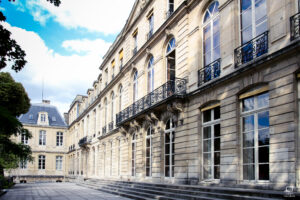
Paris 6e
60 boulevard Saint-Michel
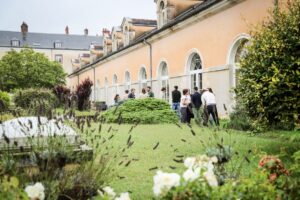
Fontainebleau
35 rue Saint-Honoré
The ISIGE site is accessible by train from Gare de Lyon (40 min), followed by a 15-minute bus ride.
Accredited Specialized Master’s
Specialized Master’s Quality Label
The Specialized Master’s is a quality-labeled program, a collective trademark registered and filed with the INPI (French National Institute of Industrial Property), owned by the Conférence des Grandes Écoles. It is awarded to 12-month programs delivering a post-Master’s degree (Bac+6 level).

Contact