
Training engineers for the energy transition: immersion in Sweden with students from the OSE Specialized Master’s program
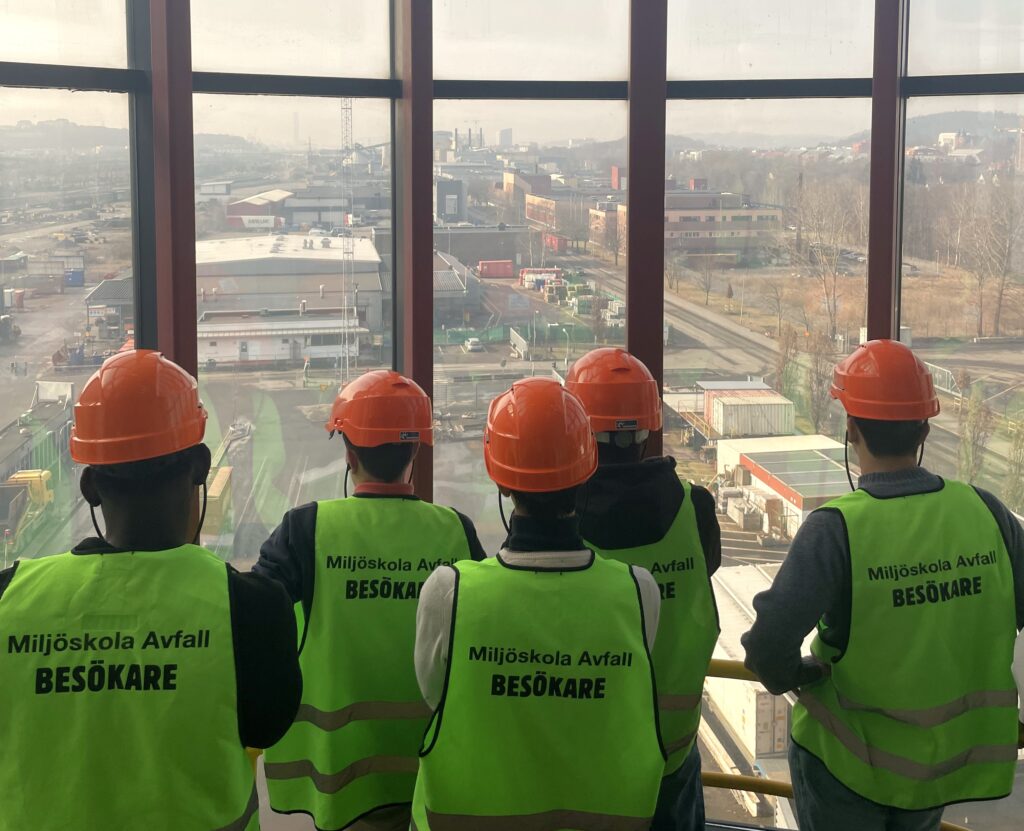
From March 9 to 13, 2026, students from the Specialized Master’s in Energy Systems Optimization (OSE) traveled across Sweden—from Gothenburg to Stockholm—for an immersive experience at the heart of the industrial realities of the energy transition. This study trip reflects the commitment of Mines Paris – PSL to training engineers and managers capable of addressing tomorrow’s energy challenges. Through site visits, meetings with international experts, and analysis of pioneering energy models, students were able to confront their academic knowledge with real-world issues.
A look back at a learning experience that places the excellence of the OSE program at the service of innovation and decarbonization.
A program grounded in real-world practice
The Specialized Master’s in Energy Systems Optimization (OSE) is a postgraduate program (equivalent to a Master’s +1 year) designed to train experts capable of addressing energy challenges in all their complexity—technical, economic, environmental, and legal. Organized by Mines Paris – PSL, in partnership with the CREDEN research center at the Faculty of Economics of Montpellier and EDHEC Business School, the program is built on a pedagogy firmly oriented toward the industrial world. Its objective is clear: to prepare future engineers and managers to become key players in the energy transition by equipping them with a systemic understanding of both challenges and solutions.
Each year, the study trip is a highlight of the program, giving students the opportunity to confront their theoretical knowledge with real-world conditions. It is part of an ambitious educational approach: training professionals who can think and act in a rapidly changing world, where energy and climate issues are reshaping industrial and economic models.
Sweden
A living laboratory for the energy transition
This year, the Class of 2025 traveled to Sweden, a country whose energy mix—dominated by hydropower, nuclear energy, and a growing share of wind power—and climate ambitions (carbon neutrality by 2045) make it a compelling case study. Sweden is often cited as a benchmark for decarbonization, offering a unique opportunity to examine the complex balances and innovations underpinning its energy transition. The country demonstrates that decarbonization is not just a stated objective, but a reality embedded in political, industrial, and societal decision-making.
Throughout the visits, students observed how Sweden reconciles security of supply, economic competitiveness, and environmental sustainability, while addressing structural challenges such as large-scale electrification, low-carbon reindustrialization, and the tension between innovation and regulation.
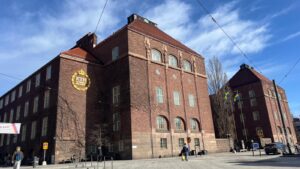
KTH Live-in Lab is a laboratory positioned at the intersection of fundamental research and field engineering. Located at the heart of Sweden’s largest university in Stockholm, its mission is to address climate and technical challenges through the construction of sustainable, resource-efficient buildings.
A look back at some of the site visits conducted during the trip:
Göteborg Energi & Renova
Understanding synergies between waste, energy, and the city
The first stop of the trip was the Sävenäs plant, operated by Renova (waste management) and Göteborg Energi (municipal energy utility). Students discovered how Sweden turns constraints into opportunities. Here, waste incineration is not merely a treatment solution—it is a cornerstone of the local energy system. The plant supplies 5% of the electricity for Gothenburg, the country’s second-largest city, and provides a substantial share of district heating, which serves 90% of the city’s buildings.
Students observed a circular economy model in action: non-recyclable waste becomes an energy resource, while ultimate residues are landfilled. A notable feature is that Renova even imports waste from the United Kingdom to optimize incinerator capacity, illustrating an unexpected form of European cooperation. Eric Zinn, Director of Sustainability at Göteborg Energi, highlighted future challenges, including the need to anticipate a 100% increase in electricity demand by 2045.
For the students, this visit illustrated a systemic approach: in Gothenburg, waste, energy, and district heating form an integrated ecosystem—an approach that inspires sustainable, efficient, and low-carbon solutions.
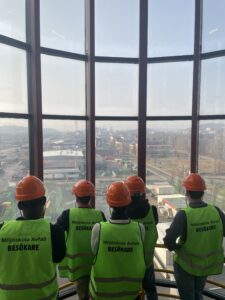
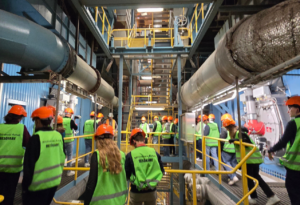
Visit to the Göteborg Energi plant. Left: view of the truck and waste container unloading area.
VARO Preem
Rethinking refining for the post-carbon era
The visit to the Gothenburg refinery, operated by VARO Energy and Preem, provided insight into the transformation of a traditional sector. Born from the merger between Switzerland’s VARO Energy and Sweden’s Preem, this major player in Northern European refining is gradually transitioning toward renewable fuels—without waiting for regulatory pressure.
Students learned how the company integrates biomass into its processes, despite technical challenges such as lower energy density, impurities, and complex conversion pathways. The Sunpine project, which converts residues from the pulp and paper industry into renewable diesel, is a notable example.
At the same time, VARO Preem is leveraging artificial intelligence to optimize conversion units such as Fluid Catalytic Cracking (FCC) and reduce emissions in real time.
This visit revealed a key reality: the energy transition in industry is not decreed—it is built step by step, balancing technological innovation, economic viability, and anticipation of future regulations. For OSE students, it underscored that decarbonization requires long-term vision and the ability to fundamentally rethink industrial models—core competencies for future engineers.
Scania R&D
Electrifying heavy transport: a technical and logistical challenge
At Scania, a leader in trucks and buses, students discovered that electrifying heavy-duty transport goes far beyond battery technology. The challenge is to make electric solutions competitive by 2035 by rethinking vehicles, charging infrastructure, and business models.
The company is investing in Milence (a joint venture with Volvo and Daimler) to deploy a European high-power charging network, and in Erinion to optimize depot charging, where up to 60% of fleet energy needs can be covered. This systemic approach—combining innovation, collaboration, and efficiency—demonstrates that the transition of heavy transport requires close coordination between industry, grid operators, and public authorities.
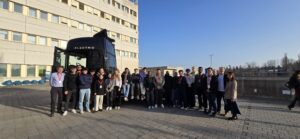
Presentation of an R&D prototype of a Scania semi-trailer by Joakim Gimholt.
Karolinska University Hospital
Combining medical excellence and environmental performance
At Karolinska University Hospital, ranked the best hospital in Europe in 2025, students observed how medical excellence and environmental performance can coexist. With an annual energy consumption of 176.5 GWh, the hospital produces 94% of its cooling and 90% of its heating on-site, using heat pumps, a cooling network, and 168 geothermal wells.
The visit also highlighted a robust energy resilience strategy: 66 uninterruptible power supply systems (UPS) and backup generators ensure continuity of care, while a sustainability program (2023–2027) optimizes waste management and prioritizes reusable equipment.
This immersion demonstrated that hospitals are not merely energy consumers—they are key actors in the transition, capable of combining efficiency, sobriety, and resilience.
Stockholm Royal Seaport
Rethinking the city for a sustainable future
Stockholm Royal Seaport, a flagship redevelopment project covering 236 hectares of former port land, aims for carbon neutrality by 2030. Students explored a model of sustainable urban planning where energy efficiency, social diversity, and biodiversity converge to create an innovative living environment.
Buildings are designed to minimize carbon footprints and rely on an underground vacuum waste collection system, eliminating noise pollution and emissions from garbage trucks. The district also prioritizes green spaces and soft mobility (bike infrastructure, reduced car use), while promoting social diversity through inclusive housing accessible to all income levels.
This visit showed how a district can become a living laboratory for sustainable cities, integrating technology, inclusion, and environmental responsibility.
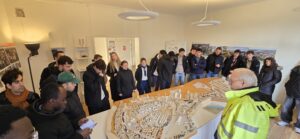
Flower
Energy flexibility: a cornerstone of the transition
Founded in 2020, Flower has become Sweden’s leader in electricity flexibility, with a portfolio of 250 MW of batteries and 15,000 charging points managed across Europe. Students learned how the company uses artificial intelligence to optimize electricity production and consumption in real time, smoothing the intermittency of renewable energy sources.
Flower demonstrates that flexibility is not only a technical lever but also an economic one. By aggregating batteries, demand response, and EV charging, the company secures power grids, accelerates the transition, and creates value for its clients. Active in seven countries, it shows how Swedish solutions can scale and adapt across Europe.
For the students, this visit clarified that energy flexibility is not optional—it is a prerequisite for large-scale transition and effective decarbonization.
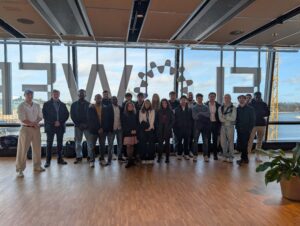
Students from the Class of 2025 at the offices of Flower in Stockholm.
The study trip
A program that combines academic rigor with real-world grounding to prepare for future challenges
This study trip to Sweden confirmed that the energy transition goes beyond theoretical concepts—it is built on the ground, through daily engagement with the stakeholders driving it forward. For students in the OSE Specialized Master’s program, this immersion provided a formative experience, enabling them to confront academic knowledge with industrial and societal realities.
Through visits to organizations such as Göteborg Energi, VARO Preem, Scania, Karolinska, and Stockholm Royal Seaport, students gained a deeper understanding of the importance of a systemic approach that integrates technical, economic, and environmental dimensions. They also recognized that the energy transition requires agility, collaboration, and long-term vision—qualities that Mines Paris – PSL actively fosters in its students.
By placing real-world immersion at the core of its pedagogy, the program prepares its students to become key actors in the energy transition, capable of designing and leading innovative and sustainable projects.
Testimonials
Flavien BAZON, OSE Specialized Master’s student, Class of 2025

“This study trip to Sweden was, in many respects, a hands-on extension of the concepts covered in our program. In just one week, between Gothenburg and Stockholm, we were able to observe waste-to-energy recovery at Renova, renewable refining at Preem, heavy-duty transport electrification at Scania, and flexibility aggregation at Flower—not to mention Karolinska University Hospital, a pioneer in hospital decarbonization.
What stands out, beyond the sophistication of each technology, is the overall coherence: in Stockholm, Stockholm Royal Seaport is transforming former industrial port brownfields into a full-scale laboratory for sustainable city technologies; at Scania, smart charging for electric trucks is already paving the way for vehicle-to-grid systems.
These building blocks are interconnected, supported by long-term energy policies and a strong culture of collaboration between public and private stakeholders. This systemic perspective is precisely what the OSE program trains us to develop—and this trip gave us the opportunity to see it in action.
We would like to extend our sincere thanks to everyone who hosted us, as well as to Gilles GUERASSIMOFF, Alice SPASARO, and Amel SAHLI for organizing this exceptional trip.”
Gilles Guerassimoff, Professor at CMA Mines Paris – PSL and Head of the program
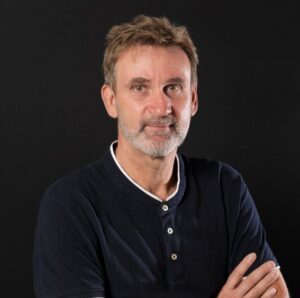
“The cohort was able to fully appreciate the importance of the skills acquired during the first six months of the program through this immersion in the Swedish energy system.
Visits to industrial and institutional sites, as well as exchanges with major corporations and startups, enabled our students to broaden their understanding through exposure to diverse practices and cultures within the energy sector.
Insights gained during this trip will contribute to ongoing reflections on topics addressed at the OSE Conference, scheduled for September 29, 2026, focusing on decarbonization in hospital systems, as well as to a forthcoming book on the same subject to be written collectively by the students.”
Going further
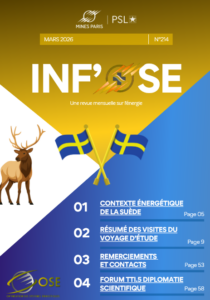
The program’s monthly energy publication
Discover Issue #214 of Inf’OSE, a special edition dedicated to the study trip to Sweden by the Class of 2025.
The OSE Specialized Master’s program recognized in the Eduniversal ranking
The OSE Specialized Master’s program at Mines Paris – PSL, already recognized for its academic excellence and strong industry grounding, was ranked #1 in the 2026 Eduniversal ranking in the “Energy – Renewable Energy Master’s” category—further подтверждение of the program’s quality and positioning.
Applications are open until May 26
Interested in joining this program and becoming an active contributor to decarbonization? Applications for the next cohort are open until May 26, 2026.
To learn more and apply, visit: