
The Géol’ 2026 internship for engineering students: from the field to the major challenges of the future
Why learn to interpret landscapes when you’re training to become an engineer? Because understanding our environment, its history, and how it has changed is essential to better anticipate the consequences of our actions.
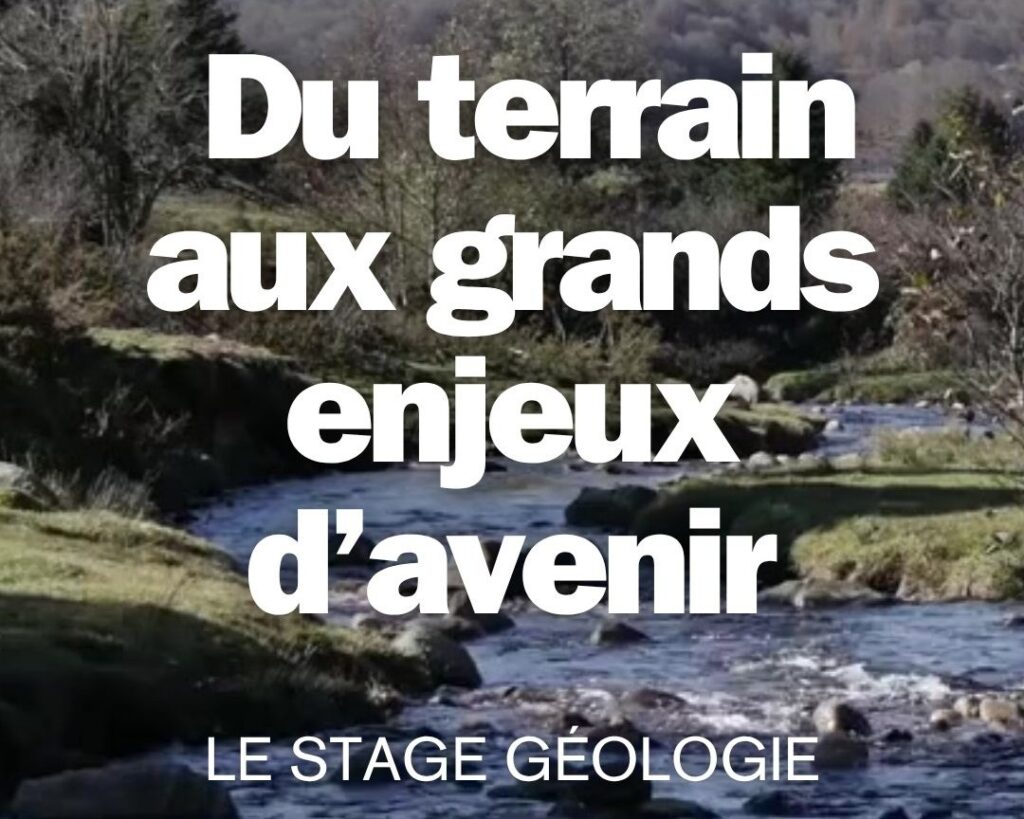
Every year, first-year students in the Civil Engineering program at Mines Paris – PSL leave the classroom for a week-long field immersion. Divided into six groups across France, they learn the geologist’s approach: observing rocks, interpreting landscapes, and reconstructing the processes that have shaped them over time.
Observe to understand; understand to act more effectively
An approach at the heart of the Mines Paris – PSL engineering program.
Geology also serves as a gateway to many contemporary challenges: water resource management, subsurface exploration, the energy transition, climate change, and the impacts of human activities on natural environments.
Guided by faculty members who are also researchers, students learn to apply their theoretical knowledge to real-world situations, formulate hypotheses, and navigate scientific uncertainties. This experience extends far beyond geology alone and encourages them to reflect on their future roles as engineers.
In this video, Jean-Louis Grimaud, a faculty member and researcher at the Mines Paris–PSL Geosciences Center, along with Marguerite Gounot and Ethan Cantor, first-year students in the Civil Engineering program, reflect on this educational experience and what it has taught them.
