On World Soil Day, which took place on Friday, December 5, this appointment reaffirms the center’s central role in the knowledge, preservation, and sustainable management of soil and subsoil resources, in support of the transitions our societies are undergoing.
-
Fadi Henri, tell us a little about your background: what formative experiences led you to take over as director of the Geosciences Center?
I discovered geology at a very early age in Lebanon, in an environment where karst landscapes are omnipresent. Between scouting, caving, and my first fieldwork, this proximity to natural systems quickly led me to geosciences.
After completing my bachelor’s degree and during my master’s degree at the American University of Beirut (AUB), I worked for six years as a field hydrogeologist, a decisive period that deeply rooted my applied approach.
In 2000, I received a grant from the Lebanese CNRS to pursue a PhD at KU Leuven in Belgium. Returning to AUB as an assistant professor, I then joined IFP Energies nouvelles (IFPEN) in 2007, where I conducted research on sedimentary systems, fluid-rock interactions, and multiscale reservoir characterization. Since 2019, I have also been a professor at the University of Utrecht, holding the Multiscale Fluid–Rock Interactions chair.
These experiences—in the field, in the laboratory, in modeling, and in teaching—have shaped an integrated vision of geosciences, at the heart of energy, resource, and environmental issues.
It is this vision that I now wish to put at the service of the Center for Geosciences.
This trajectory has naturally been accompanied by scientific specialization focused on a detailed understanding of the complexities of the subsurface. My work focuses on sedimentology and integrated basin analysis, with the aim of shedding light on the uses of the subsurface in the context of current transitions, whether in terms of energy or storage. In particular, I study the characterization and multiscale modeling of sedimentary basins, aquifers, and reservoirs in a multidisciplinary manner. Rock-fluid interactions are one of my scientific threads, both in the laboratory and in the field or in my modeling work, as is the transmission of knowledge: teaching, coaching, and mentoring are important dimensions of my academic commitment.
The Geosciences Center brings together unique skills: fieldwork, experimentation, modeling, geochemistry, geomechanics, geophysics, etc. It also has exceptional experimental and digital resources.
For me, it is a great opportunity to be part of this prestigious institution and to join a collective of excellence that has the potential to make a real contribution to the major challenges facing our societies in terms of energy, hydrogeological, and environmental transition.
-
What is your vision for the Geosciences Center?
Before defining a trajectory, I first want to listen to the teams, understand their projects, their dynamics, and their needs.
With this preliminary overview, three areas seem to me to be fundamental:
- Strengthening scientific cross-functionality by facilitating natural interactions between fieldwork, modeling, experimentation, geochemistry, geophysics, and geomechanics.
- Leveraging experimental and digital resources, which are a unique asset at Mines Paris – PSL. Their visibility and integration into national and international projects must be amplified.
- Increasing the center’s external visibility, both in the academic ecosystem and among industrial, institutional, and international partners.
This vision is not a fixed program, but a basis for discussion that I would like to develop collectively with the teams.
-
The energy and environmental transitions are profoundly transforming our relationship with the subsurface. In your opinion, what role should geosciences play in this context?
The energy, hydrogeological, and environmental transitions rely on a detailed understanding of the subsurface. However, the subsurface is complex, heterogeneous, and difficult to predict—but essential.
- Resources: Sustainable management of water, minerals, and energy requires solid, integrated scientific knowledge.
- Climate change: the impacts on soils, aquifers, reservoirs, and geological structures can only be anticipated by mobilizing expertise in geosciences (in the broad sense).
- Public and industrial decision-making: geosciences must inform strategies, with rigor but also in language that is accessible to decision-makers and citizens.
- Responsible innovation: this is not about “techno-push,” but about building solutions based on the real needs of territories and stakeholders.
In this context, the Geosciences Center has a key role to play: producing fundamental and applied knowledge, but also contributing to public debate through independent expertise.
-
On World Soil Day, how does the center contribute to understanding and preserving soils?
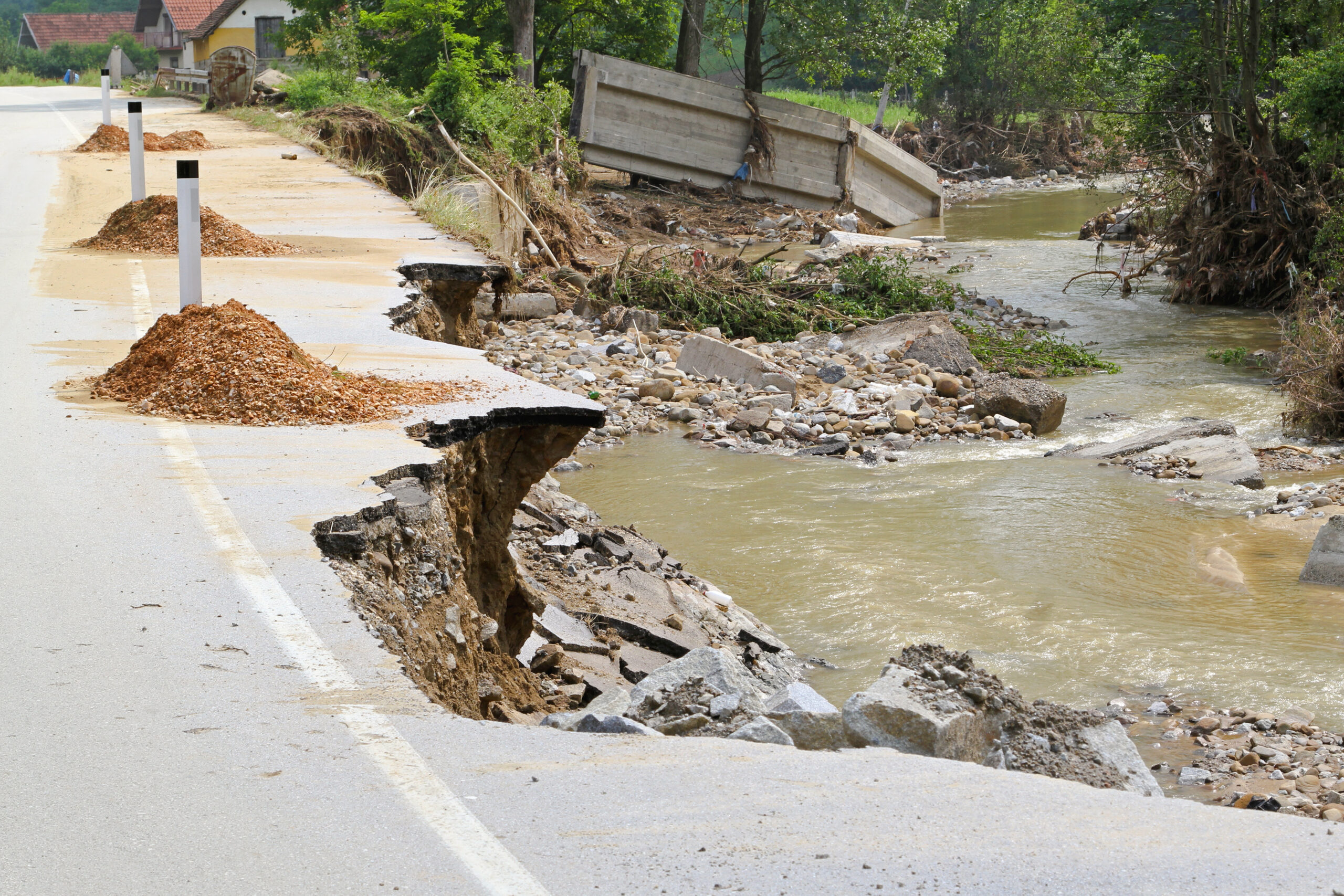
The Geosciences Center has long been conducting major work on erosion, sediment dynamics, and landscape evolution, which are essential processes for understanding soil degradation.
Here are some of the Geosciences Center’s most notable contributions:
- Bassin de la Canche (Nord Pas-de-Calais): this work is being carried out by Christine Franke, in partnership with the University of Lille, IMT Nord Europe and IFPEN, combining field measurements, analyses, and modeling (TOPMODEL, LisFlood, CEASAR). These data are being used in the thesis of Marylin Uchasara.
- TRACS project with Voies Navigables de France (VNF) and the Artois-Picardie Water Agency: this project, led by Sophie Guillon, tracks agricultural and urban sediments, hydro-sediment transport, and sediment recovery, with industrial partners, notably EDF.
- Orgeval Basin: monitoring for this project is carried out by Sophie Guillon and focuses on suspended matter, soil gases (O₂, CO₂) and carbon fluxes, in order to link erosion, hydrology and biogeochemical dynamics.
- Long-standing partnership with the French National Agency for Radioactive Waste Management (ANDRA): these experimental and numerical studies, monitored by Jean-Louis Grimaud and Olivier Stab, assess the resistance of storage site covers to erosion processes, particularly in the European Partnership on Radioactive Waste Management (EURAD2) within the CLIMATE and SUDOKU work packages, the FAVL waste storage project in Aube, and Gabriel Portzer‘s thesis on the cover of the Manche storage center.
- Soils and mineral resources: some work focuses on lateritic soils in Africa and New Caledonia as evidence of paleoclimates and as carriers of mineral resources. In New Caledonia, our work focuses on the concentration of nickel in these soils in relation to landscape evolution (CNRT, Jean-Louis Grimaud) and the mineral extraction chain in industrial processes (Prony Chair, Damien Goetz).
To carry out all of these projects, the center utilizes a range of cutting-edge tools and infrastructure. Our teams deploy methods combining field surveys and detailed laboratory analyses to quantify erosion rates and characterize sediments. This data is then fed into digital models, such as RUSLE, which assesses soil loss per unit area, or various landscape evolution models, which offer solutions for testing a wide range of climate scenarios while taking into account numerous physical, chemical, and biological processes. We also rely on experimental platforms capable of simulating extreme events such as intense rainfall exceeding 100 mm/h, in collaboration with the Écotron de Nemours.
This work directly informs agricultural, hydrological, climatic, and industrial issues.
-
What are the major projects or initiatives you would like to promote?
These priorities will be developed collectively with the teams, but several avenues are already emerging:
- Develop new structural projects at the interface between fieldwork, modeling, and experimentation, particularly around soil vulnerability, water resources, geomaterials, CO₂, reservoir characterization, and climate impacts.
- Strengthen promotion by giving greater visibility to the tools, platforms, models, and data produced by the center.
- Expand the training offering by leveraging the center’s unique field expertise and experimental skills.
- Become a key player in decision support by providing robust scientific analyses to local authorities, institutions, manufacturers, and public actors.
These projects should strengthen the Geosciences Center’s position as a leading scientific player in the transition.
To go further
The Geosciences Center