An international PSL bachelor’s degree in science and engineering, accredited by the CTI, starting in September 2026 in Sophia Antipolis
Starting in the 2026 academic year, the Pierre Laffitte campus of Mines Paris – PSL in Sophia Antipolis will host the new PSL International I-BE³ Bachelor’s degree (International Bachelor of Environmentally Engaged Engineering), an international program in science and engineering accessible after high school, accredited by the Commission des Titres d’Ingénieur (CTI) and equivalent to a bachelor’s degree. This program, taught entirely in English, combines scientific rigor with a systemic understanding of major contemporary issues, including ecological, energy, and digital transitions.
The program includes a mandatory semester abroad and takes place in a multicultural academic environment. I-BE³ students can also follow a unique path to obtain a bachelor’s degree in environmental science from Rice University (Houston, Texas), renowned for its excellence in energy transition and environmental science. The fall semester of the third year takes place on Rice’s Paris campus, with courses taught by professors from Rice, ESPCI, and Chimie ParisTech, before continuing for a year and a half on the main campus in Houston.
At the end of the three years, graduates will be able to take advantage of a specific pathway to apply for engineering programs at Mines Paris, ESPCI, or Chimie ParisTech, as well as scientific master’s programs at PSL, or enter the job market directly thanks to professional skills recognized by the CTI.
Engineering focused on Sustainable Development Goals
I-BE³ is part of an international vision of engineering at the service of sustainable societies. The curriculum aims to train engineers capable of combining scientific fundamentals, an understanding of complex systems, and social responsibility.
The program is based on an active, project-based approach, organized into three teaching blocks covering engineering sciences, data sciences, and artificial intelligence. The projects confront students with concrete issues (energy, water, climate, health, sustainable cities, mobility, and responsible industries) aligned with the United Nations and its Sustainable Development Goals (SDGs).
I-BE³ in the spotlight at UNESCO’s World Engineering Day 2026
As part of World Engineering Day 2026, an international event organized under the auspices of UNESCO, the teaching team from Mines Paris – PSL represented the University. The School also participated in discussions on the future of engineering and its role in sustainable development.
During this international meeting, Philippe Blanc, professor and researcher at Mines Paris – PSL and head of the I-BE³ program, spoke at a session devoted to the preliminary work for UNESCO’s third world report on engineering, a reference document intended to analyze the strategic role of engineering in economic, technological, and environmental transformations.
The I-BE³ program was also presented at this event as an example of training aimed at translating these international guidelines into concrete terms in higher education.
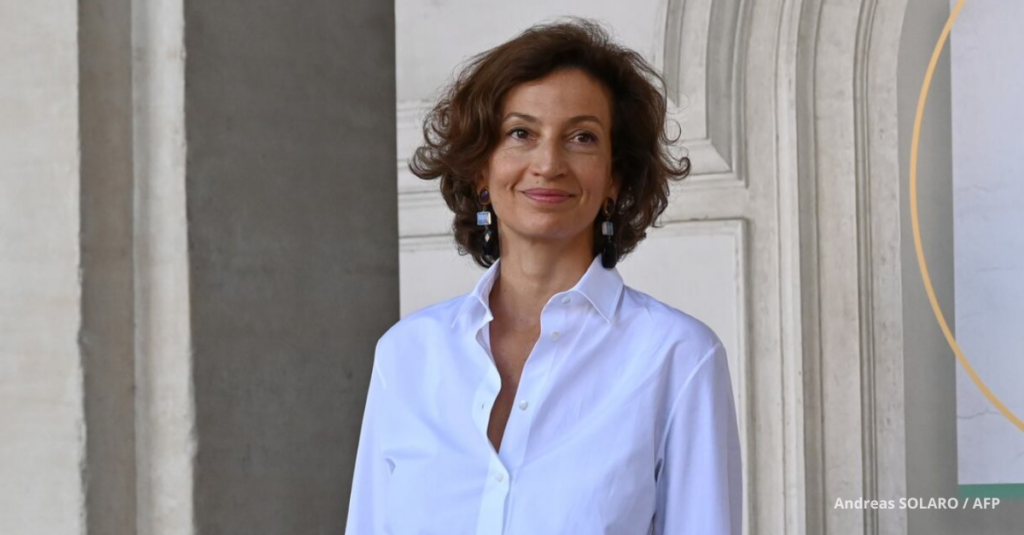
Audrey Azoulay, patron of the PSL I-BE³ Bachelor’s degree
On this occasion, Audrey Azoulay, former Director-General of UNESCO (2017-2025) and patron of the Bachelor’s degree in I-BE³, reflects on the challenges of training engineers to meet contemporary challenges.
You have agreed to be the patron of PSL’s Bachelor of Environmentally Engaged Engineering (I-BE³). What convinced you to support this initiative? How does this program embody the recommendations you made as Director-General of UNESCO in terms of sustainable engineering?
“I was delighted to agree to support the creation of this new Bachelor’s degree at PSL because it aims to train the new generations we need around the world. In 2021, as Director-General of UNESCO, I published a global report by the Organization showing that the future of the planet and humanity depends on the total mobilization of the engineering profession. Engineers are no longer just builders; they are strategic leaders, guarantors of human dignity. Engineering determines access to water, energy, digital infrastructure for education, agricultural engineering, clean transportation, energy-efficient buildings, waste management, and climate resilience. It is not just a matter of learning a trade, but of acquiring the power to transform reality. And this power calls for ethics, given the trajectory of our world. Climate change and the scarcity of natural resources are no longer scientific projections: they are major political constraints that call for a rethinking of everything we take for granted. They are redefining the priorities of states, economic models, and international balances. In this context, engineering has become a central lever for transforming reality, but also for sovereignty.
For this Bachelor’s degree, PSL and Rice University have made a strong choice: to consider engineering not as a neutral discipline, but as a structuring function of societal issues, including when it is practiced in the private sector or internationally.”
The I-BE³ Bachelor’s degree program integrates practical skills in addition to scientific fundamentals. In your opinion, how does this approach, which combines academic and practical excellence, enable young people to be trained for the jobs of tomorrow, which will necessarily have to integrate global issues?
“The I-BE³ program was designed to confront students with responsibilities. Its pedagogy starts with real-world challenges and then returns to scientific fundamentals. Students will learn by doing, through concrete projects linked to research and industry. Semester-long research projects, engineering and data science, professionalization challenges, and international exposure—with a mandatory semester abroad—form a coherent whole. I am very keen on the lively combination of academic and practical learning, “hands-on” at the university. It is very motivating for students, who will be passionate about the issues that arise in professional life. And they will have all the academic input they need to come up with their own answers.
What message would you like to send to high school students who are wondering about their choice of higher education?
“I encourage them to look for something that matches both their interests and their ability to change the world, on their own scale. Nothing is set in stone. We are living in a time when the world needs science and science needs them, with a perspective that is different from that of previous generations. It also needs them because there are still too few girls pursuing careers in science.”
Learn more about the program and applications