AI at CGS
Research rooted in the history of organizations
The work currently being carried out on AI at CGS is part of a long-standing research tradition. Historically, the center has contributed significantly to the development of formalized models in operational research, design theory, and decision support, which are capable of producing theoretically high-performance solutions. However, a realization has emerged through industrial collaborations: models that look promising on paper sometimes have little concrete effect in organizations.
This discrepancy has led the CGS to develop an original approach that systematically combines two inseparable dimensions:
- Formalized and rigorous models, now enhanced by artificial intelligence and machine learning.
A detailed analysis of organizational dynamics, work practices, norms, representations, and responsibilities associated with these technologies.
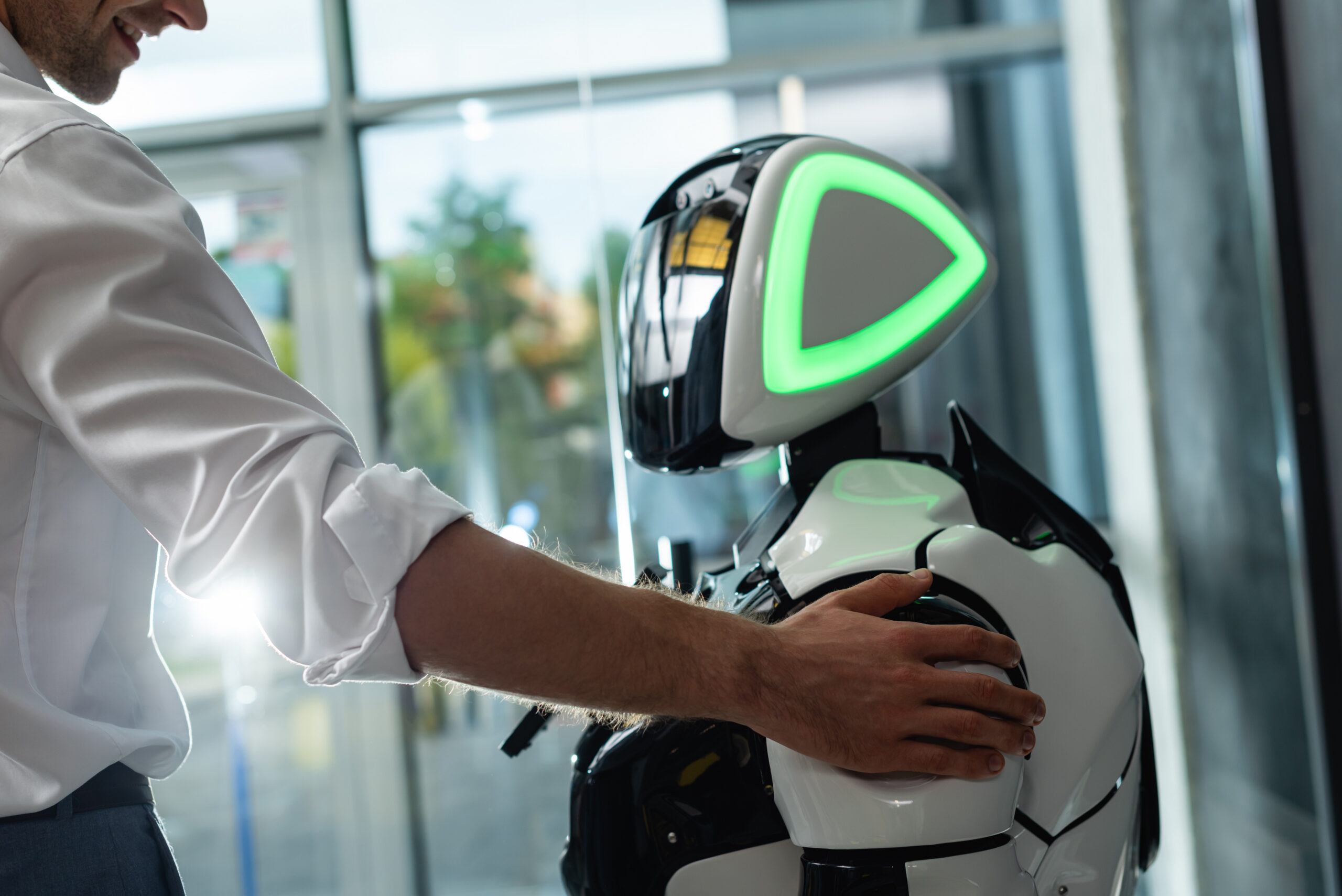
AI is thus part of a research program that seeks not only to make algorithms work, but also to understand how they transform human and collective activity.
Generative creativity… with well-defined boundaries
The spectacular rise of generative AI, capable of producing text, images, music, and concepts, is a major area of study for the CGS. Behind the apparent creativity of these tools lies a central scientific question: what does “generate” really mean?
The work of Antoine Bordas, Pascal Le Masson, and Benoît Weil shows that the generativity of current AI is often weak and limited. In other words, these systems excel at producing plausible variations on what already exists, but struggle to challenge frameworks of thought, categories, or the very dimensions of problems.
In contrast, human design reasoning is capable of:
- Redefining objectives
- Transforming the parameters of a problem
- Introducing new and unexpected dimensions
The CGS’s research thus aims to finely characterize the different regimes of AI generativity and to identify how organizations can mobilize them in a relevant way. Inspired by a renewed reading of Taylorism, this program explores models of “good management” of generative AI: organizational mechanisms, methods, and dedicated roles to frame exploration, avoid routinization, and support collective learning.

From prediction to decision
AI in the face of industrial realities
Another key area of CGS research concerns the integration of AI into critical operational decisions. The work of Marie Bouilloud and Michel Nakhla on predictive maintenance of wind farms offers a concrete illustration of this.
Thanks to machine learning and deep learning models, it is now possible to detect weak signals that indicate potential failures, which are invisible to conventional statistical methods. The stakes are high: anticipating failures makes it possible to avoid costly unplanned downtime and increase the reliability of renewable energy production infrastructure.
But prediction alone is not enough. Researchers show that the real difficulty begins after the prediction:
- How can this information be integrated into maintenance schedules?
- How can a balance be struck between immediate costs and future risks?
- How can models be adapted to the real constraints of organizations?
The CGS’s work therefore proposes an integrated approach, combining AI, operational research, and decision analysis, to transform an algorithmic advance into a measurable industrial impact.
When the machine becomes a colleague
Beyond industrial sectors, generative AI is profoundly transforming design, creation, and consulting activities. Research by Nicolas Ricci, Sophie Hooge, and Tristan Guyon highlights the emergence of a new way of working: “Alone Teamwork.”
In this new regime, professionals work alone, but in constant interaction with generative AI, which becomes a true cognitive partner. The study of creative processes shows that AI is involved at every stage:
- Inspiration: rapid exploration of avenues
- Framing: reformulation of problems
- Prototyping: production of intermediate artifacts
- Validation: testing, comparisons, adjustments
This transformation does not eliminate human creativity, it reconfigures it. New skills become central: curation (selection and filtering), iterative dialogue with the machine, and above all, final control of the consistency, authenticity, and ethics of productions.
Transforming digital transformation
The CGS’s work also questions the dominant models of digital transformation in organizations. Traditionally, two approaches coexist:
- A prescriptive model, driven by management, which defines the tools and objectives in advance
- A constructive model, where uses emerge from the field before being institutionalized
Generative AI puts these two models in tension. Its malleability, rapid evolution, and diversity of uses make any comprehensive planning illusory… as does a totally decentralized adoption without a collective framework.
Research conducted by consulting firms shows that this instability raises major issues of skills, professional identity, and social responsibility, in a context where some studies are already observing a decline in the employment of junior executives. The CGS is therefore exploring the conditions for sustainable digital transformations that can deliver value creation, collective learning, and social impact.
The Physical Internet in the age of AI
For fifteen years, the CGS logistics team (Eric Ballot, Shenle Pan, Mariam Lafkihi) has been conducting research on the Physical Internet (PI), a paradigm aimed at interconnecting and pooling networks and services for more sustainable and responsible logistics. The digitization of logistics chains is a central component of this, enabling the collection, structuring, and exploitation of data between actors. AI is now accelerating this transformation towards more intelligent and cooperative systems, for example:
- AI-augmented decision-making relies on the exploitation of massive data from digitized systems, as illustrated by our work with Orange on heavy goods vehicle routes in France, and our work on digital freight transport platforms using AI for dynamic pricing and resource allocation.
- Autonomous systems orchestrated by AI Agents aim to make IP systems more resilient and decentralized, in particular through cognitive digital twins based on ontology and knowledge graphs, studied in a European project on Smart City Logistics and in an ongoing ANR project.

A workshop to bring the AI community together
This work was highlighted at the AI Workshop held in December 2025 at Mines Paris – PSL. Designed as an opportunity for internal exchange, the event allowed faculty, doctoral students, and engineers to present their projects, tools, and platforms through oral presentations and posters.
Beyond the diversity of topics, the workshop highlighted a common dynamic: building AI that is rooted in reality, capable of interacting with humans and integrating into complex systems.
Concrete impacts, open questions
From the optimization of freight transport systems to hospital management, from the circular economy to creative work, AI research at CGS follows the same guiding principle: to make AI a tool for collective action, rather than a black box imposed on organizations.
At CGS, AI is therefore neither an abstract promise nor an inevitable threat: it is a subject of research in its own right, at the crossroads of science, management, and social issues, with the aim of inventing smarter, more responsible, and more creative organizations.
To go further
- Nicolas Ricci, Tristan Guyon, Sophie Hooge. The Rise of “Alone Teamwork.” Unveiling the Transformations in the Creation Process of Artists Using Generative Artificial Intelligence Tools. Marta Massi; Marek Prokupek; Alessandra Ricci; Maria Carmela Ostillio. Artificial Intelligence in the Cultural and Creative Sectors: Opportunities, Challenges, and Transformations, Routledge, In press. ⟨hal-05261843⟩