A strong commitment by the School to social issues
Supported by the Support Division of the Teaching Department, this first edition of Prevention Month brought together students and staff to discuss issues that affect the daily life of the Mines Paris – PSL community, both at the School and in the professional world.
The goal: to inform, raise awareness, and provide concrete tools for understanding, taking action, and being a supportive voice for classmates and colleagues. Throughout January 2026, the School offered opportunities for collective reflection in an open setting, encouraging dialogue and the sharing of experiences.
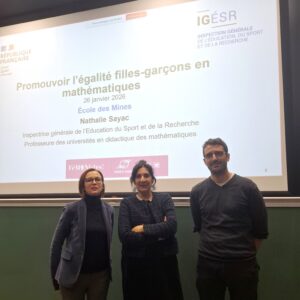
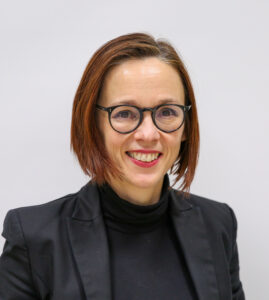
Isabelle Lecallier, Head of the Mines Paris – PSL Support Center, Nathalie Sayac, Inspector General of Education, Sports, and Research, University Professors in Mathematics Education, and Matthieu Mazière, Director of Studies for the IC Mines Paris – PSL cycle
A variety of formats to encourage participation and dialogue
Conferences, interactive workshops, collaborative games, forum theater… The diversity of formats offered made it possible to address these sometimes sensitive topics in an accessible and engaging way.
Specialist speakers—academics, researchers, health professionals, and representatives from the non-profit sector—provided expert insights, complemented by participatory formats that encouraged everyone to get actively involved.
Student associations (Camomines, Octo, ASTI, Dopamines, FéMINistes!, PIM), as well as several departments within the School, played a key role in facilitating and enriching the discussions, reinforcing the collective dimension of the initiative.
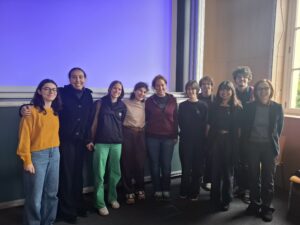
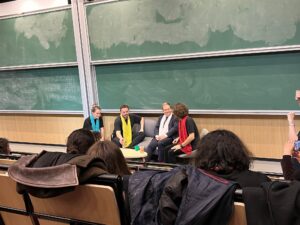
The student associations féMINistes and PIM organized the Sexual Health Lecture led by Dr. Yaëlle Amsellem Mainguy, Research Officer at INJEP (center).
Four weeks, four key themes
Addiction and alcohol: understanding for better prevention
The first week kicked off Prevention Month with a focus on risky behaviors related to alcohol and addiction. Through conferences and forum theater, participants were able to better understand the mechanisms of addiction, identify warning signs, and reflect on possible courses of action, both individually and collectively.
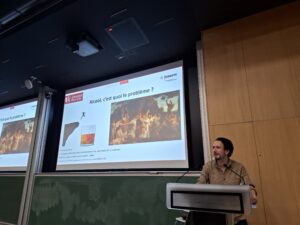
Dr. Clément Vansteene, psychiatrist and addiction specialist at Sainte-Anne Hospital, during the conference “Alcohol: what’s the problem?”
Discrimination: racism, anti-Semitism, and disability
The second week was devoted to the mechanisms of discrimination and the challenges of inclusion, both in education and in the workplace. Conferences and awareness-raising workshops helped to deconstruct preconceived ideas and provide a concrete experience of the obstacles faced by those affected.
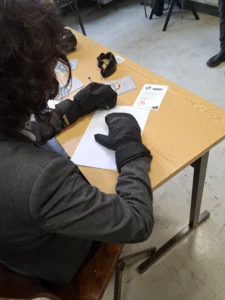
Interactive workshops to raise awareness of disabilities, led by 100% Handinamique
Misinformation: developing critical thinking
In the age of social media and artificial intelligence, the third week invited the community to decipher the mechanisms of fake news and strengthen their critical thinking skills. Conferences and interactive games provided practical tools to better navigate a complex information environment.
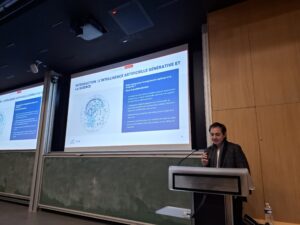
Hosting of the conference “Transparency in the age of AI” by Sébastien Perrin, Director of the Mines Paris – PSL Library
Equality and gender stereotypes
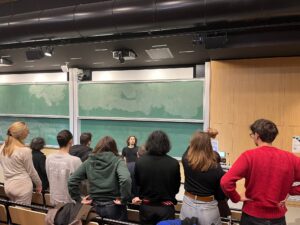
The final week focused on equality and the fight against sexist and LGBTphobic stereotypes. Lectures, workshops, and forum theater sessions identified concrete levers for action, both in academic careers and in everyday life.
A collective approach that is set to continue
Beyond the highlights offered in January, Prevention Month is part of a long-term approach, in line with the values of Mines Paris – PSL. By creating spaces for discussion and awareness-raising, the School is affirming its role as a committed player that is attentive to the well-being of its community.
Godefroy Beauvallet, Director General of Mines Paris – PSL, played along to show that alcohol is not a must!