
When the Theory of Design Meets the Pyramids of Egypt
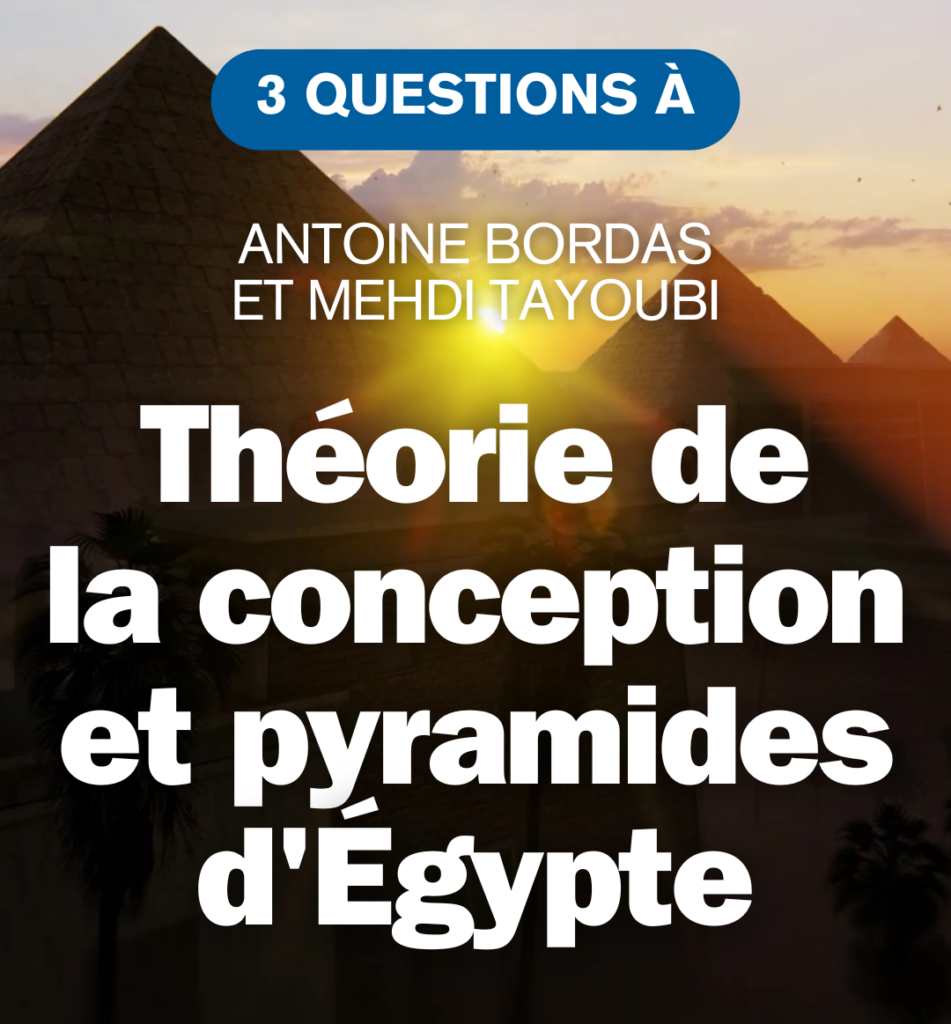
À l’occasion de la conférence internationale Design Computing and Cognition (DCC’26), organisée à Mines Paris – PSL, Antoine Bordas, post-doctorant au CGS (Centre de Gestion Scientifique) et organisateur de l’événement, et Mehdi Tayoubi, Vice President Innovation & Culture chez Dassault Systèmes et cofondateur de la mission ScanPyramids, reviennent sur les liens entre théorie de la conception, innovation technologique et patrimoine.
Three Questions to Understand How Design Research Fuels Tomorrow’s Innovations
Using the ScanPyramids mission as an example, Mehdi Tayoubi shows how collaboration between engineers, researchers, archaeologists, artists, and digital specialists has led to the discovery of new hidden spaces within the Pyramid of Khufu through muography, virtual twins, and immersive technologies. These innovations extend far beyond cultural heritage and are now finding applications in industry.
Antoine Bordas discusses the importance of the DCC’26 conference for Mines Paris–PSL and the growing role of design theory in international research. In particular, this research helps us better understand the mechanisms of creativity, develop new methods of innovation, and provide analytical tools used in fields as diverse as AI, engineering, and the large-scale assessment of creativity.
Why is DCC’26, one of the most prestigious international conferences in the field, being held at Mines Paris – PSL? How do the technologies developed to explore the Pyramid of Cheops or Notre-Dame de Paris also enable innovation in industry? And how do the design theories developed over several decades at the CGS contribute today to addressing major scientific and societal challenges?
