
Three Questions to Understand How Real-Time 3D Reconstruction Can Contribute to the Vehicles of Tomorrow
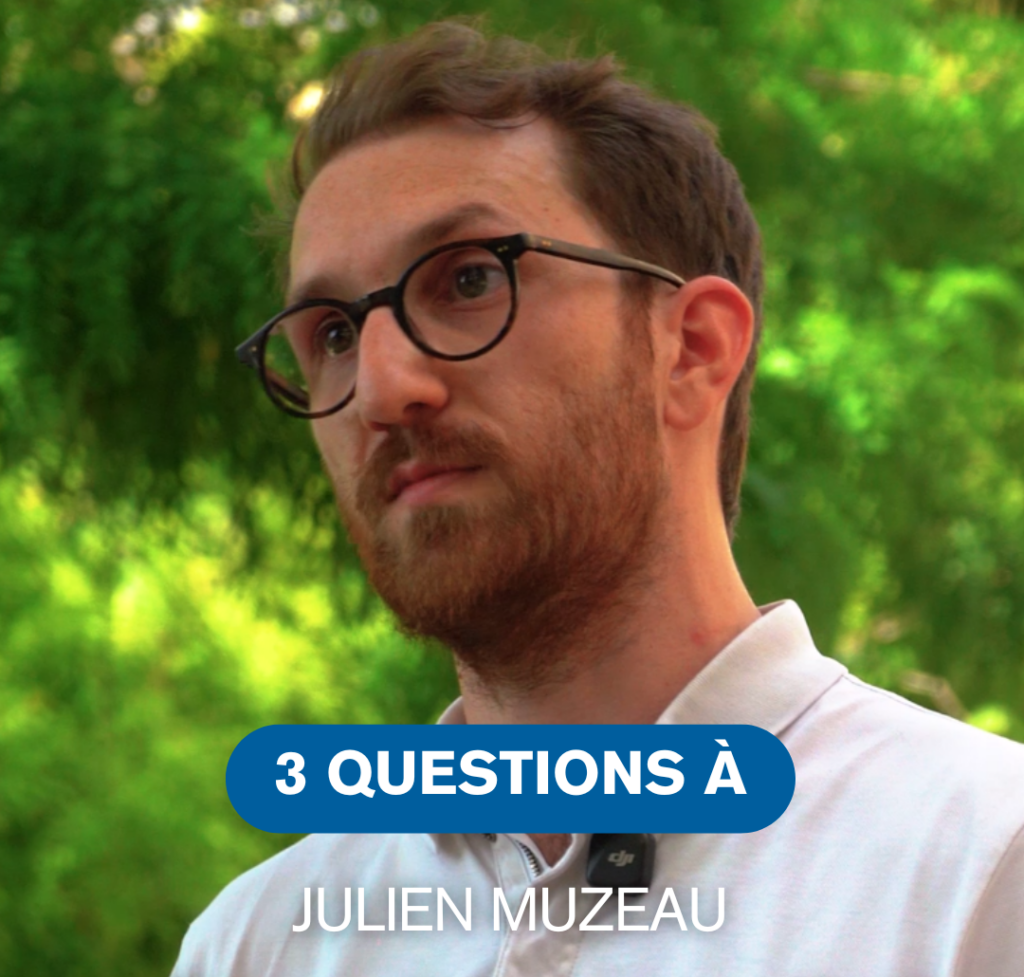
In this video, Julien Muzeau, a postdoctoral researcher at the Center for Robotics (CAOR) at Mines Paris – PSL, presents his work on Gaussian Splatting, a recent 3D reconstruction and rendering method that shows particular promise for in-vehicle automotive applications.
How can a vehicle reconstruct and visualize its 360° environment in real time? The key challenge is to better account for its surroundings (pedestrians, vehicles, changes in the scene) to support decision-making and, ultimately, autonomous driving systems.
Recent advances in Gaussian Splatting enable both fast and photorealistic renderings, while facilitating their integration with methods from robotics, such as SLAM. Another key challenge is to condense and simplify the models sufficiently so that they can run directly on embedded systems, in robots, or in vehicles.
The approach being studied relies on just four color cameras, oriented in different directions, without requiring more expensive sensors such as LiDAR or radar. This 360° view makes it possible to both broaden the perception of the environment and reconstruct its geometry more robustly.
This project, presented at the 2026 Mines Paris Research Day, illustrates how advances in neural rendering and robotics research can be adapted to the practical constraints of the automotive industry.
To learn more: https://researchday.minesparis.psl.eu/cutting-edge-neural-rendering-for-automotive-applications/
