
The Fréole Expedition: during his gap year, Raphaël is using a sailboat to support ocean and climate research between Ushuaia and Porto
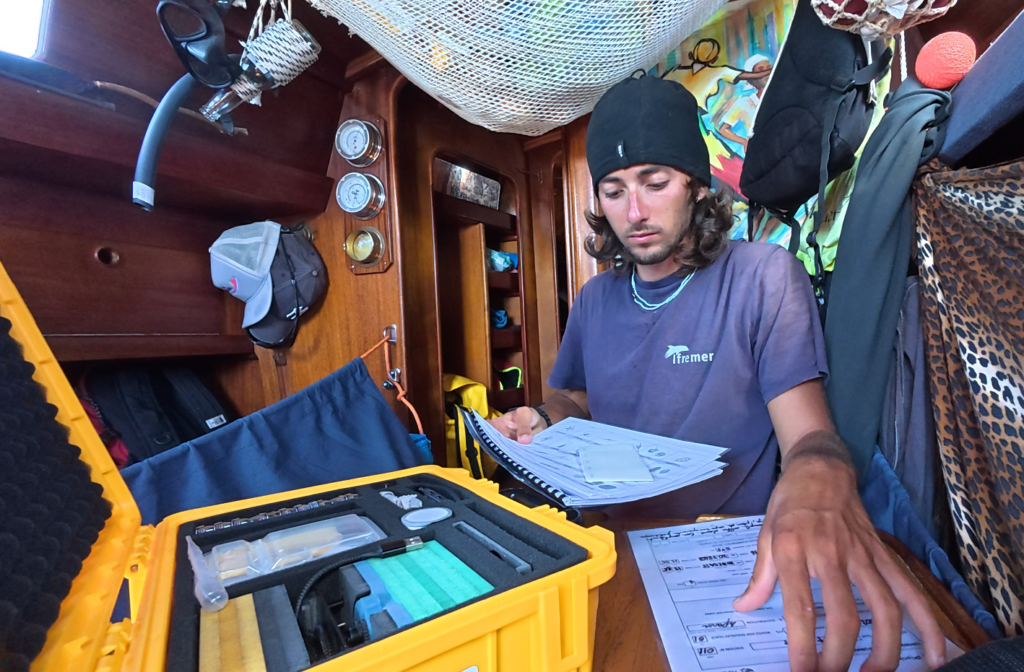
From January to July 2026, Raphaël Pietravalle (P24), a student in the Civil Engineering program at Mines Paris – PSL who is taking a gap year, is leading the Fréole Expedition, a scientific sailing expedition between Ushuaia and Porto (Portugal). Aboard makeshift sailboats converted into mobile research stations, he is collecting data for several research programs in oceanography and climate science, while also producing a documentary aimed at raising public awareness of the oceans’ essential role in regulating the climate. Through three questions, he reflects on the project’s origins, the challenges encountered, and the lessons learned from this expedition.
A Student Expedition
At the Intersection of Science, Maritime Adventure, and Outreach
Fascinated by the sea since his childhood in the Mediterranean and deeply concerned about environmental issues, Raphaël, a student in the Civil Engineering program at Mines Paris – PSL, has chosen to devote his gap year to a scientific and educational project: the Fréole Expedition. The goal is to use sailing to advance ocean and climate research, while bridging the gap between the scientific community and the general public.
The expedition is based on the concept of an “opportunity sailboat.” This is a private sailboat that takes advantage of a sea crossing to contribute to scientific programs by making some of its resources available: sampling capabilities, space on board, or observations made at sea.
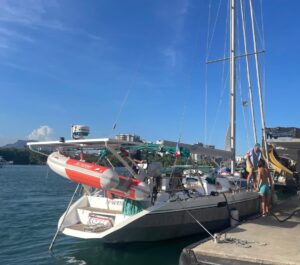
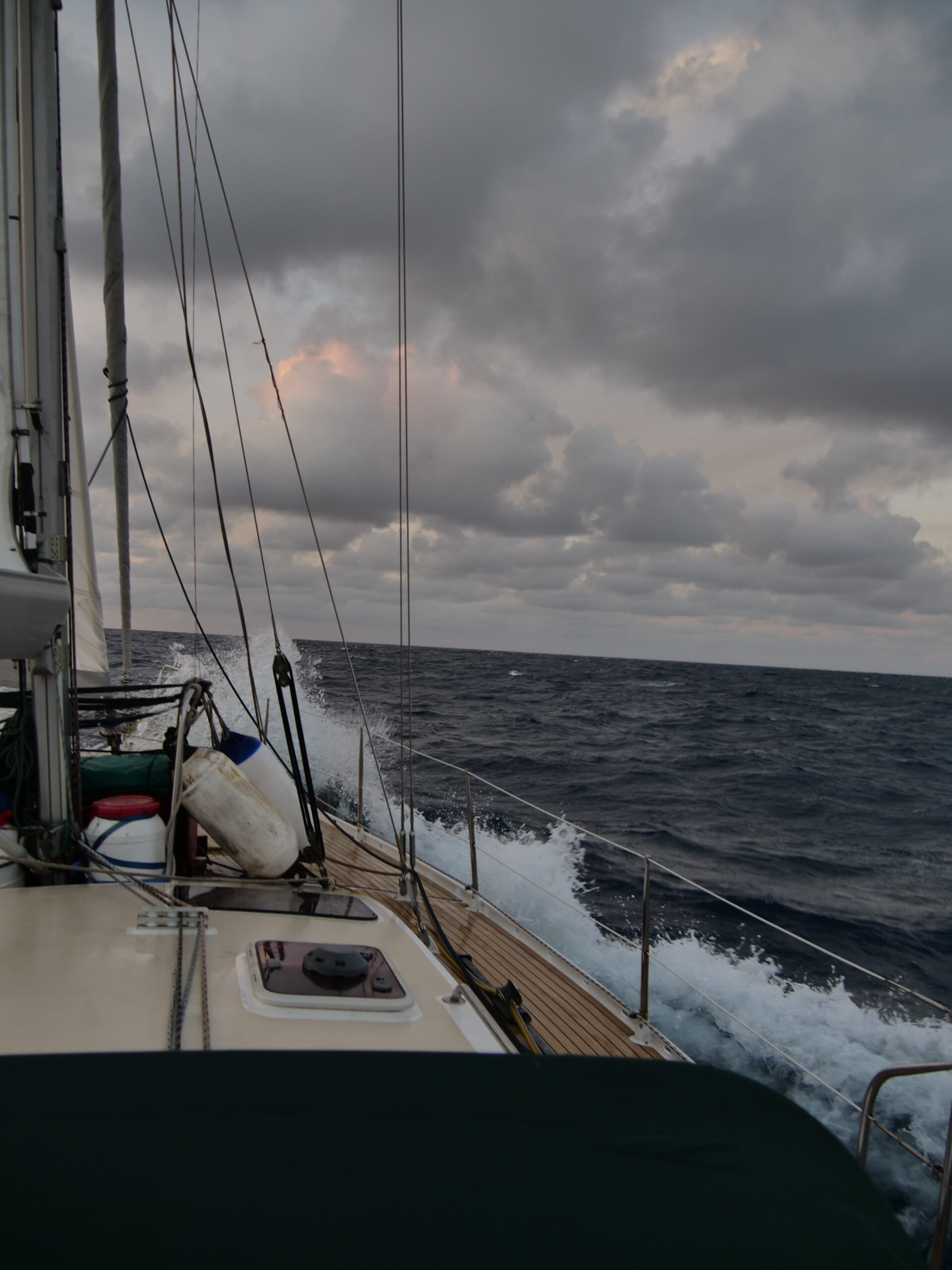
For six months, between Ushuaia and Porto, Raphaël carried scientific equipment on board to carry out various research protocols adapted to the constraints of deep-sea navigation: limited space, variable weather conditions, and the need to balance life on board with data collection. The goal was to transform a sailboat into a small, mobile research station capable of contributing to research programs while minimizing the logistical and environmental constraints of a field campaign at sea.
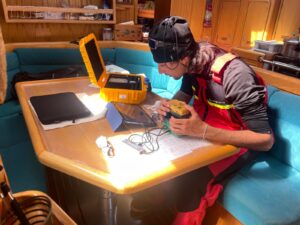
With support from the Mines Paris Foundation, as well as Singular Project grants provided by the SingularPlanet Foundation and the PSL University Foundation, Raphaël is receiving guidance that enables him to carry out this initiative, which places science and civic engagement at the heart of climate and societal challenges.
Conducted as part of a Civic Service Initiative with the NGO International Impact, the Fréole Expedition combines citizen science, maritime exploration, and knowledge sharing.
Contribute to Research
On the Oceans and Climate
The oceans play a fundamental role in regulating the climate: they absorb a significant portion of the carbon dioxide emitted into the atmosphere, redistribute heat on a global scale through ocean currents, and are home to biodiversity that is essential to the functioning of ecosystems. Better understanding how they evolve is therefore essential to refining our knowledge of climate change and improving scientific models.
As part of the Fréole Expedition, Raphaël is collaborating with several organizations involved in oceanographic research and climate science, including Ifremer, Plankton Planet, Astrolabe Expeditions, and Phénomer. Together, they have adapted various scientific protocols so they can be carried out aboard a sailboat—converted for the occasion into a mobile research station.
Observing Plankton Biodiversity
From the Sea and from Space
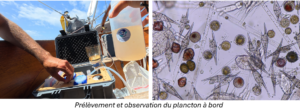
As part of the PlanktoSpace program led by the Plankton Planet association, Raphaël is collecting plankton samples throughout his voyage, from Ushuaia to Porto.
The protocol involves towing a plankton net behind the boat to collect microscopic organisms present in the water. The samples are then filtered to isolate different size classes of plankton before being examined under a microscope to qualitatively document the biodiversity encountered. These samples are of particular interest: they are collected as Earth-observing satellites pass overhead. Funded by NASA and the ESA (European Space Agency), the PlanktoSpace program aims to link observations made at sea with satellite data on ocean color. Ultimately, this approach could enable global monitoring of planktonic biodiversity from space.
Studying Climate Archives
Preserved in Sediments
The expedition is also contributing to research conducted with Ifremer’s Géo-Océan laboratory as part of a paleoclimatology dissertation focused on the role of Patagonian glaciers during the last ice age, more than 100,000 years ago.
During stops along the Patagonian coast, Raphaël collects sedimentary rock samples—primarily clays—from areas conducive to their preservation. These sediments serve as true natural archives: their mineralogical composition preserves evidence of past environmental conditions. Analysis of these samples will, in particular, help to better reconstruct the movements of glaciers over time and improve our understanding of the interactions between ice sheets, the oceans, and the climate.
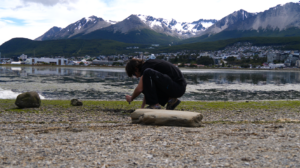
Prélèvement d’argile à Ushuaïa
A Documentary in the Works
To Raise Awareness About Ocean and Climate Issues
Beyond scientific data collection, the Fréole Expedition aims to educate the public: to make issues related to the oceans and climate change accessible to as many people as possible.
Throughout his journey, Raphaël conducts interviews with scientists, local stakeholders, and individuals committed to preserving marine environments to document the challenges encountered in the regions he traverses. These encounters will form the basis of a documentary for the general public dedicated to the role of the oceans in regulating the climate, created using footage from the crossing and testimonies gathered during the expedition.
By combining research, maritime adventure, and the sharing of knowledge, Raphaël transformed a personal initiative into a scientific and educational project dedicated to understanding the oceans and climate challenges.
After six months of sailing between South America and Europe—a transatlantic crossing covering nearly 20,000 kilometers—the Fréole Expedition concluded in July in Portugal.
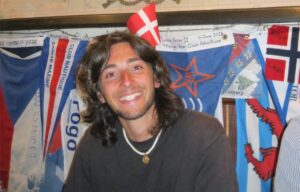
Three Questions for Raphaël
What inspired you, during your gap year, to plan a scientific sailing expedition focused on the oceans and climate?
The sea and sailing have always been a part of my life: ever since I was a child, I’ve been lucky enough to do a lot of sailing! At the end of every trip I was lucky enough to spend at sea, I dreamed of only one thing: that it would never end. I truly felt at home in that environment.
At the same time, my growing interest in climate science and oceanography led me to take a closer look at scientific expeditions at sea, particularly the campaigns organized by the Tara Ocean Foundation and those of the French Oceanographic Fleet, initiated by Ifremer. I knew I wanted to take part in such an adventure during my gap year.
Unfortunately, I wasn’t able to join an existing expedition along the way. So I decided to create my own scientific expedition project! Since I was on this adventure alone, it’s obviously a small-scale expedition, but it’s a project that was particularly close to my heart and to which I devoted nearly a year of preparation.
The first step was to find a sailboat interested in my project, on which I could join as a crew member. Sailing through high latitudes, close to the poles, was particularly important to me. It was both a personal dream and a scientifically sound choice: few boats pass through these regions, which makes using an opportunity sailboat to take relatively rare measurements all the more valuable.
How did you build scientific partnerships and adapt research protocols to the specific constraints of an opportunity sailboat?
When I embarked on this project in early 2025, I didn’t know a single person in this field. So I reached out to numerous laboratories and organizations—it was a bit like throwing messages in a bottle into the sea! These initial exchanges allowed me to meet passionate people, but above all, to better understand how scientific research at sea works.
I then began my gap year in June 2025 with a research internship at an Ifremer laboratory, where I studied the drift of Arctic sea ice. This experience allowed me to meet researchers who had already participated in or organized scientific expeditions. I was thus able to benefit from a great deal of advice—on both technical and logistical aspects—and gain a clearer picture of what was actually possible aboard a sailboat
From that point on, my project gradually took shape. By making more targeted requests to various laboratories, I was finally able to incorporate four scientific protocols. Some were already designed to be carried out on opportunistic sailboats, such as plankton sampling with Plankton Planet or the continuous collection of data via a probe installed on board with Astrolabe Expeditions.
Other protocols were designed specifically for the expedition. This was particularly the case for the collection of clay sediments along the coast of Patagonia, in partnership with Ifremer’s Geo-Ocean laboratory. They needed these samples for a doctoral thesis, and the sailboat I was boarding happened to be passing through precisely the regions they were interested in. The protocol was therefore designed based on this very concrete opportunity.
Once at sea, however, you realize that implementing these protocols is always more complex than you had imagined. You can prepare a very precise plan, but reality is often different. Weather conditions can prevent us from stopping to collect a sample, while the equipment available on board sometimes requires us to improvise, make repairs, or completely adapt the protocol.
So you constantly have to find solutions using whatever resources are on hand. It’s not always easy, but with resilience and a lot of motivation, we usually end up getting the job done!
After six months at sea and nearly 10,000 nautical miles traveled, what lessons have you taken away from this experience, both scientifically and personally?
Over these six months at sea, I was fortunate enough to sail on two different boats. This allowed me to discover very different ways of sailing, lifestyles, and personalities. It’s a kind of accelerated lesson in living together, in an environment where you can never truly isolate yourself.
For long voyages, you have to learn to take care of yourself: knowing how to take time for yourself, rest, and find your own rhythm. But life on board also consists of a multitude of daily tasks: preparing meals, doing the dishes, standing watch, tinkering with the engine, fixing a leak, or resolving an electrical problem. All of this takes place in a very confined space, which makes it particularly important to be mindful of others’ well-being.
This closeness also forges very strong bonds. Sharing the same storms, the same breakdowns, the same exhaustion, or sometimes the same fears creates a sense of solidarity that’s hard to find elsewhere. Conversely, we also share extraordinary moments: unique landscapes, sunsets, flocks of birds… These are memories of a richness that’s almost indescribable.
Stopovers also provide opportunities to meet new people. After spending several days—sometimes several weeks—isolated at sea, these encounters take on a special significance. We may experience them with greater intensity than in our everyday lives.
This very minimalist lifestyle has also made me think deeply about our relationship with material possessions, with others, and with our environment. When you live with very few possessions and every resource counts, certain priorities become much clearer.
From a scientific standpoint, dedicating more than a year to this project—and then continuing to explore it through the documentary—was an incredible opportunity. I was able to deepen my knowledge of climate science and oceanography, all while meeting researchers and scientists who taught me so much.
Above all, I had the chance to observe firsthand in the field phenomena that are usually studied from behind a computer screen. I’m thinking in particular of the proliferation of Sargassum in the Caribbean and plankton blooms.
This adventure has thus given me a much more concrete understanding of the environmental challenges facing our oceans.
Follow the Fréole Expedition
To learn about the stages of the voyage, the stops along the way, and behind-the-scenes details of this scientific expedition, follow the expedition on: