

Keywords
Awards & distinctions
- 2024 2024 Academic Essay of the Year Award presented by the FNEGE/EFMD for his book, “Innovation—But What’s the Point?”
- 2019 2019 Grand Paris Award. EcoCirc research project conducted in collaboration with Matériaupole
Team
Gouvernance et normes de responsabilité pour les transitions
Biography
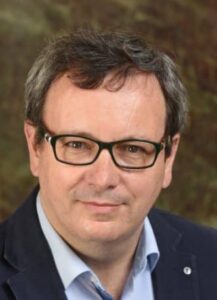
Franck Aggeri is a researcher specializing in sustainable innovation, ecological transition, and circular economic models. His work centers on the critical analysis of dominant paradigms, such as green growth and the linear economy, and explores alternatives such as the functional economy, simplicity, and extended producer responsibility. His research also examines environmental assessment tools, such as Life Cycle Assessment (LCA) and internal carbon pricing, and their ability to transform the practices of businesses and public actors. Through empirical studies, particularly in the automotive and retail sectors, he examines the conditions for deploying these tools and integrating them into collective strategies. His expertise also covers the dynamics of frugal innovation, regulatory frameworks, and governance mechanisms that promote a transition toward more sustainable models, with an emphasis on design processes and organizational transformations.
Publication(s)
-
2025
Dispositive formation, a framework for analyzing purpose-driven collective action - Conceptualization and methodology; [La mise en dispositif, un cadre d’analyse de l’action collective finalisée Conceptualisation et méthodologie] DOI : 10.1684/rfg.2025.107
-
2024
Anatomie des outils de gestion DOI : 10.1684/rfg.2024.5
-
2023
ECOLOGICAL TRANSFORMATION: pathways to frugal and responsible innovation
-
2023
Sufficiency-based circular business models: An established retailers’ perspective DOI : 10.1016/j.jclepro.2023.139431
-
2023
L'Innovation, mais pour quoi faire ? Essai sur un mythe économique, social et managérial DOI : 10.3166/rfg.311.95-102
-
2023
L'ÉCONOMIE CIRCULAIRE, UNE RENAISSANCE DURABLE ? DE LA CIRCULARITÉ FAIBLE À LA CIRCULARITÉ FORTE DOI : 10.3917/eh.110.0105
-
2023
PIVOTER VERS L’ÉCONOMIE CIRCULAIRE: TRAJECTOIRES ET ENJEUX DOI : 10.3917/eh.110.0121
-
2022
Implementing environmental labelling of food products in France DOI : 10.1007/s11367-022-02071-8
-
2022
L’économie circulaire comme utopie rationnelle: De la fiction à sa performation DOI : 10.3166/rfg304.43-64
-
2022
Appropriation of Environmental Management Tools by Companies: Explaining the Implementation Gap DOI : 10.4324/9781003251095-13
-
2021
L'entreprise comme acteur politique: Un cadre d'analyse DOI : 10.3917/eh.104.0019
-
2021
Setting internal price of environmental criteria, the good way to transform organization? DOI : 10.1007/978-3-030-77127-0_17
-
2021
Eco-modulation as a driver for eco-design: A dynamic view of the French collective EPR scheme DOI : 10.1016/j.jclepro.2020.125714
-
2021
Stimulating innovation and creating new markets – The potential of circular public procurement DOI : 10.1016/j.jclepro.2021.127303
-
2021
Hatchuel, Armand, and the Refoundation of Management Research: Design Theory and the Epistemology of Collective Action DOI : 10.1007/978-3-030-38324-4_80
-
2021
Industrial eco-parks as drivers of the circular economy
-
2021
Pathways to an innovative circular economy Introduction
-
2021
FROM ECODESIGN TO ECO-INNOVATION: FRAMING AND TRANSFORMATION OF BUSINESS PRACTICES; [DE L’ÉCO-CONCEPTION À L’ÉCO-INNOVATION: CADRAGES ET TRANSFORMATION DES PRATIQUES DES ENTREPRISES]
-
2021
From waste to urban mines: A historical perspective on the circular economy
-
2020
Commentaires DOI : 10.3166/rfg.2020.00447
-
2020
Vers une innovation responsable DOI : 10.3917/espri.2002.0040
-
2020
The emergence of carbon accounting: How instruments and dispositifs interact in new practice creation DOI : 10.1108/SAMPJ-09-2017-0111
-
2020
The Circular Economy: Historical Perspective and Contemporary Issues DOI : 10.1002/9781119777076.ch1
-
2019
Just for fun! How experimental spaces stimulate innovation in institutionalized fields DOI : 10.1177/0170840617736937
-
2019
Towards a sustainable material use in the automotive industry: Life Cycle Costing and socio-technical approach to material use; [Vers un usage durable des matériaux dans l’industrie automobile: Coût du Cycle de Vie et approche socio-technique de l’usage des matériaux] DOI : 10.1051/mattech/2019027
-
2018
Counting before acting? The performativity of carbon accounting called into question - Calculation acts and dispositifs in a big French construction company
-
2017
La puissance des grandes entreprises mondialisées à l'épreuve du judiciaire: De l'affaire Volkswagen au dieselgate DOI : 10.3166/rfg.2018.00208
-
2017
L'histoire méconnue du Marché Européen du carbone: Archéologie du secteur électrique DOI : 10.3917/eh.086.0054
-
2017
Le changement climatique et les entreprises: Enjeux, espaces d'action, régulations internationales DOI : 10.3917/eh.086.0006
-
2017
Débat les entreprises face au changement climatique DOI : 10.3917/eh.086.0140
-
2017
Armand hatchuel and the refoundation of management research: Design theory and the epistemology of collective action DOI : 10.1007/978-3-319-52878-6_80
-
2017
How can performativity contribute to management and organization researc?: Theoretical Perspectives and analytical framework
-
2016
Using eco-design tools as a cognitive support for creating the urban fabric DOI : 10.1201/9781315375090
-
2015
A genealogy of managerial thinking on CSR; [Une généalogie de la pensée managériale sur la RSE] DOI : 10.3166/RFG.180.131-157
-
2015
Managerial phenomena to the test of standard economic thinking. Another perspective on Jean Tirole’s works; [Les phénomènes gestionnaires à l'épreuve de la pensée économique standard: Une mise en perspective de travaux de Jean Tirole] DOI : 10.3166/RFG.250.65-85
-
2012
Cooperation for common goods production: A conceptual framework for the management of animal genetic resources; [Coopérer pour gérer des races locales: conception, rôles et usages des instruments scientifiques de sélection] DOI : 10.1051/nss/2012015
-
2012
Discipline and change: How technologies and organizational routines interact in new practice creation DOI : 10.1177/0170840611430589
-
2011
Sustainable development, a catalyst for innovation in SMEs?; [Le développement durable comme champ d'innovation: Scénarisations et scénographies de l'innovation collective] DOI : 10.3166/RFG.215.87-106
-
2011
Constructing the selectable animal. Breeding regimes and their transformations; [Construire l'animal sélectionnable: Des régimes de sélection et de leurs transformations] DOI : 10.3917/rac.013.0302
-
2009
Managing learning in the automotive industry -the innovation race for electric vehicles DOI : 10.1504/IJATM.2009.026394
-
2009
The active role of instruments in articulating knowing and knowledge: The case of animal qualification practices in breeding organisations DOI : 10.1108/09696470910974162
-
2007
Innovation and project development: An impossible equation? Lessons from an innovative automobile project development DOI : 10.1111/j.1467-9310.2007.00457.x
-
2007
Une généalogie de la pensée managériale sur la rse DOI : 10.3166/RFG.180.131-157
-
2005
The environment in search of theories; [L'environnement en quête de théories] DOI : 10.1051/nss:2005019
-
2003
Struggling with hospital management; [L'hôpital aux prises avec le management] DOI : 10.3406/sosan.2003.1592
-
2003
"Socioeconomic orders" and the polarization of research in agriculture: For a critique of the relations between science and society; [Ordres socio-économiques et polarisation de la recherche dans l'agriculture: Pour une critique des rapports science/société] DOI : 10.1016/S0038-0296(02)01308-0
-
1999
Environmental policies and innovation: A knowledge-based perspective on cooperative approaches DOI : 10.1016/S0048-7333(99)00015-3
Teaching
Testimonials
Testimonials from stakeholders on management, its tools, and business models_x000D_ • union representative_x000D_ • social and solidarity economy (SSE) stakeholder_x000D_ • environmental transition stakeholder_x000D_ • corporate law expert,_x000D_ • executive at a mission-driven company_x000D_ • reading of a universal registration document
Eco-design
ATHENS - MP20 - Circular Economy and Eco-Design: The Case of the "Urban Mine."
1 - European regulations on WEEE recycling_x000D_ 2 - New business models_x000D_ 3 - Implementing a circular economy_x000D_ 4 - Technologies for sorting plastics and recycling materials_x000D_ 5 - An operational overview based on a tour of a processing plant: FRICOM Bruyères_x000D_ 6 - Innovation in the strategic recycling of metals from WEEE*._x000D_ 7 - Some examples of eco-designed products that are easily recyclable or use secondary raw materials, presented through industrial case studies._x000D_ _x000D_ *Waste Electrical and Electronic Equipment
ATHENS - MP30 - Life Cycle of Energy Systems
The course alternates formal lectures on the various aspects of the life cycle—technical, economic, and ecological—with project-based sessions led by practitioners. In this way, the concepts introduced gradually are applied through case studies in workshops. The course therefore requires fairly intensive work concentrated over the course of one week. Feedback from previous years confirms this.
Design Engineering (DE) Option
National and International Context_x000D_ _x000D_ The program collaborates with leading international academic institutions in its field (Chalmers, Stanford, Carnegie Mellon, Imperial College, RWTH Aachen, Delft, etc.) and with France’s top design schools (Strate College, École Nationale Supérieure de Création Industrielle, ENSAD)._x000D_ Compared to the curricula of these leading international scientific institutions, the program allows students to combine courses in “Engineering Design,” “Project Management,” “Innovation Management,” and “Industrial Design” in a unique way. _x000D_ _x000D_ _x000D_ Career Prospects and Opportunities_x000D_ _x000D_ Graduates of this track go on to work in a wide variety of sectors (automotive, aerospace, high tech, luxury goods, services, innovation consulting, intellectual property consulting, healthcare, energy, retail, etc.), including the creative industries. With the growth of innovation departments in many large corporations, several students have quickly risen to high-level innovation leadership roles (Schneider, Thales, RATP, SNCF, Urgo, Airbus, etc.). _x000D_ _x000D_ _x000D_ Some representative elective topics covered in recent years:_x000D_ _x000D_ The elective project runs from October through June. Topics are carefully selected from a wide variety of sectors. They fall into two main categories:_x000D_ _x000D_ • Type 1: Students participate in the development of a range of new products or systems and implement new design approaches. Some examples:_x000D_ Seb / startup incubator: development of devices to combat mosquitoes and vector-borne diseases Soft@Home / Orange: leveraging data from home internet routers Urgo Médical: development of connected devices in healthcare Decathlon: the “freshness” of sportswear: methodology for exploring and structuring a new value proposition. _x000D_ • Type 2: Students participate in the development of design methods. Some examples:_x000D_ Airbus: methodology to support cross-sector technology transfer; innovation support tool for the “design-oriented factory” Thales Avionics: From Operational Need to Innovative Design: The Case of Helmet-Mounted Displays for Helicopter Pilots. SNCF / Zeebra (startup): Development of digital tools and services for coordinating innovation experts within the company. _x000D_ Throughout this work, students receive significant support from the faculty teaching the elective. It is a key educational experience during which students can consolidate their knowledge and gain initial professional experience on a topic that addresses real-world business challenges.