
What if African research changed the way we think about the transition?
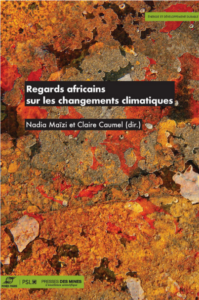
Although Africa accounts for only about 9% of global greenhouse gas emissions, it is among the regions most vulnerable to the consequences of global warming. Addressing issues ranging from climate justice to colonial legacies and local innovations, African Perspectives on Climate Change gives a voice to African researchers to rethink responses to climate change. Published by Presses des Mines under the direction of Nadia Maïzi, director of the Center for Applied Mathematics (CMA) and of The Transition Institute 1.5 (TTI.5), as well as Claire Caumel, a doctoral student and research engineer at the CMA, the book brings together contributions from the TTI.5 Forum 2024. Building on the discussions held during the “Africa Forward” summit and on the occasion of African Week at UNESCO and Africa Day, this book invites us to shift our perspective: no longer speaking about Africa, but thinking alongside it about the world’s climate futures.
Perspectives that are too often marginalized
When it comes to climate change, public debates on the international stage are dominated by the voices of Northern countries, which consequently shape our view of the problem. This results in inaccurate projections regarding regions that are underrepresented in these debates, even though it is essential to contextualize and refine the analysis. How do African societies envision their ecological transitions? What insights can be found there?
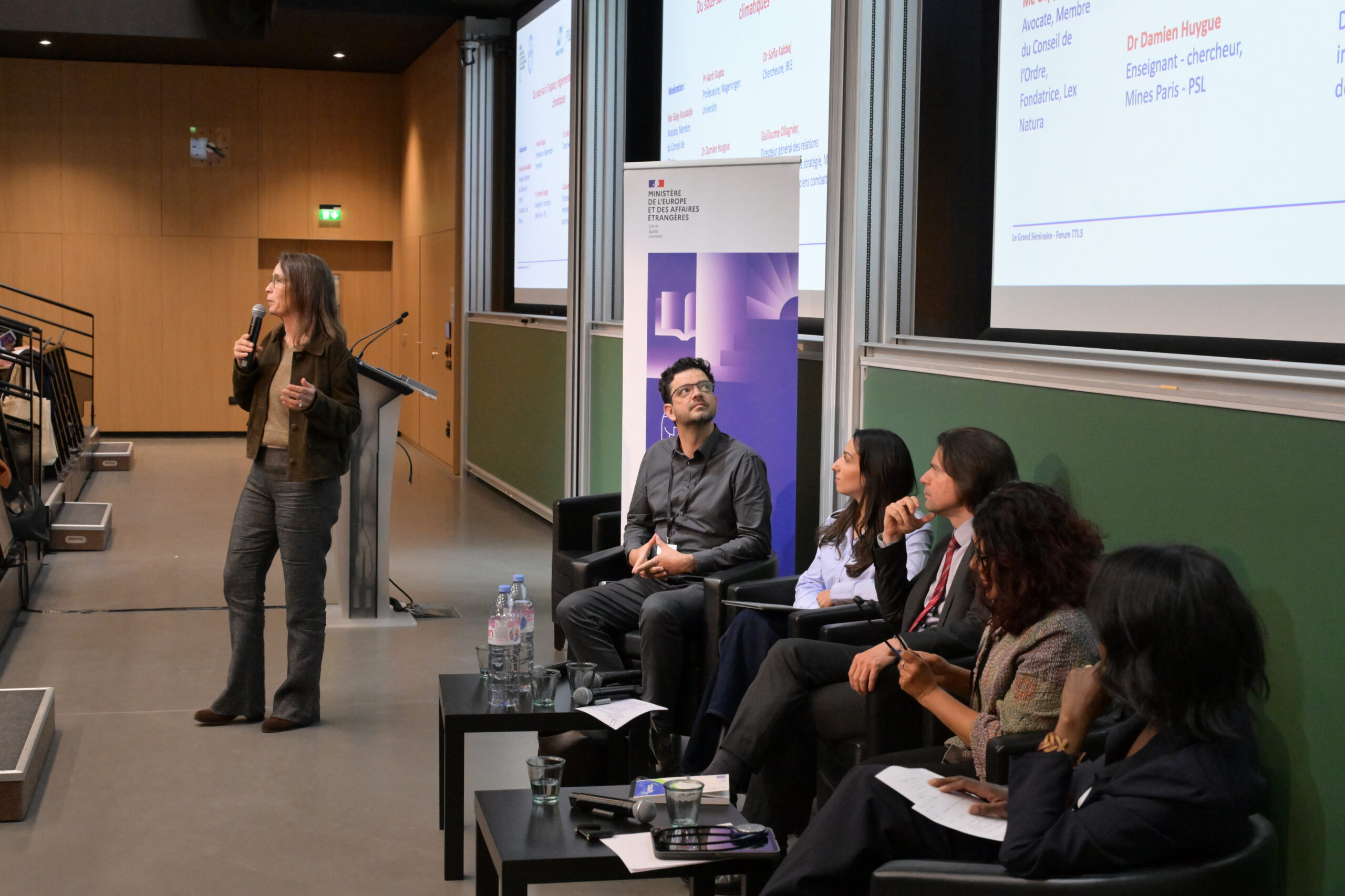
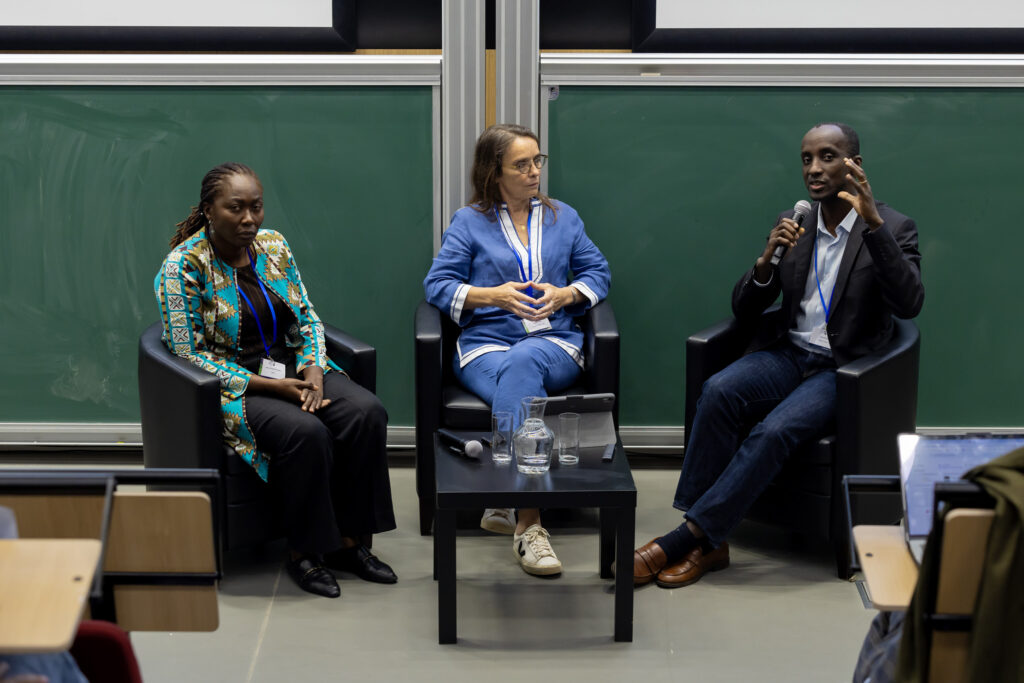
This is the question Nadia Maïzi and Claire Caumel seek to answer in this book. It brings together contributions from African researchers, economists, engineers, climate experts, and institutional actors who gathered at the TTI.5 2024 Forum with a shared goal: to put African perspectives back at the center of international climate discussions.
Published to mark Africa Day on May 25, which celebrates the history of African solidarity, this book reminds us that Africa is not merely a region vulnerable to global warming; it is also a space for generating knowledge, solutions, and worldviews that are essential for envisioning the future.
A Climate Injustice That Has Taken Center Stage
It is important to recall a paradox well-documented by the scientific community: Africa is one of the regions least responsible for global greenhouse gas emissions, yet one of the most exposed to their consequences. Per capita emissions there remain far lower than those in Northern countries, even as African populations are already bearing the brunt of droughts, rising temperatures, pressure on water resources, and food insecurity.
This situation is characteristic of “climate injustice,” but the book goes further: this injustice is not limited to a question of the distribution of emissions. It also concerns the way climate policies are designed and imposed on a global scale.
“Beyond these figures, the purpose of the discussions we sought to initiate is to reflect on a systemic and holistic transition, so that the solutions of some do not become the problems of others.”
Nadia Maïzi, Director of the CMA and TTI.5
International debates remain largely dominated by approaches developed in Northern countries, often based on European or North American historical trajectories. However, mechanically applying these models to the African continent can produce counterproductive effects.
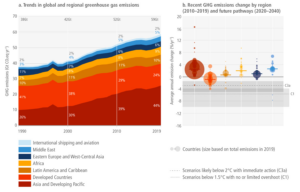
Illustration from the IPCC report
The Ecological Transition as a Historical and Political Legacy
By situating climate issues within a broad historical context, Nadia Maïzi addresses in her introduction the dominant narratives of the energy transition, which are far from neutral. The conventional history of the transition generally portrays the shift from wood to coal, and then from coal to oil, as an almost natural evolution of Western technological progress. But this interpretation obscures the relationships of economic and colonial domination that accompanied this industrialization, which she examines.
Thus, the development of the British coal industry in the 19th century cannot be separated from imperial expansion and the exploitation of peripheral territories. Certain regions of the world were thus made dependent on imported energy resources for the benefit of industrial powers.
This historical perspective helps explain why current debates surrounding the energy transition in Africa are deeply political. Energy infrastructure, development models, and global supply chains remain shaped by these legacies.
Furthermore, as Nadia Maïzi points out, certain environmental myths inherited from colonization persist. The example of the Maghreb is striking: for a long time, colonial authorities claimed that North Africa had been deforested by local pastoral practices. However, the historical research cited shows that this view was scientifically erroneous. Yet these narratives were used to justify land-use policies imposed on local populations, sometimes with significant social consequences.
Environmental policies are never purely technical. They are based on worldviews, power relations, and societal choices.
“Decarbonizing” is not enough
This political dimension is evident in the work of Fadhel Kaboub, President of the International Institute for Sustainable Development (IISD) and associate professor at Denison University. His assessment is radical: the global ecological transition risks reproducing the economic logic inherited from colonization if it is not accompanied by a structural transformation of North-South relations.
We cannot decarbonize a system that has not yet been decolonized structurally and economically.
Dr. Fadhel Kaboub, President of the IISD and Associate Professor at Denison University
For the economist, the African continent continues to occupy a subordinate position in the global economy: a supplier of raw materials, a reservoir of low-cost labor, and a market for technologies produced elsewhere.
Yet the global energy transition could reinforce this dependence. The growing demand for critical minerals such as cobalt, lithium, manganese, and platinum makes Africa a strategic territory for green industries. But who will control these resources? Where will the added value be created? Who will truly benefit from this new decarbonized economy?
Multiple African Transitions
There is no single African transition, but rather a plurality of trajectories depending on political, economic, and geographic contexts. Jesse Burton, a researcher at the University of Cape Town, illustrates this complexity well.
In South Africa, phasing out coal presents a colossal challenge. The country still generates more than 80% of its electricity from coal, and entire regions depend economically on this industry. The transition to renewable energy cannot therefore be viewed solely as a technological replacement. It involves major social issues: employment, training, social protection, regional inequalities, and access to electricity.
The country also faces contradictions: how can coal-fired power plants be shut down when massive power outages are already affecting the population? How can the transition be financed in a context of high unemployment and significant social inequalities?
Effective planning and monitoring will be essential to mitigate the social and economic risks associated with phasing out coal.
Jesse Burton, researcher at the University of Cape Town
Another reality often absent from Western debates is also worth highlighting: for many African countries, the climate emergency is compounded by other equally fundamental challenges such as economic development, access to energy, the fight against poverty, and political stability.
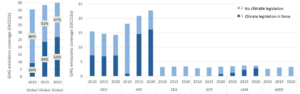
Illustration from the IPCC report
Green hydrogen, local innovations, and forgotten knowledge
Emerging energy strategies are taking shape across the continent. Rabah Sellami, Director of Hydrogen and Alternative Energies at the Algerian Commission for Renewable Energy and Energy Efficiency (CEREFE), highlights Algeria’s ambitions regarding green hydrogen.
Faced with rising natural gas consumption, the country is seeking to diversify its energy mix and become a major future player in renewable hydrogen production. Algeria is banking in particular on its solar potential, its existing gas infrastructure, and its proximity to Europe. But it would be a mistake to fall into a technocratic view of the transition.
On the contrary, local know-how and traditional climate adaptation practices are real drivers of change. For example, the ancient hydraulic systems of Timimoun are capable of organizing collective water management in extreme desert environments.
African Repair Cafés, which facilitate the repair and reuse of objects, also remain common practices. This serves as a reminder that certain forms of frugality or the circular economy have long existed in many African societies, long before they became central concepts in Western environmental policies.
Another Way of Thinking About the Future
African Perspectives on Climate Change offers a much broader reflection on how societies envision their future. Africa is portrayed not merely as a “testing ground” for global climate policies, but as an intellectual and political laboratory capable of inspiring alternative models of transition.
Even if it already is for Europe and the West, our way of thinking about the transition is not suited to other regions of the world, particularly Africa. We must not seek to apply a standardized vision and the resulting pathways.
Nadia Maïzi, Director of the CMA and TTI.5
In a context where debates on the ecological transition sometimes tend to standardize solutions, this book forcefully reminds us that there is no single model. Thinking about the transition from an African perspective means accepting a shift in perspective: recognizing the plurality of historical trajectories, rehabilitating long-marginalized knowledge, and questioning the power dynamics that still structure global climate policies.