A student project focused on raising awareness
As part of her engineering studies, Aurélie Reynaud embarked on an ambitious initiative alongside three students from AgroParisTech and the Institut Agro Dijon. Together, they founded the association Sous l’aile du pygargue, with a clear goal: to help raise awareness among the general public, particularly young people, about contemporary environmental issues.
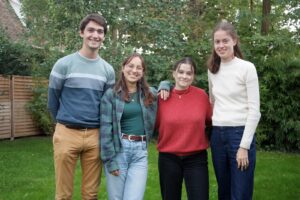
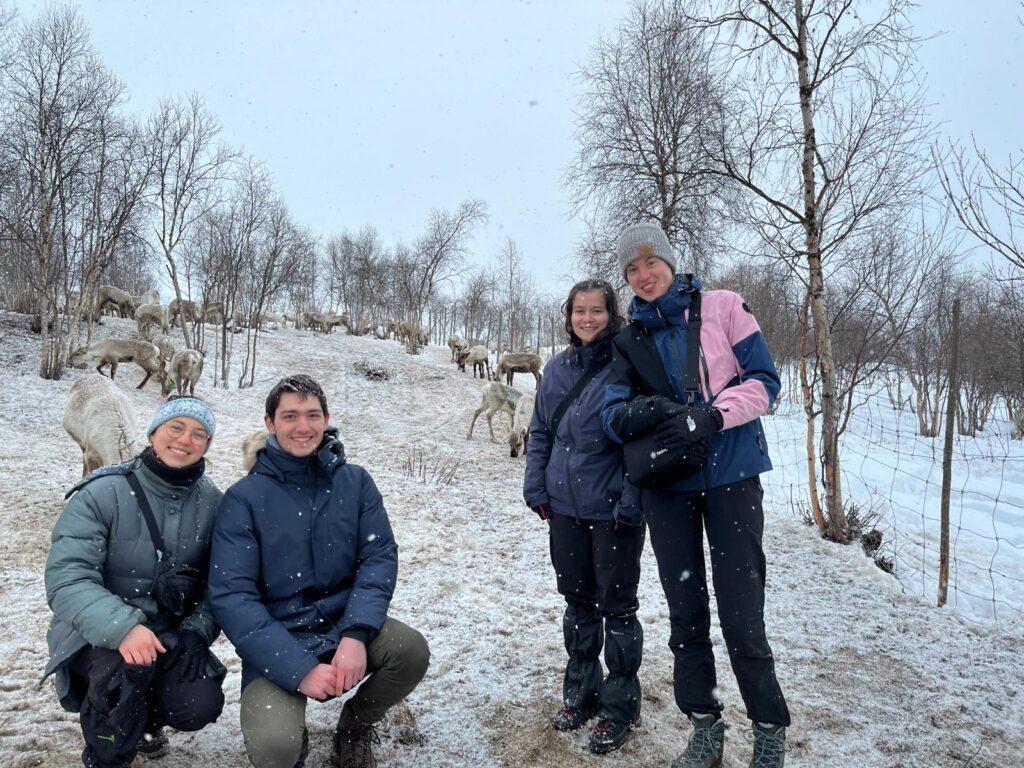
(From left to right) Natacha Berne (Institut Agro Dijon), Tanguy Labaeye (AgroParisTech), Alix Lesage (AgroParisTech), and Aurélie Reynaud (Mines Paris – PSL – AgroParisTech) – Credit: Sous l’aile du pygargue
Conceived in 2023, the project is based on a coherent three-part approach: a field expedition to meet with stakeholders involved in these issues, the production of a documentary for the general public, and the dissemination of educational content. The overall aim is to make scientific knowledge accessible, while showcasing concrete examples of natural environment management as a source of inspiration.
A four-month immersion in the heart of northern ecosystems
Between March and July 2024, the team traveled through three countries renowned for their environmental policies and conservation approaches: Norway, Sweden, and Finland. While there, the students conducted some forty interviews with a diverse range of stakeholders: researchers, public institutions, livestock farmers, fishermen, foresters, and associations.
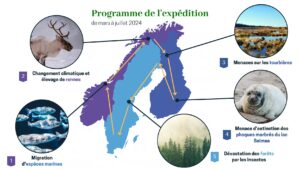
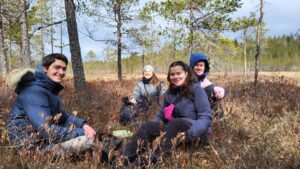
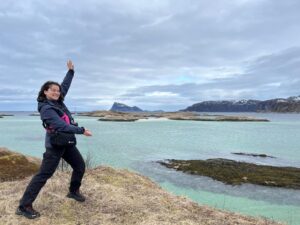
Throughout their journey, they traversed iconic landscapes (fjords, mountains, taiga, peatlands) that serve as prime observation sites for the environmental transformations currently underway. The people they met shared not only their observations and concerns regarding climate change but also the solutions and perspectives being considered locally.
This diversity of viewpoints is a central element of the approach: comparing scientific analyses with on-the-ground realities and professional practices to offer a comprehensive understanding of the stakeholders and issues under study.
Environmental issues analyzed at different scales
The research focuses on several key themes that illustrate the effects of climate change and human activities on various ecosystems:
- Marine environments, including the study of the impact of warming waters on fish populations and fishing activities;
- Agro-pastoral systems, through changes in reindeer herding in Lapland, which is directly affected by climate variations;
- Terrestrial ecosystems, notably the drainage of Swedish and Finnish peatlands—which are essential for carbon storage—as well as Swedish forests facing new biotic pressures (insects);
- Biodiversity, using the example of the Saimaa ringed seal, an endangered endemic species that has been the focus of conservation programs.
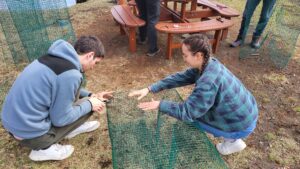
Construction in Savonlinna (Finland) of fish traps adapted for Saimaa ringed seals – Credit: Sous l’aile du pygargue
Beyond simply documenting these issues, the project highlights local responses: public policies, agricultural practices, and scientific or community initiatives.
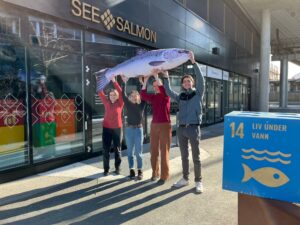
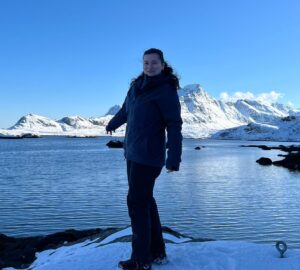
Meeting with See Salmon in Norway on the topic of marine species impacted by warming seas – Credit: Sous l’aile du pygargue
A documentary as a tool for knowledge transfer
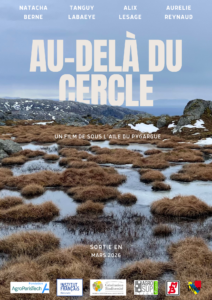
This work led to the creation of the documentary Beyond the Circle, entirely conceived and produced by the students. Streamed online, it aims to popularize science by making complex issues accessible to everyone without oversimplifying the challenges.
The film draws on testimonies gathered throughout the expedition and offers an accessible, relatable perspective on the issues, highlighting the role of collective action and potential avenues for addressing environmental challenges.
In parallel, the association develops short-form content organized by theme, distributed primarily to middle and high school students through a network of partner teachers. This educational dimension extends the fieldwork and anchors the project in a dynamic of knowledge transfer.
The White-tailed Eagle, a Symbol of Resilience
The choice of the association’s name refers to the white-tailed eagle, an iconic species of the northern regions. Long threatened by human activities (pollution, habitat destruction, hunting), this bird has seen its populations recover thanks to conservation policies implemented during the 20th century.
This journey illustrates a core idea of the project: while human activities can disrupt ecological balances, they can also contribute to their restoration, provided that scientific knowledge and appropriate actions are mobilized.
Three questions for Aurélie Reynaud