
Keywords
Awards & distinctions
- 2020 2020 FNEGE Award for Best Collective Work in Management Research: “Putting an End to New Public Management,” edited by Nicolas Matyjasik and Marcel Guenoun
- 2014 Syntec-FNEGE Academic Award for Management Research
Team
Gouvernance et normes de responsabilité pour les transitions
Biography
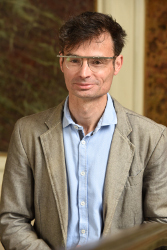
Philippe Lefebvre is a researcher whose work focuses on innovation, organizational management, and psychosocial dynamics in the workplace. His research explores, in particular, the mechanisms of coordination and intermediation in collaborative projects, especially within clusters and R&D initiatives. He analyzes innovation processes by distinguishing between different forms of intermediation and refining the concepts of cognitive proximity among actors, thereby contributing to a better understanding of the factors influencing the effectiveness of inter-organizational collaborations. At the same time, he is developing an approach centered on mental health in the workplace, proposing models to diagnose and address psychosocial issues through organizational restructuring, while integrating strategic, structural, and procedural dimensions. His work in the history of labor law also offers a critical perspective on the evolution of labor relations, highlighting the transformations in the legal statuses and norms governing work since the 19th century.
Publication(s)
-
2021
Comment comprendre la politisation contemporaine des entreprises ? DOI : 10.3917/eh.104.0198
-
2021
Penser l'entreprise comme acteur politique DOI : 10.3917/eh.104.0005
-
2021
La construction de l'entreprise comme acteur politique de 1945 ç nos jours DOI : 10.3917/eh.104.0055
-
2019
Globalisation, régulation et transformations des entreprises DOI : 10.3917/eh.094.0186
-
2019
Les entreprises et les temps de la globalisation DOI : 10.3917/eh.094.0005
-
2013
Organising deliberate innovation in knowledge clusters: From accidental brokering to purposeful brokering processes DOI : 10.1504/IJTM.2013.056899
-
2011
Psychosocial stakes in the workplace. From a theoretical framework to the design of the organization; [Les enjeux psychosociaux de la santé au travail: Des modèles d'analyse à l'action sur l'organisation] DOI : 10.3166/RFG.214.69-88
-
2009
Subordination et « révolutions » du travail et du droit du travail (1776-2010) DOI : 10.3917/eh.057.0045
-
2009
Redynamizing trades: A case study in the aeronautic industry DOI : 10.4324/9780203872833
-
2002
The role of design regimes in the coordination of competencies and the conditions for inter-firm cooperation DOI : 10.1504/IJATM.2002.000057
Teaching
Organizational Design and Dynamics
Student Engagement in the Course. The course draws on a set of case studies from recent action research projects involving significant organizational changes, as well as a few emblematic cases selected from the literature. Students play an active role. Each session is prepared by reading a dossier containing various documents: a case presentation (describing the initial situation, the intended goals, and possible scenarios without specifying the final outcome), texts offering analytical frameworks, and texts discussing the merits of new forms of organization. These documents are to be read by everyone: they form the common basis for discussion. For each session and each dossier, a group of students prepares the case: analysis of the problem, possible organizational scenarios, foreseeable risks, critical uncertainties, and strategies for action and support.