

Team
STIM
Biography
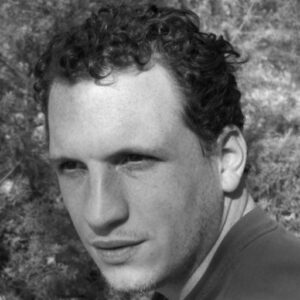
Nicolas Desassis is a researcher specializing in geostatistics and spatial modeling, with significant expertise in the development of advanced statistical methods for the analysis and simulation of geological and environmental phenomena. His work focuses in particular on the application of stochastic partial differential equations (SPDEs) for modeling Gaussian random fields, as well as on the integration of deep learning (generative neural networks, GANs) to improve uncertainty management in geological models. His research also addresses issues related to the non-stationarity of spatial data, the conditional simulation of geological reservoirs, and the optimization of kriging methods for complex datasets. His approach combines mathematical rigor with practical applications, particularly in the fields of hydrogeology, seismology, and the characterization of natural resources.
Publication(s)
-
2025
Kriging Alluvial Thicknesses in Valley Bottoms Using Nonstationary Geometric Anisotropies DOI : 10.1007/s11004-025-10200-w
-
2025
Two-Dimensional Stochastic Structural Geomodeling with Deep Generative Adversarial Networks DOI : 10.1007/s11004-025-10188-3
-
2024
A stable deep adversarial learning approach for geological facies generation DOI : 10.1016/j.cageo.2024.105638
-
2024
The SPDE approach for spatio-temporal datasets with advection and diffusion DOI : 10.1016/j.spasta.2024.100847
-
2024
Deep Generative Models for Stochastic Seismic Imaging and Uncertainty Quantification
-
2022
First Steps in the Application of Physics-Informed Neural Networks to Full Waveform Inversion
-
2022
Geostatistics for Large Datasets on Riemannian Manifolds: A Matrix-Free Approach DOI : 10.6339/22-JDS1075
-
2021
A general framework for SPDE-based stationary random fields DOI : 10.3150/20-BEJ1317
-
2020
Analysing Temporal Variability in Spatial Distributions Using Min–Max Autocorrelation Factors: Sardine Eggs in the Bay of Biscay DOI : 10.1007/s11004-019-09845-1
- 2020
-
2019
Technical note: Water table mapping accounting for river-aquifer connectivity and human pressure DOI : 10.5194/hess-23-4835-2019
-
2019
Efficient simulation of Gaussian Markov random fields by Chebyshev polynomial approximation DOI : 10.1016/j.spasta.2019.100359
-
2019
Inference of plurigaussian model parameters in SPDE framework DOI : 10.3997/2214-4609.201902171
-
2019
Plurigaussian simulations with the stochastic partial differential equation (SPDE) approach DOI : 10.3997/2214-4609.201902174
-
2019
Geostatistical filtering of noisy seismic data using Stochastic Partial Differential Equations (SPDE) DOI : 10.3997/2214-4609.201902264
-
2018
Fifty years of kriging DOI : 10.1007/978-3-319-78999-6_29
-
2017
Uncertainty estimation by probabilistic first arrival time tomography using Markov Chain Monte Carlo sampling DOI : 10.3997/2214-4609.201701694
-
2016
A generalized convolution model and estimation for non-stationary random functions DOI : 10.1016/j.spasta.2016.01.002
-
2015
Estimation of space deformation model for non-stationary random functions DOI : 10.1016/j.spasta.2015.05.001
-
2015
Propagation of the velocity model uncertainties to the seismic event location DOI : 10.1093/gji/ggu374
-
2014
An automated MCEM algorithm for hierarchical models with multivariate and multitype response variables DOI : 10.1080/03610926.2012.700372
-
2013
Microseismic monitoring - Consequences of velocity model uncertainties on event location uncertainties DOI : 10.3997/2214-4609.20131027
-
2013
Automatic Variogram Modeling by Iterative Least Squares: Univariate and Multivariate Cases DOI : 10.1007/s11004-012-9434-1
-
2011
Microseismic monitoring: Consequences of velocity model uncertainties on location uncertainties
-
2010
Aggregation patterns in hierarchy/proximity spaces DOI : 10.1016/j.ecocom.2009.03.012
-
2009
Inference with a contrast-based posterior distribution and application in spatial statistics DOI : 10.1016/j.stamet.2009.03.003
-
2008
Pollen flow in the wildservice tree, Sorbus torminalis (L.) Crantz. IV. Whole interindividual variance of male fecundity estimated jointly with the dispersal kernel DOI : 10.1111/j.1365-294X.2008.03809.x
-
2007
Model-based estimation of the link between the daily survival probability and a time-varying covariate, application to mosquitofish survival data DOI : 10.1016/j.mbs.2007.06.005
Teaching
Inverse Problems
Introduction: Origin of Inverse Problems. Study of Linear Problems: Conditioning, Least Squares, Singular Value Decomposition. Why There Is Noise in Measurements: The Example of the CCD Sensor. Regularization: Tikhonov Method, LASSO. Optimization Problems and Associated Algorithms. Problems governed by a differential equation: the adjoint method for gradient calculation Statistics: a Bayesian perspective. A posteriori estimation, least-squares estimator. Use of neural networks: the Plug-and-Play framework Each half-day will consist of one lecture session and one tutorial or lab session.
Geostatistics
General Introduction and Introduction to the R Software (www.r-project.org) Random Function Models, Inference, and Prediction (Kriging and Simulations) Spatiotemporal Modeling
PhD supervision
- 2025 Automatic generation of visual animations from musical sources BUGUET Romain
- 2025 Effective methods for spatio-temporal model estimation LORET Alexandre
- 2022 Stochastic two-dimensional structural geomodeling using deep generative adversarial networks GARAYT Charlie
- 2022 The impact of deep generative models for solving nonlinear inverse problems: application to seismic imaging XIE Yuke
- 2021 Deep Generative Models for Conditional Spatial Simulation BHAVSAR Ferdinand
- 2020 Machine learning and compliance with physical laws: application to seismic imaging DE SOUZA Léo
- 2020 Spatio-temporal prediction by stochastic partial differential equations CLAROTTO Lucia
- 2016 Generalized random fields defined on Riemannian manifolds: theory and practice PEREIRA Mike
- 2015 Stochastic partial differential equation-based development of geostatistical models CARRIZO VERGARA Ricardo