
Team
GEM - Genèse, Évolution des Microstructures
Biography
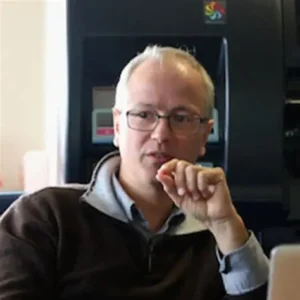
Christophe Colin is a researcher specializing in additive manufacturing processes and advanced materials, with significant expertise in metallurgy and microstructural characterization. His work focuses primarily on optimizing additive manufacturing processes such as *Binder Jetting*, laser powder bed fusion (L-PBF), and *Laser Metal Deposition* (LMD), by studying the underlying physical phenomena such as solidification, residual stresses, and laser-material interactions. His research also covers the analysis of microstructures generated by these processes, particularly for metal alloys (stainless steels, Inconel, titanium, aluminum) and ceramics, highlighting the relationships between manufacturing parameters, solidification conditions, and mechanical properties. Christophe Colin also contributes to the improvement of numerical models for simulating heat transfer and melting-solidification dynamics, as well as to the study of chemical segregation and crystallographic texturing mechanisms in manufactured parts.
Publication(s)
-
2025
Understanding drying dynamics in Binder Jetting: Development of a physical model for improved selection of drying parameters and better control of binder saturation DOI : 10.1016/j.addma.2025.104798
-
2024
Experimental evaluation of binder infiltration depth and axial overlap to control properties of green parts produced by Binder Jetting DOI : 10.1016/j.addma.2024.104231
-
2023
Microstructures of Metallic Materials from Additive Manufacturing DOI : 10.1002/9781394229055.ch1
-
2023
Residual Stress Gradient Built in X40CrMoVN16-2 Austenitic Steel Cube Manufactured by Laser Powder Bed Fusion DOI : 10.1007/s11661-023-07148-z
-
2022
Microstructure control of Additively manufactured IN718 By L-PBF process DOI : 10.1080/00325899.2022.2069540
-
2021
Effect of processing parameters during the laser beam melting of Inconel 738: Comparison between simulated and experimental melt pool shape DOI : 10.1016/j.jmatprotec.2020.116897
-
2021
Microstructure Control Of Additively Manufactured IN718 By L-PBF Process
-
2021
Experimental determination of solute redistribution behavior during solidification of additively manufactured 316L DOI : 10.1016/j.scriptamat.2020.113663
-
2020
Experimental and numerical analysis of gas/powder flow for different LMD nozzles DOI : 10.3390/met10050667
-
2020
Processing a non-weldable nickel-base superalloy by Selective Laser Melting: role of the shape and size of the melt pools on solidification cracking DOI : 10.1016/j.mtla.2020.100686
-
2019
Level-set modelling of Laser Beam Melting process applied onto ceramic materials - Comparison with experimental results DOI : 10.1088/1757-899X/529/1/012002
-
2019
Additive manufacturing of an oxide ceramic by laser beam melting—Comparison between finite element simulation and experimental results DOI : 10.1016/j.jmatprotec.2019.02.004
-
2018
Laser Beam Melting of Alumina: Effect of Absorber Additions DOI : 10.1007/s11837-017-2716-9
-
2017
Microstructural Investigations of the White and Deformed Layers Close to the Turned Surface of Ti-6Al-4V DOI : 10.1007/s11661-016-3844-5
-
2017
Finite element simulation of Ti-6Al-4V direct metal deposition
-
2016
Heat treatment optimization of a high nitrogen stainless steel manufactured by laser beam melting
-
2016
Quality and wear behavior of graded polycrystalline diamond compact cutters DOI : 10.1016/j.ijrmhm.2015.12.009
-
2016
Additive layer manufacturing of titanium matrix composites using the direct metal deposition laser process DOI : 10.1016/j.msea.2016.09.002
-
2016
The prospects for additive manufacturing of bulk TiAl alloy DOI : 10.1080/09603409.2016.1171510
-
2015
Wear mechanisms of WC-Co drill bit inserts against alumina counterface under dry friction: Part 2 - Graded WC-Co inserts DOI : 10.1016/j.ijrmhm.2014.07.024
-
2013
Direct metal deposition of titanium matrix composites: Optimization of the process and microstructural analysis DOI : 10.2351/1.5062906
-
2012
Microstructural and mechanical approaches of the selective laser melting process applied to a nickel-base superalloy DOI : 10.1016/j.msea.2011.11.092
-
2011
As-fabricated and heat-treated microstructures of the Ti-6Al-4V alloy processed by selective laser melting DOI : 10.1007/s11661-011-0731-y
-
2010
Direct fabrication of a TI-47AL-2CR-2NB alloy by direct metal deposition DOI : 10.2351/1.5062044
Teaching
Metal 3D Printing
The curriculum for the course days is as follows: General introduction to additive manufacturing processes; overview of the phenomena involved in LBM and ColdSpray processes; thermodynamics; phase transformation during rapid solidification; associated microstructural evolution; mechanical behavior and properties of parts produced by additive manufacturing processes; post-processing; defect mitigation. LBM and ColdSpray fabrication techniques, construction steps, overview of experimental characterization methodologies related to additive manufacturing processes and defect analysis, measurement of residual stresses using X-ray diffraction (XRD). Numerical modeling of additive manufacturing processes; objectives of simulation tool development; physical phenomena monitored; resolution scales; prediction of final properties. Presentation (by an industry R&D engineer) on the use of additive manufacturing processes in an industrial context, the objectives pursued, and the expected results. In addition to these lectures, a project component will also be included in the course, lasting 6 hours, at the Materials Center (CMAT, Evry), requiring students to travel to this laboratory for two full days. During these two days, on the first morning, students will attend the lecture on fabrication and characterization techniques associated with additive processes (Session V—3 hours in the morning on Day 1). The subsequent training period (3 hours in the afternoon on Day 1 + 3 hours in the morning on Day 2) will be dedicated to carrying out the supervised projects. Independent work (3 hours in the afternoon on Day 2) may be conducted at the CMAT to allow for the review and analysis of the results, in preparation for the evaluation session. Project selections will be made no later than during the first lecture session.
Materials Science and Engineering (MSE) track
The Second Year: Discover, Observe, Experiment The two-week elective period is devoted to a mini-project in pairs, in one of the School’s two laboratories (the Materials Center in Evry or the Materials Processing Center in Sophia-Antipolis, with more than 70 faculty members supporting the elective). The topics revolve around a specific industrial project. The focus is on discovering physical, chemical, and mechanical phenomena—and on quantifying them. A detailed report and an oral presentation allow students not only to develop communication skills but, above all, to learn from one another. Some topics include: investigation of a railway brake failure, investigation of non-conformity in metal joints, welding (instrumented testing and numerical modeling), study of foam formation mechanisms for automotive seats, aerogel formation for super-insulation or biomedical applications... The 3rd Year: Understanding, Making Choices, Optimizing The two highlights of the third year are the elective month (starting at the beginning of the academic year) and the personal project, which takes up the rest of the time allocated to the elective. The elective month: “Materials and Engineers” in a specific industrial sector. The elective month is devoted to materials engineering and focuses on a specific industrial sector (2004 and 2005: the automotive industry; 2006 and 2007: aerospace; 2008 and 2009: construction; 2010 and 2011: energy; 2012 and 2013: healthcare; 2014 and 2015: aerospace). The wide range of activities fosters hands-on learning and helps build a cohesive group, enriched by the diverse backgrounds and personalities of both students and teachers: industrial tours: the development, processing, and use of materials in the chosen field; a few lectures given by industry experts; “Industrial Discovery” mini-projects: 5 days in groups of 2 to 4 students at an industrial site, supervised by on-site engineers, working on an engineering problem; a written report (for internal company use) and an oral presentation allow the different groups to share the knowledge and experiences gained in the field; a few “classes”—which are actually sessions to prepare for the visits and “debriefing” sessions in the form of Q&A sessions with faculty regarding the lectures and industrial visits. The elective project: applying methods and knowledge to solve an industrial problem. These individual elective projects form the backbone of the third year. Defined as early as October, in accordance with each student’s preferences, they focus on a clearly identified industrial problem. Lasting at least 4 months (a total of 8 months for Polytech students in the “specialized track”), they take place at an industrial site under dual supervision: engineers from the company on one hand, and a faculty member from one of the School’s two “Materials” laboratories on the other. The emphasis is on understanding the underlying phenomena and solving the practical problem at hand. Some representative elective topics covered in recent years: selection of a material for a Formula 1 racing car component (Renault, Viry-Châtillon); modeling of thin films deposited on glass (Saint-Gobain, Thourotte); selection and sizing of a shock-absorbing foam (SNCF, Le Mans); feasibility of coating pistons via plasma spraying (Toyota, Evry—Belgium – Japan); an innovative steel continuous casting process (Vallourec, Aulnoye-Aymeries / Brazil); optimization of the fiber-reinforced polymer injection molding process (Bosch, Germany); analysis of medieval gilded enameled glass (Laboratoire des Musées de France, Paris); prediction of fracture properties of steels for gas pipelines (ArcelorMittal, Ghent, Belgium). acceptance criteria for forging defects (PSA, La Garenne-Colombes); painting defects on automotive plastic body parts (Mécaplast, Monaco) welding of superalloy parts for space launch vehicles (Snecma, Vernon) improvement of non-destructive testing of power plant components (EDF, Saint-Denis) decontamination of concrete used in civil engineering for nuclear power plants (Bouygues, St-Quentin / CEA, Marcoule) Improving the manufacturing of composite parts for the aerospace industry (Dassault, Argenteuil) Material selection for endoscopic probes with integrated microscopes (Mauna Kea Technologies, Paris) Key features of the track: Hands-on experience! The track includes very few courses in the traditional sense: knowledge and skills are acquired through courses offered to all students (core curriculum, specialized courses) and, above all, by sharing each student’s real-world experiences in the field. It’s about experimenting on your own and as part of a team (with dual mentoring by an industrial engineer and a faculty researcher). Intensive group work The diversity and number of students in the track allow everyone to learn from and with one another. This provides effective training in self-directed learning methods that engineers will use throughout their careers to remain key players in their fields of expertise and take control of their professional development. Interdisciplinary Approach The field of materials lies at the intersection of disciplines such as physics, chemistry, mechanics, applied mathematics, and numerical modeling. Elective projects often include both an experimental component and a modeling component, providing a well-rounded education in materials science. The track covers ceramics, “plastics,” metals, and alloys, as well as ancient artifacts (archaeology) and the latest innovations (“biological” steels, bio-based and non-bio-based aerogels, etc.).
PhD supervision
- 2024 Experimental study of the influence of laser cladding process parameters on the metallurgical characteristics of brake disc tracks LEQUIN-SOUCHON Justine
- 2022 The development of the L-PBF process with preheating for the fabrication of unweldable nickel-based superalloys. ASSAINTE Matthieu
- 2021 Mastery of additive manufacturing of SS316L parts by Metal Binder Jetting (MBJ) for large-scale applications CHENY Thomas
- 2021 Hot cracking and cold cracking mechanisms in nickel-based superalloys produced by laser powder bed fusion (L-PBF): effect of process-induced microstructure BORGES MENDONCA Elisa
- 2021 Inconel 718 parts manufacturing by Metal Binder Jetting: from printing to sintering through debinding to ensure material integrity and part dimensions SCHNELL Agnès
- 2019 Understanding and optimization of the early stages up to the debinding step of the Metal Binder Jetting process for the indirect additive manufacturing of IN718 aeronautical parts SANGOUARD Benjamin
- 2019 Mastery of the microstructure of a nickel-based superalloy (Inconel 718) produced by the L-PBF process LACOSTE Luc
- 2019 Al2O3-ZrO2 and Al2O3-ZrO2-YAG eutectic ceramics by laser powder bed fusion (L-PBF): From self-absorbing powder design to microstructural stability of 3D parts MARTINEZ DOSAL Jorge
- 2017 In-situ detection by infrared thermography of manufacturing defects in Laser-Powder Bed Fusion (L-PBF) for closed-loop process control: applications to TA6V and 15-5PH alloys FOSSE Bastien
- 2017 Selective laser melting of Inconel 738 and René 77 parts: towards controlling cracking during the process for high γ' fraction superalloys GRANGE David
- 2015 Study of laser-matter interaction for the fabrication of high added-value parts in semi-transparent oxide ceramics by selective laser melting on powder bed MONIZ DA SILVA SANCHO Liliana