AI Is Changing the Way Knowledge Is Generated
AI is transforming the work of researchers far beyond the automation of certain tasks. For Vincent Mallet, a researcher at the Center for Bioinformatics (CBIO), large language models are gradually becoming true research facilitators, particularly in interdisciplinary fields where biologists, physicians, mathematicians, and computer scientists collaborate.
By enabling researchers to quickly explore disciplines outside their area of expertise or to generate new hypotheses, these tools accelerate research. But they do not replace the scientific method. AI models excel at identifying patterns in vast amounts of data and suggesting novel avenues of inquiry, but these must always be tested through experimentation.
This development also leads researchers to question the very nature of scientific discovery. To what extent can we trust models capable of making accurate predictions without necessarily explaining the underlying mechanisms? AI thus appears less as a substitute for the researcher than as a new tool for generating knowledge, whose results remain subject to scientific validation.
Physics
An Indispensable Ally of AI
This need for validation becomes even more critical when AI moves from the laboratory into industry. According to David Ryckelynck, a researcher at the Center for Materials Processing (CEMEF), data alone is not enough to build reliable models. Industrial processes are already described by decades of scientific knowledge and proven physical models. The challenge, therefore, lies in combining this knowledge with machine learning methods rather than replacing it.
One approach involves generating synthetic data from physical simulations to train models on rare or critical situations that cannot be observed frequently enough in industrial data. This hybrid approach makes it possible to develop more robust artificial intelligence systems, capable of better anticipating exceptional events while preserving the scientific expertise of engineers.
This same approach guides the work of Pierre Kerfriden, a researcher at the Center for Materials (CMAT). His research on digital twins combines mechanical simulations, neural networks, and probabilistic methods to better represent the behavior of complex materials. The goal is not to completely reconstruct physical models using AI, but to use it where traditional approaches reach their limits.
These hybrid approaches illustrate a major evolution in AI: rather than pitting physical models against machine learning, they highlight the complementary nature of the two.
Understanding AI Decisions
An Industrial Challenge
However, producing an accurate prediction is not enough. It is also necessary to be able to explain how it was obtained. This is precisely the focus of the research conducted by Étienne Decencière, director of the Center for Statistics and Images (STIM). In many industrial sectors, from aerospace to nuclear energy, an automated decision must be justifiable, documented, and traceable—sometimes even several years after it was made.
Researchers are therefore developing various approaches to “explainable AI.” Some assess the degree of uncertainty associated with a prediction; others make it possible to identify the regions of an image or the variables that led the model to its decision. Even more ambitious, certain methods seek to directly integrate physical or geometric knowledge into the architecture of the models so that their reasoning is more easily interpretable.
Beyond performance, it is therefore the ability to understand AI’s decisions that now determines its adoption in the most sensitive industrial applications.
Sovereignty extends far beyond the models
For Corinne Ancourt, director of the Computer Science Research Center (CRI), discussing sovereign AI is not merely about developing European models. The entire technology chain is involved: data, data centers, electronic components, software, and human expertise. The current dependence on certain foreign infrastructures poses a major challenge for both research and industry.
As models become more powerful, their computational demands increase significantly. This evolution is gradually transforming computing performance issues into economic, energy, and strategic challenges. Developing more efficient AI is therefore no longer just about improving algorithms: it’s also about optimizing the entire infrastructure that makes them possible.
AI Systems Operating in the Real World
While some systems assist researchers or engineers, others make decisions directly in the physical world. This is the field of Fabien Moutarde, director of the Robotics Center (CAOR), whose work focuses on collaborative robots and autonomous vehicles. Unlike conversational agents, these systems operate in real time, without prior human validation. They must perceive their environment, plan their actions, and react instantly to often unpredictable situations.
This autonomy poses considerable scientific challenges. How can we ensure the safety of an autonomous vehicle when faced with extremely rare situations? How can we verify a robot’s behavior before deployment? To address this, researchers are developing new simulation methods capable of generating critical scenarios. Furthermore, foundational models such as Vision Language Models (VLM) and Vision Language Action models (VLA)—currently being tested in these fields by the scientific community—are yielding very promising results and have the advantage of being able to explain the reasons behind their decisions (for example, “the vehicle will change lanes to pass a stopped vehicle ahead”).
The goal remains the same: to build artificial intelligence capable of assisting humans without replacing them, by taking on the most repetitive, tedious, or dangerous tasks.
Smarter… and More Resilient Power Grids
Forecasting renewable energy production, estimating electricity consumption, and assisting with grid management: these applications are now deployed daily by grid operators. Georges Kariniotakis, head of the Renewable Energy and Smart Energy Systems (ERSEI) group at the PERSEE Center, noted that AI is already widely used in energy systems.
But the rise of renewable energy and changing consumption patterns are making these systems increasingly complex. A forecasting error can now ripple through the entire decision-making chain and destabilize the balance of the power grid.
To address these challenges, researchers are developing a new generation of models that incorporate—from the very outset—requirements for robustness, resilience, cybersecurity, energy efficiency, and compliance with future European regulations on artificial intelligence.
The goal of building trustworthy AI
AI is not an isolated discipline, but a set of methods that now permeate all engineering sciences. From bioinformatics to robotics, from materials to energy systems, researchers at Mines Paris – PSL share the conviction that AI performance relies as much on data as on scientific knowledge, an understanding of physical phenomena, and human expertise.
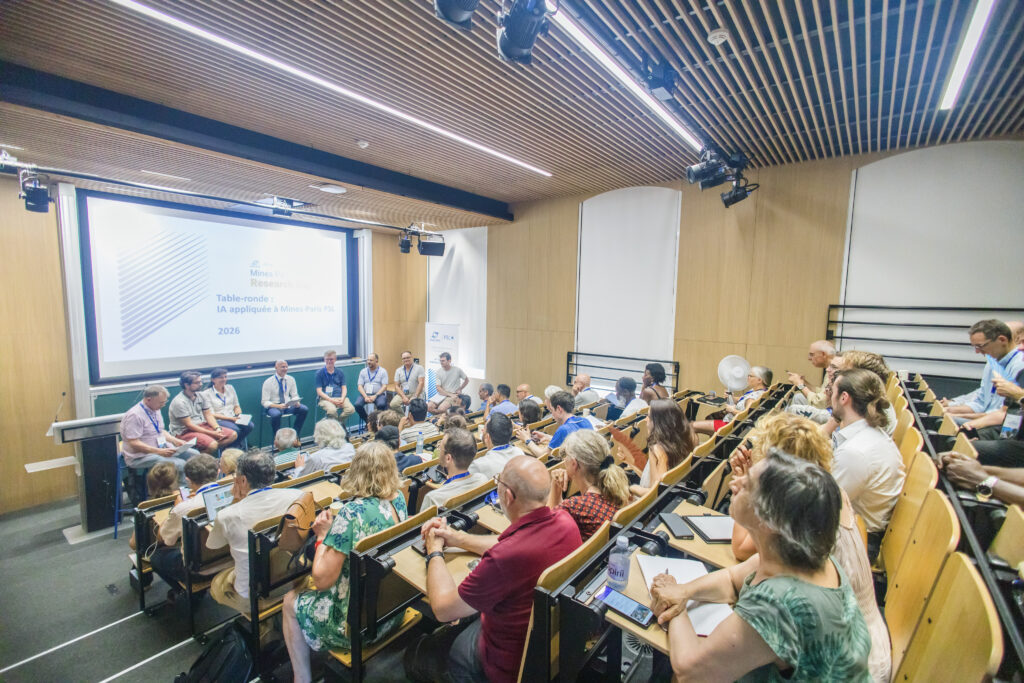
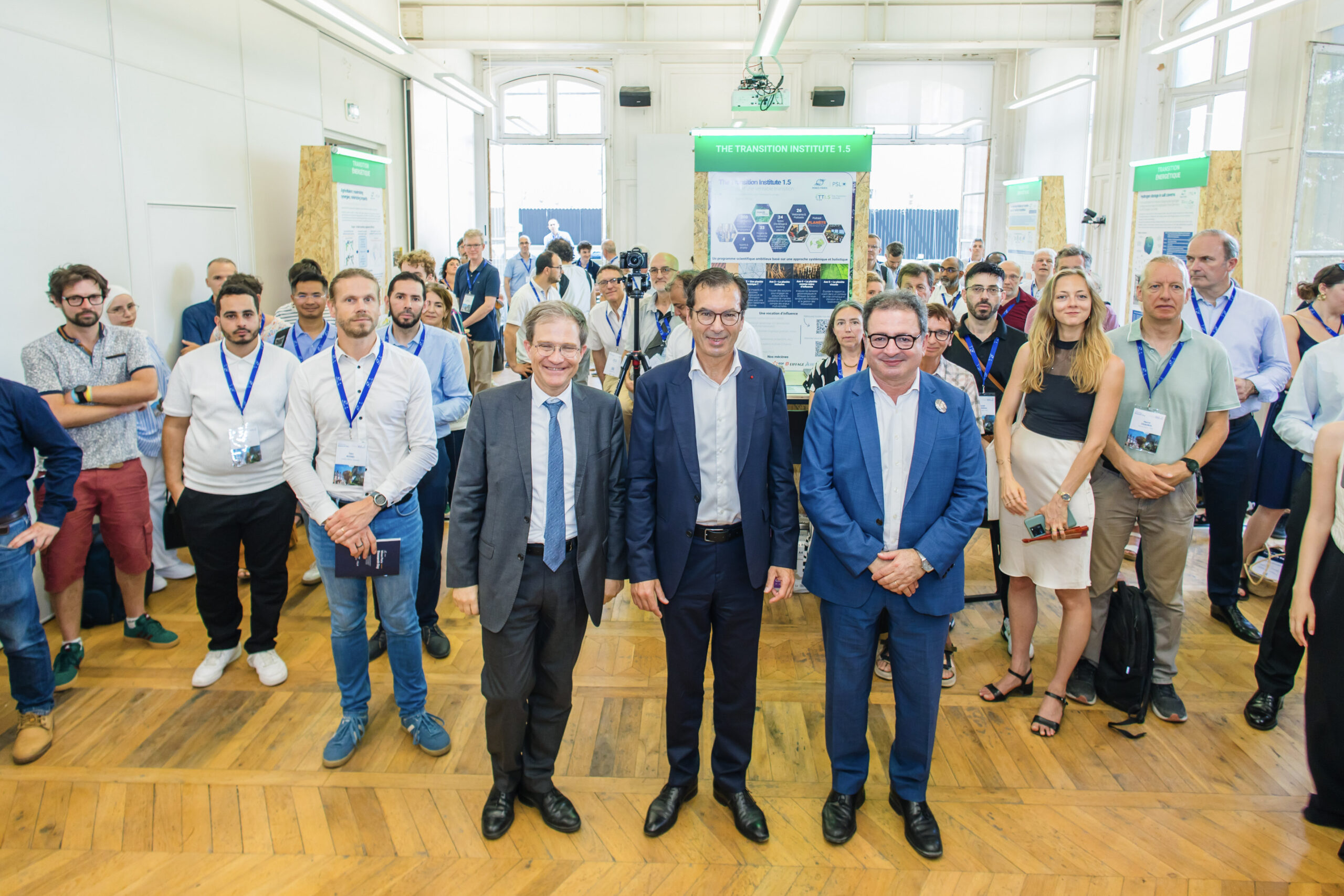
This cross-disciplinary approach fully embodies the ambition of Mines Paris Research Day, the School’s annual event dedicated to collaborative research. By bringing together researchers, industry leaders, entrepreneurs, and institutional partners to address major scientific and technological challenges, the event highlights the collaborations that transform research advances into concrete solutions for society. The future of AI lies not only in ever-more-powerful models, but in their ability to be robust, explainable, resource-efficient, and autonomous. An AI designed to support major industrial, environmental, and digital transitions without ever straying from the scientific rigor that underpins research.