

Center for Systems and Control (CAS)
The Center for Automation and Systems (CAS) at Mines Paris – PSL conducts research in control theory and the control of dynamic systems, at the intersection of applied mathematics, engineering, and cutting-edge technologies. Its work focuses in particular on nonlinear control theory, optimization, quantum systems, and complex systems, with applications in energy, robotics, aerospace, and quantum computing.
Combining fundamental research with industrial partnerships, the CAS collaborates with numerous academic and industrial partners to develop innovative solutions for dynamic systems and the technologies of the future.

The Automatic Control and Systems Center
Research and expertise in the control of dynamic systems
The Center for Systems and Control (CAS) at Mines Paris – PSL specializes in control theory, a field of applied mathematics focused on the control of dynamic systems.
CAS is one of the 18 research centers at Mines Paris – PSL and is part of the Mathematics & Systems Department, one of the five departments defined according to the School’s major themes and future challenges. As part of a dual-impact research approach, CAS combines academic research with industrial collaborations.
Within the PSL University, renowned for its international outlook, the School provides the CAS with an ideal setting to combine theoretical instruction and practical applications.
Short-cycle research with stakeholders from other fields—whether scientific (quantum physics, microfluidics, optimization) or industrial (process engineering, robotics, electrical engineering, aerospace)—contributes to the advancement of control theory, from its theoretical foundations to the details of its implementation in real-time loops.
The CAS has made major advances, such as:
- The flatness theory
- The invariant observer theory
- Control algorithms deployed in industrial devices (e.g., Fluigent’s FlowEZ™, Fareco’s Pryo).
+10
industrial partners in direct research
11
research staff
+15
doctoral students
1M€/year
in research contracts
Doctoral Level – Courses
Specialization “Mathematics and Control”
Doctoral School of Systems, Materials, Mechanics, and Energy Engineering (ISMME) at PSL University
Master’s Level – Courses
- Signal Processing
- Control Theory
- Continuous Optimization
- Differential Equations
- Quantum Computing
Research Areas
Research conducted at the CAS aims to advance the theory of (automatic) control. The center publishes in leading journals and at major conferences and works closely with industrial and experimental challenges. Researchers gather input on the needs of industry stakeholders, and contracts managed by ARMINES and the School generate new scientific questions. The CAS’s contributions take the form of algorithms executed in real time on industrial or experimental systems developed with its partners. The CAS has contributed to major advances in a variety of sectors, including the oil industry, the automotive industry, electrical engineering, mechatronics, and quantum systems.
Nonlinear Automation
The CAS develops methods for synthesizing open-loop and closed-loop control laws, state observers, and system identification for nonlinear dynamic systems. Flatness and invariant observers—also known as “KKL” observers—are examples of this. This field also encompasses the study of industrial systems in which the management of nonlinearities is critical and non-standard: slugging, stick-slip, magnetic saturation in electric machines, etc. More recently, the CAS has been focusing on non-regular and hybrid systems, employing a variety of approaches ranging from the extension of classical control theory methods to non-smooth optimization and machine learning.
Infinite-Dimensional Systems
The CAS focuses on the control and estimation of systems with potentially variable delays, as well as systems of partial differential equations (PDEs). This includes, for example, the theory of differential flatness, the development of backstepping for control-dependent delay systems, and boundary control of hyperbolic PDEs. This research has applications in a wide range of fields, from drilling to the control of internal combustion engines.
Decision Mathematics
The CAS has expertise in the optimization of large-scale systems and optimal control. Its theoretical work focuses on the management of state and control constraints, delays, and stochastic phenomena in optimal control. In the field of numerical optimization, the center exploits the underlying structure of large-scale problems—for example, in the context of optimal power flow—to develop state-of-the-art approaches tailored to hardware architectures. The CAS’s research also focuses on the use of tensor networks to solve very large-scale optimization problems, particularly in fundamental physics, such as the quantum n-body problem.
Quantum Systems
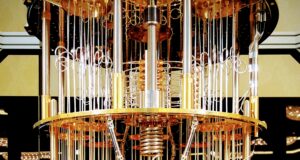
As part of the Quantic team, CAS is a pioneer in the development of cat qubits and their use in the construction of a quantum computer. This goal, pursued in collaboration with the startup Alice & Bob, shapes a significant portion of the center’s research in this field: preparation of quantum states, error-correcting codes, perturbative methods, and numerical schemes for solving the Lindblad equation, among others. At the same time, the CAS is exploring the potential of new qubits, such as GKP qubits, which make it possible to eliminate the need for error-correcting codes to varying degrees through decoherence engineering based on Josephson circuits controlled by microwave drives.
Major Contributions
More than 40 scientific publications per year
Lifetime of cat qubits
ENS-INRIA-Mines Quantic team, “Quantum control of a cat qubit with bit-flip reversal times exceeding ten seconds”.
This publication marks a major breakthrough in quantum computing by demonstrating the execution of quantum operations on a highly stable qubit. The breakthrough lies in the bit-flip time measured on this qubit, which exceeds 10 seconds. This innovation paves the way for more powerful and stable quantum computations, with applications ranging from cryptography to molecular modeling and AI.
Flatness Theory
Fliess, M., Lévine, J., Martin, P., & Rouchon, P. (1995). Flatness and defects of nonlinear systems: introductory theory and examples. International Journal of Control, 61(6), 1327–1361.
This article establishes the theory of platitude, which defines dynamic systems whose trajectories can be parameterized by an output and its derivatives. This property simplifies the synthesis of control laws, particularly trajectory planning and tracking. Developed for nonlinear dynamic systems, the approach will be extended to other frameworks, including boundary control of partial differential equations.
ANAMEL, software for refinery optimization
Chebre, M., Creff, Y., & Petit, N. (2010). Feedback control and optimization for the production of commercial fuels by blending. Journal of Process Control, 20(4), 441-451.
This publication describes how ANAMEL works—software that optimizes the blending of crude oil in refineries to produce a product with defined properties. This problem, which is poorly instrumented and has multiple inputs, is solved using an adaptive optimal control approach. The software is deployed in numerous TOTAL refineries.
Frameworks for Thinking About the Observation of Nonlinear Systems
Bernard, P. (2019). Observer Design for Nonlinear Systems (Vol. 479). Springer.
This book provides a framework that describes a significant portion of the state of the art in state observer synthesis for nonlinear dynamic systems. By defining an observer as the combination of an invertible change of variables and appropriate (specifically, stable) dynamics, it explores a set of structures from which the major families of observers—such as high-gain and Luenberger observers—are derived.
A scientific community
Recognized at the highest level
CAS draws on a scientific community recognized for the excellence of its work in control theory, optimization, and quantum technologies, actively contributing to the academic reputation of Mines Paris – PSL in France and internationally.
Florent Di Meglio
Acting Director – Faculty Member and Researcher at CAS, Mines Paris – PSL
Delphine Bresch-Pietri
Research Professor at CAS, Mines Paris – PSL
Pierre Rouchon
Research Professor at CAS, Mines Paris – PSL
Laurent Praly
Professor Emeritus and Researcher at CAS, Mines Paris – PSL
Jean Lévine (émérite)
Professor Emeritus and Researcher at CAS, Mines Paris – PSL
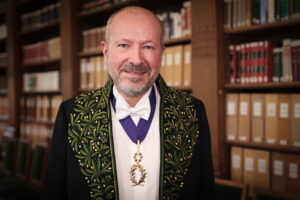
Pierre Rouchon, Elected to the French Academy of Sciences in 2025
Pierre Rouchon was elected to the French Academy of Sciences in 2025 for his major contributions to control theory and quantum engineering. A specialist in control theory and quantum systems, he has notably developed real-time control methods applied to quantum systems, opening up new possibilities for information technology and quantum computing.
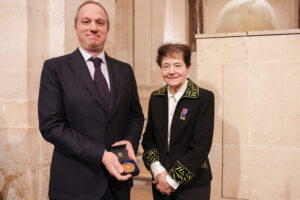
Nicolas Petit, Winner of the 2024 Michel Monpetit Prize from the Academy of Sciences
Nicolas Petit received the 2024 Michel Monpetit Prize from the French Academy of Sciences for his contributions to control theory and its industrial applications. His work focuses in particular on the development of filtering algorithms and control methods applied to complex systems, with concrete impacts in robotics, mobility, and advanced mechanical systems
A Network of Collaborations Driving Innovation
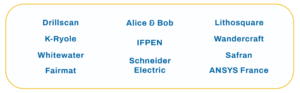
The CAS draws on a strong and diverse network of partners from academia, industry, and government. These collaborations enrich its research, open up new horizons, and strengthen the link between science and practical applications.
Funded Research
Funded Collaborative Flagship Projects
HORIZON-JU-CLEANH2-2025 MARINER
HORIZON-JU-CLEANH2-2025 MARINER Partnership Innovation Project – Validation and Demonstration of a Reliable, Efficient, Scalable, and Low-Cost PEM Fuel Cell System
The program designs and assembles a 1 MW proton exchange membrane fuel cell. This objective must be accompanied by a roadmap toward a 10 MW fuel cell. These enormous power levels are necessary for ship propulsion. The CAS is involved in designing the control algorithms and estimating the fuel cell’s health status.
EUROPEAN RESEARCH COUNCIL (ERC) GRANTS
Quantum Feedback Engineering
Q-Feedback Project led by Pierre Rouchon
The project is developing control methods to protect essential resources in quantum systems—such as coherence and entanglement—from external disturbances. The goal is to make qubits more robust, thereby advancing quantum technologies for computing, communications, and sensors.
ECLIPSE
Project led by Zaki Leghtas, funded by an ERC Starting Grant
The project aims to make qubits more reliable by using superconducting circuits and “Schrödinger’s cat” states to protect them from disturbances, with the goal of creating more powerful and secure quantum computers.
QFT.zip
Project led by Antoine Tilloy
The project uses tensor networks to model complex quantum systems by compressing essential information. It aims to improve simulations in quantum physics, with potential applications in quantum chemistry and quantum computing.
Support
For innovative projects
Mines Paris – PSL draws on the expertise of its research teams and specialists to establish collaborations:
➡️ Accelerated development of products and services
➡️ Exploring new markets
➡️ Accès à des financements et subventions pour des projets collaboratifs
➡️ Élargissement des réseaux professionnels et l’accroissement de la visibilité
➡️ Soutien d’initiatives à fort impact sociétal