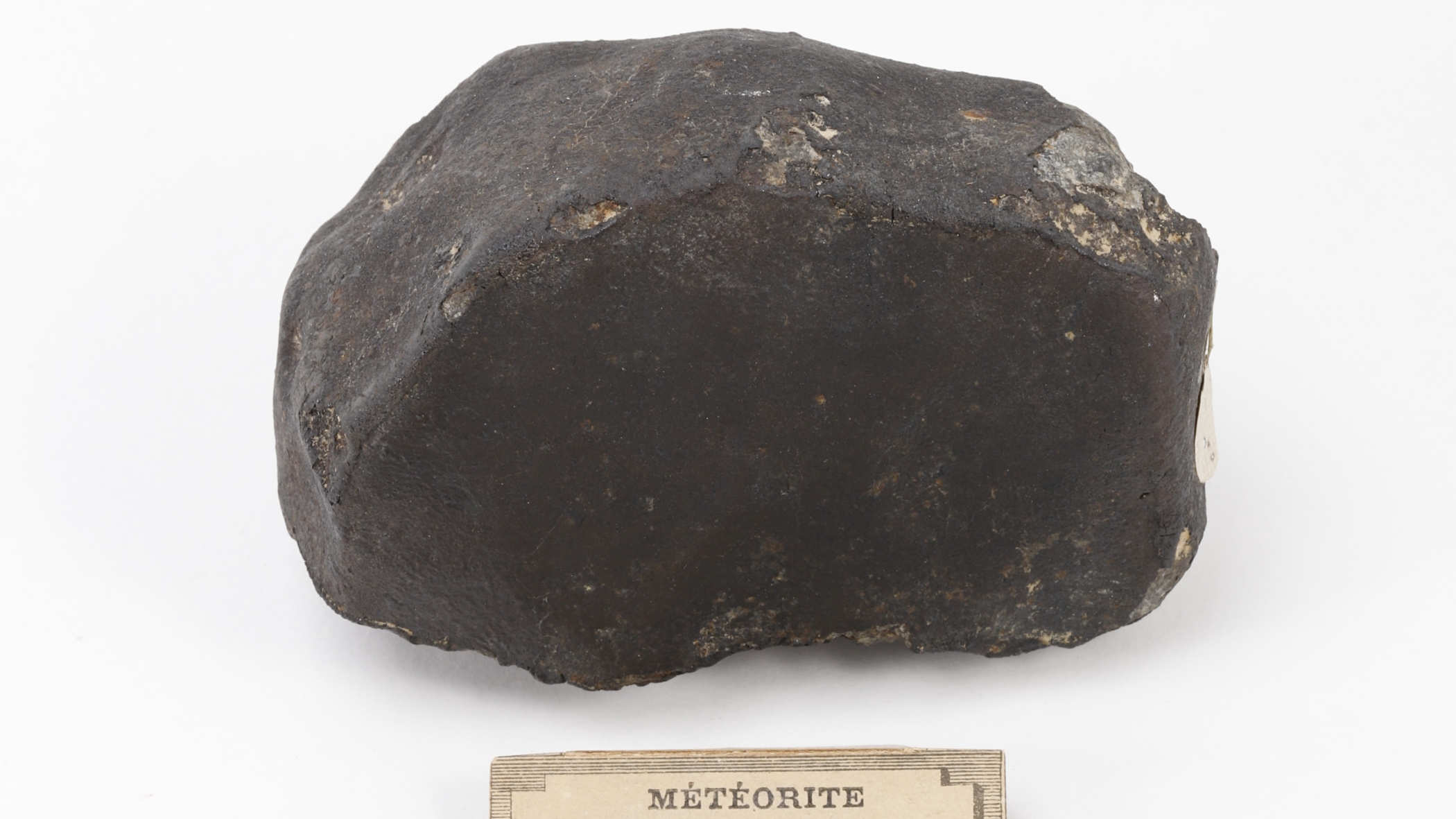

Canyon Diablo meteorite
About 49,000 years ago, a meteor estimated to weigh more than 50,000 metric tons, traveling through the atmosphere at 50 times the speed of sound, struck the Earth. The impact was so violent that it exploded, creating a massive impact crater 1.2 km wide and 175 m deep, now known as Meteor Crater, and located in the desert of Arizona. Numerous fragments of this meteorite were found up to several kilometers away. This meteorite, named Canyon Diablo, belongs to the siderite group (IAB-MG). It is composed primarily of iron (and nickel).
The Canyon Diablo meteorites at the Museum
The Museum of Mineralogy houses a historic collection of fragments from the Canyon Diablo meteorite, the largest of which weighs 226.80 kg (total weight of all fragments = 266.5 kg). It was alumnus Eckley Coxe who, upon the discovery of meteorite fragments at Meteor Crater in Arizona in 1891, donated this impressive fragment to the Mineralogy Museum of the École des Mines de Paris. It was on this fragment that Charles Friedel, the museum’s curator at the time, confirmed the presence of tiny diamonds, formed during the impact of the enormous meteorite with Earth. To do so, he had a slice cut from the fragment, on which he conducted his experiments; he published the results in 1892. This slice is also on display at the museum.
Another superb specimen from Canyon Diablo is the 35.5-kg slice purchased through the Egleston Foundation, established by Ecole des Mines alumnus Thomas Egleston, founder of the New York School of Mines.
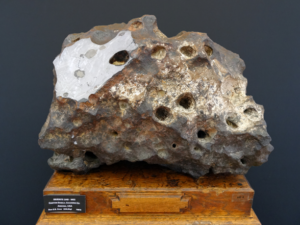
Large Canyon Diablo meteorite, weighing 226.80 kg (500 pounds) in the collection of the museum (ENSMP 10870, 48 x 37 x 35 cm). This heavy sample was donated by Eckley Coxe in 1892. © Musée de Minéralogie Mines Paris – PSL / E. Gaillou.
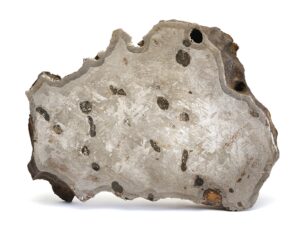
Thick slice of a Canyon Diablo meteorite fragment (ENSMP 1519; 42 x 29.5 x 5.5 cm; 35.5 kg), donated by T. Egleston (Egleston Foundation). © Musée de Minéralogie Mines Paris – PSL / E. Gaillou.
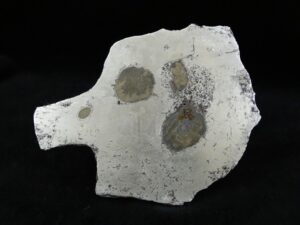
A small slice of the Canyon Diablo meteorite made from the 226.80 kg fragment. This sample was among the first to yield meteorite diamonds, as early as 1892 (ENSMP 6024; 14.8 x 11.5 x 3.4 cm). © Musée de Minéralogie Mines Paris – PSL / E. Gaillou.
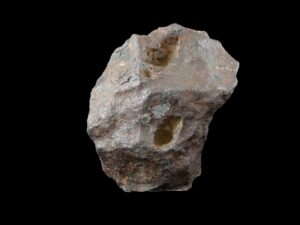
A complete fragment of a Canyon Diablo meteorite donated by Eckley Coxe in 1892 (ENSMP 24475; 10.5 x 9 x 4 cm; 1.591 kg). © Musée de Minéralogie Mines Paris – PSL / E. Gaillou.
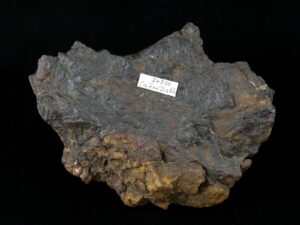
Whole fragment of the Canyon Diablo meteorite (ENSMP 24336; 13.6 x 11 x 4.5 cm; 874 g). © Musée de Minéralogie Mines Paris – PSL / E. Gaillou.
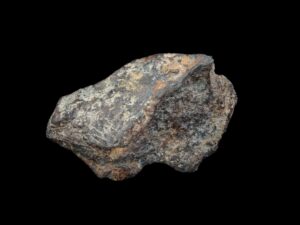
Whole fragment of the Canyon Diablo meteorite (ENSMP 24339; 2.9 x 1.9 x 1.4 cm; 10.17 g). © Musée de Minéralogie Mines Paris – PSL / E. Gaillou.
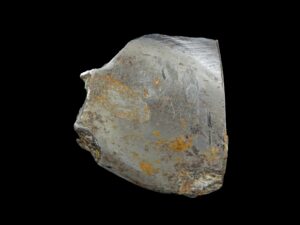
A sawn fragment of the Canyon Diablo meteorite donated by E. Coxe in 1891 (ENSMP 24323; 3.1 x 3 x 0.9 cm; 28.81 g). © Musée de Minéralogie Mines Paris – PSL / E. Gaillou.
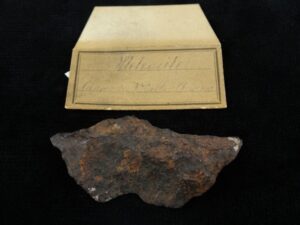
Whole fragment of the Canyon Diablo meteorite (ENSMP 76750; 5 x 2.5 x 1.4 cm; 19.41 g). © Musée de Minéralogie Mines Paris – PSL / E. Gaillou.
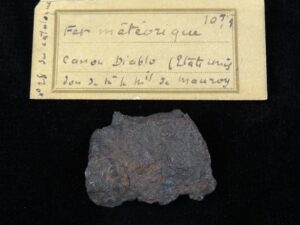
Whole fragment of the Canyon Diablo meteorite (ENSMP 76756; 2.9 x 2.6 x 0.7 cm; 10.08 g). © Musée de Minéralogie Mines Paris – PSL / E. Gaillou.
Meteor Crater
The giant crater at Canyon Diablo has been the subject of much debate. Scientists long believed that this crater was the result of an extinct volcano. However, no volcanic rock has ever been found there, even though some rocks might resemble it. It was not until 1950, thanks to Eugene Shoemaker’s research, that it was determined that the crater was formed by the impact of a large meteorite. We now know that this meteorite impact occurred approximately 50,000 years ago, creating a crater 1.3 km in diameter and 175 m deep. The force of the impact released energy equivalent to 1,700 kilotons of TNT—or 133 Hiroshima bombs!
The terrestrial rocks affected by the impact were transformed; some resemble breccias, which are sometimes found directly beneath volcanoes, hence the scientists’ initial confusion.
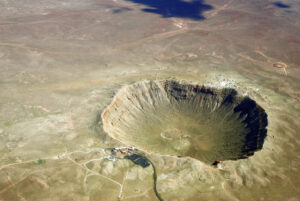
Meteor Crater, Arizona, USA. Creative Commons Attribution 3.0 Unported.
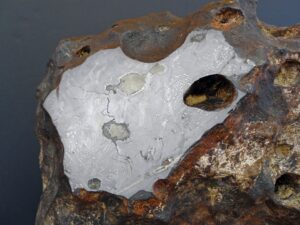
Close-up photo of the 226.8-kg meteorite fragment (ENSMP 10870), showing Widmanstätten patterns.© Musée de Minéralogie Mines Paris – PSL / E. Gaillou.
Numerous meteorites have been found on the plains surrounding the crater. These meteorites are iron meteorites (differentiated) and display incredible interlaced bands (“Widmanstätten patterns”) after acid etching (see photo on the left).
It was on the 226.80 kg meteorite fragment on display at the Museum of Mineralogy that Friedel confirmed the presence of tiny diamonds, formed during the impact. To do so, he had a slice cut from the meteorite, on which he conducted his experiments; he published the results in 1892. This slice is also on display at the Museum.
The Canyon Diablo meteorite fragments have also been the subject of numerous studies that helped determine the Earth’s age to be approximately 4.55 billion years, thanks to uranium-lead isotope analyses conducted by Clair Cameron Patterson in 1956.