Invitation to the voyage: Travel with Minerals
The Nomad School of L’Ecole Van Cleef & Arpels in Dubai welcomes an exhibit by the Mineralogy Museum MINES Paris PSL.
November 6 – 25, 2017 in Dubai
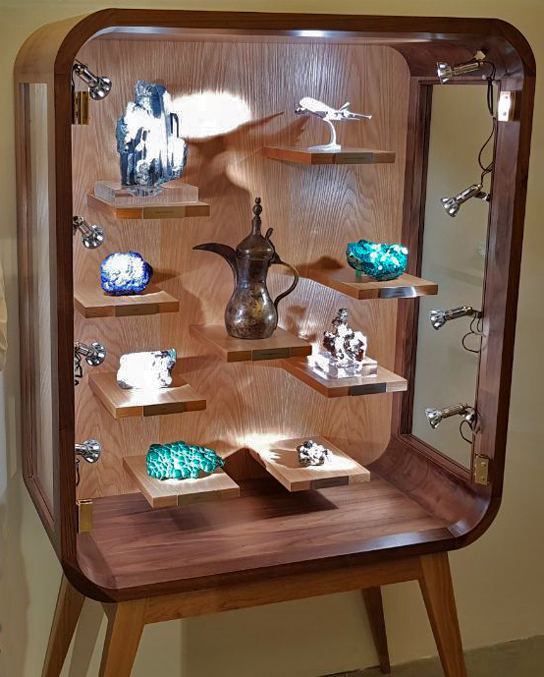
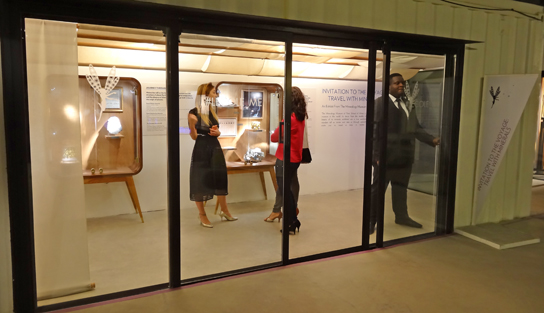
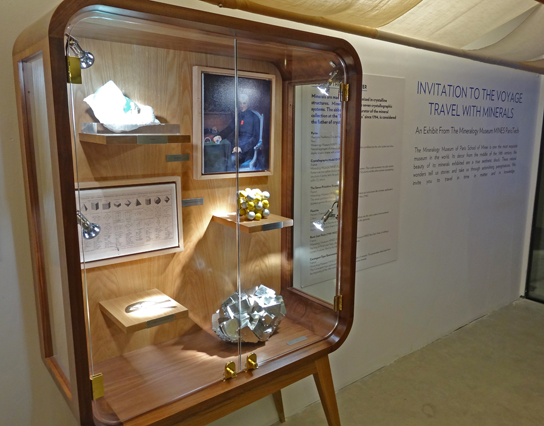
Taking place during the first Nomad School of L’Ecole Van Cleef & Arpels in Dubai, the exhibit “INVITATION TO THE VOYAGE: TRAVEL WITH MINERALS” is organized by the Mineralogy Museum MINES ParisTech in collaboration with L’Ecole. The five display cases presented are more than just a “Cabinet de Curiosités”: they tell stories and take us through astonishing peregrinatins. Through the display, the visitor is invited to travel in time, matter, space, through science and technology and of course, with jewelry.
Find the exhibit brochure by clicking here, or a short presentation of a few items exhibited below.
1- JOURNEY THROUGH MATTER
Minerals are made of atoms organized in crystalline structures. Mineralogists define seven crystallographic systems. The abbot Haüy, first curator of the mineral collection at the “école des Mines” since 1794, is considered the father of crystallography.
Pyrite. Thanks to the observation of large crystals, Haüy understood the notion of the “integral molecule”, which, for him, constituted the primary building block of a mineral. One can easily understand by looking at pyrite crystals that this mineral crystallizes into the cubic system.


2- JOURNEY THROUGH SPACE
Meteorites tell us the history of the solar system and the structure of planet Earth. Their mineralogical composition and the absence of alterations allow us to go back in time to the origin of planets.
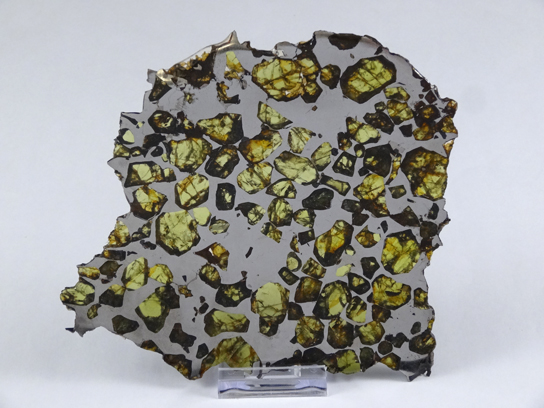
SANTA CATHARINA & ESQUEL METEORITES. These meteorites are special as they represent the core (Santa Catharina) and the mantle (Esquel) of a proto-planet. They can be dated to over 4 billion years. Just as for other planets, the core of the Earth is mostly composed of iron and nickel (such as Santa Catharina), while the mantle is a mixture between metallic and silicic components (such as Esquel).
Esquel Meteorite. The Esquel meteorite was discovered in Argentina in 1951 and has been named the “most beautiful of all meteorites”. One can indeed recognized that this polish slice is spectacular, compared to the usual dull or metallic grey of most other meteorites. Gemmy greenish-yellow crystals of olivine are bathing within a mixture of iron and nickel. The mixture corresponds to the mineralogical composition that could be found at the core-mantle boundary in the deep interior of planets. Some of the olivine crystals are used in the jewelry industry as the “oldest gems in existence”, as they are older than 4 billion years old.
3- JOURNEY THROUGH TECHNOLOGY
All objects around us come from the Earth. The transformation of rocks and minerals into manufactured objects takes us through the history of humanity, grand discoveries and the evolution of science and technology.
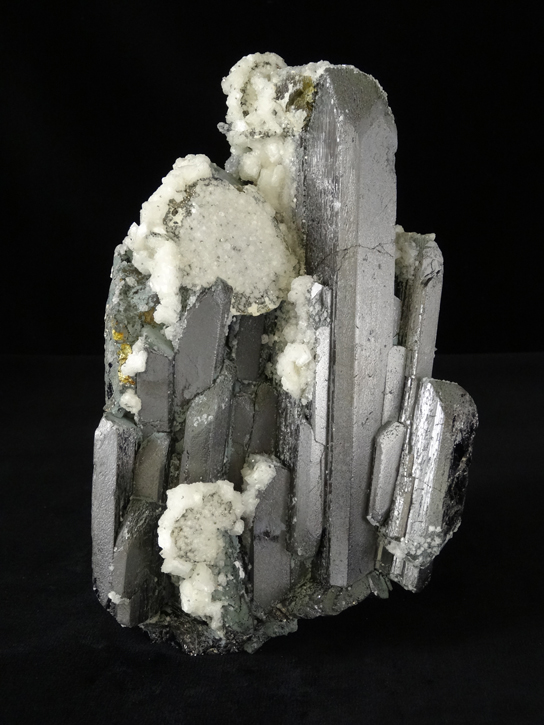
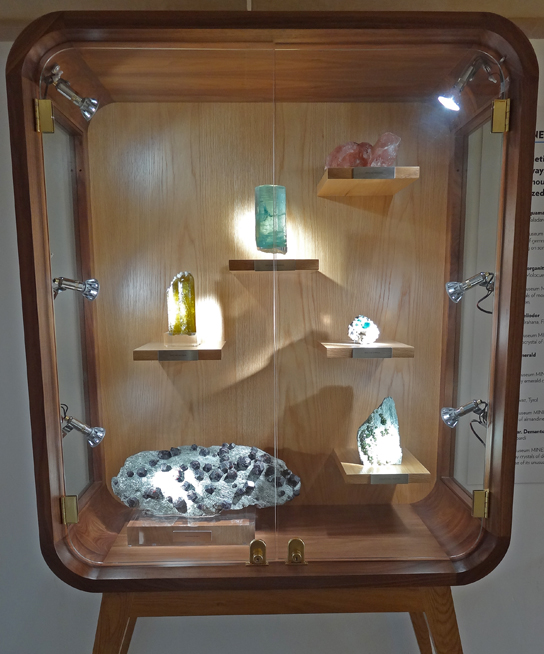
Wolframite. Wolframite is the main ore for tungsten (chemical symbol W for wolfram) meaning “heavy rock” in Swedish. Here, we are talking about the chemical element with the highest melting point (3422°C). Its compounds and alloys are highly prized for its resistance to high temperatures (armaments, aerospace, industrial furnaces, lamp filaments).
4- JOURNEY THROUGH ARTS
Sometimes, it is hard to believe that some minerals are not the results of an artist’s talent as the shapes and colors look to have been picked up carefully. However, these minerals are 100% natural.
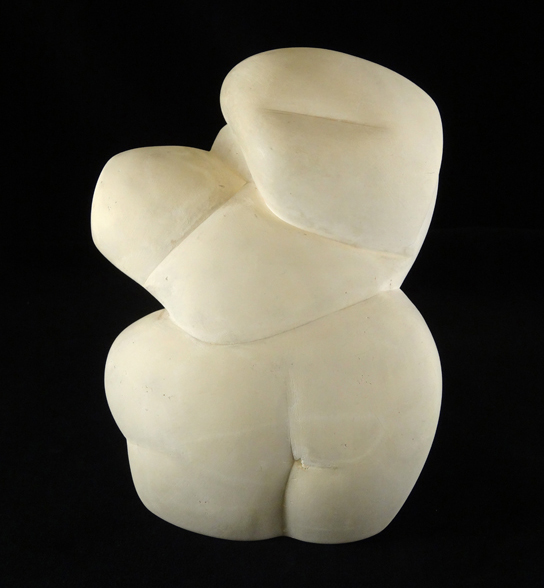
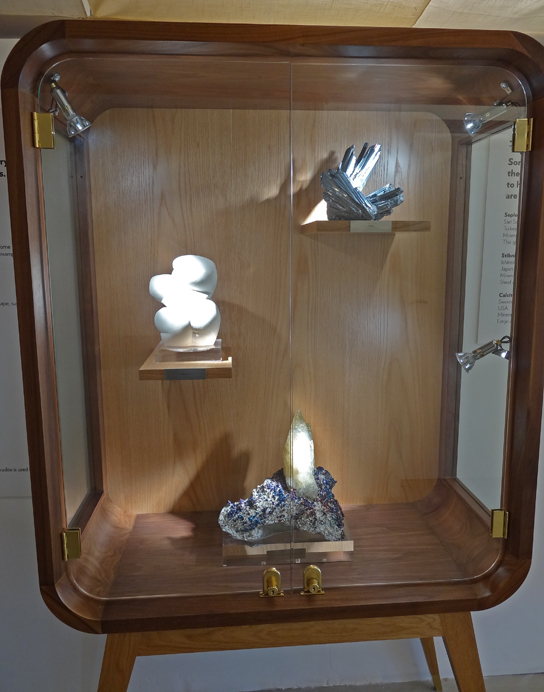
Sepiolite. This clay mineral can aggregate into very light nodular masses that float on water. This is the reason why it has been named “Meerschaum”, derived from the German word meaning “foam of the sea”. The name sepiolite comes from the Greek sêpion, meaning “cuttlebone”. The nodules are found in the deposit of Eskisehir in Turkey, which, once removed from their crust, give some astonishing shapes evocating some manmade sculptures.
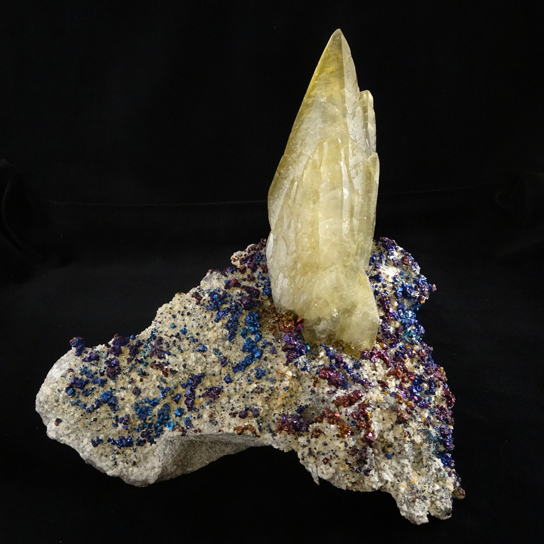
Calcite on quartz and chalcopyrite. The contrast between the creamy elongated calcite and the white quartz covered with chalcopyrite is striking. The chalcopyrite shows off all kind of colors, red, blue, purple, green, due to iridescence. The shape and harmony are so perfect that it is hard to believe this association is perfectly natural.
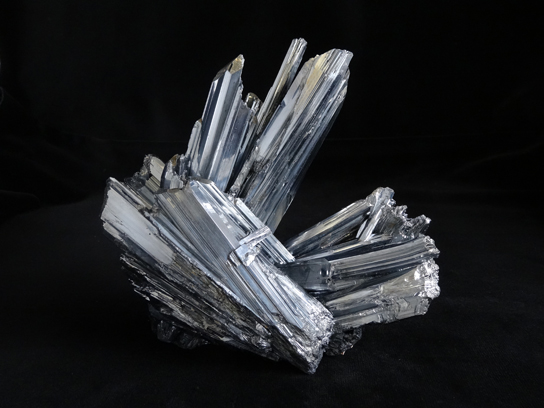
Stibnite. For long, stibnite was the main source of antimony. Today, it is mostly a by-product of lead ore treatment. It enters into the composition of Kohl (silvery grey eye make-up) that was already produced during the ancient Egypt and is still now widely world-spread and produced.
5- JOURNEY THROUGH JEWELRY
The varieties of gemmy minerals –those suitable in jewelry- have always inspired men to design jewels and ornaments. Throughout civilizations, their purity and colors have symbolized alchemical virtues.
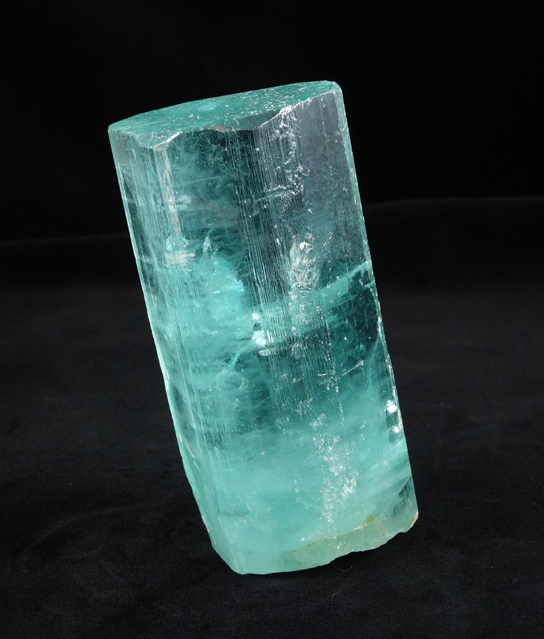
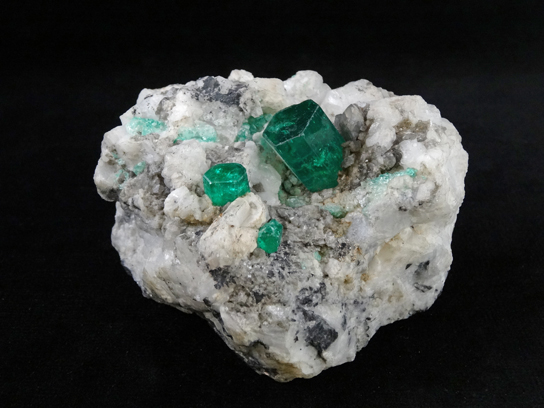
Beryl. The word « beryllos » would mean “crystal that has the color of the sea”. The varieties of this mineral offer many colorations: iron gives its blue to aquamarine and its yellow to heliodor, manganese its pink to morganite and red to bixbite, and chromium its green to emerald, which is the most precious variety.

THE EXHIBIT IN DUBAI
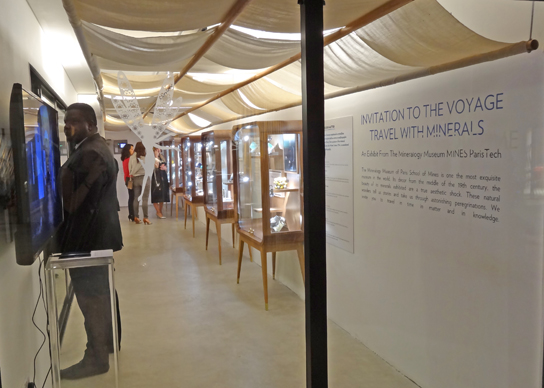
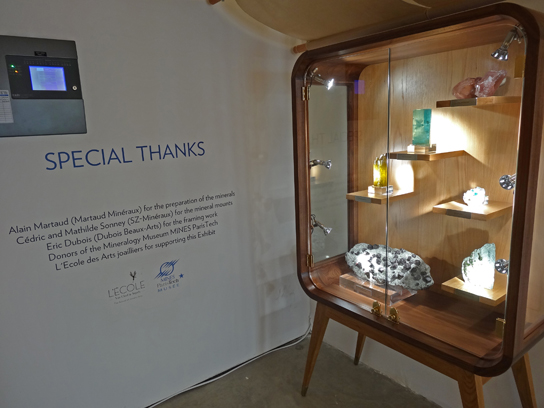
Inside the Nomadic School of L’Ecole Van Cleef & Arpels, five exhibits are set up for the duration of the School, including our exhibit: “Invitation to the Voyage: travel with minerals”.
THE CAMPUS OF L’ECOLE VAN CLEEF & ARPELS
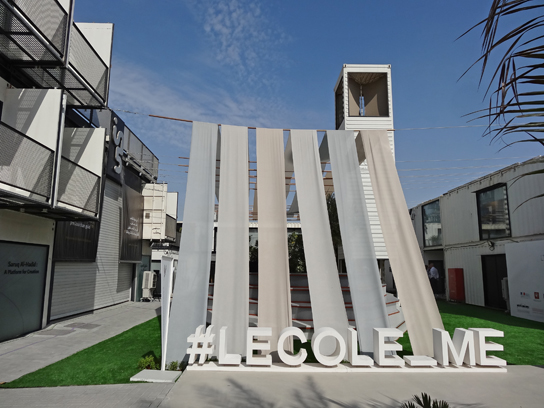
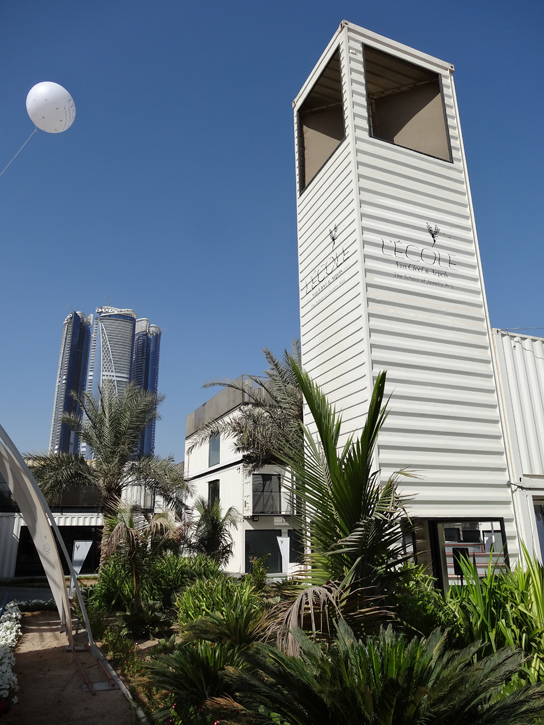
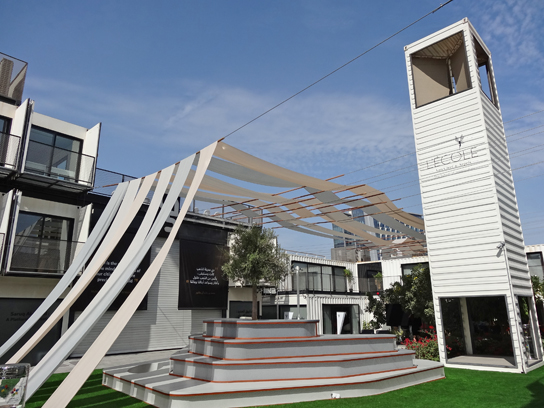
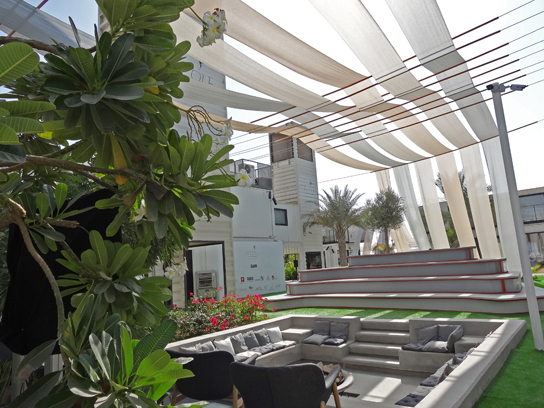
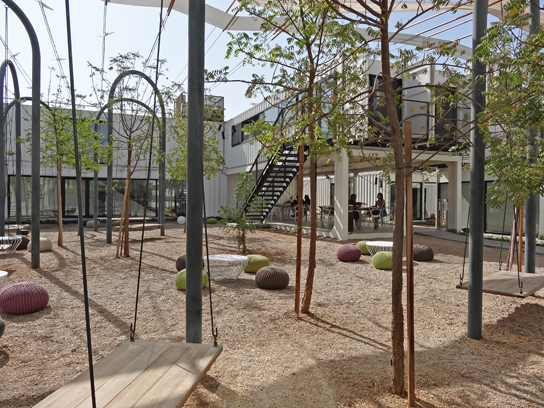
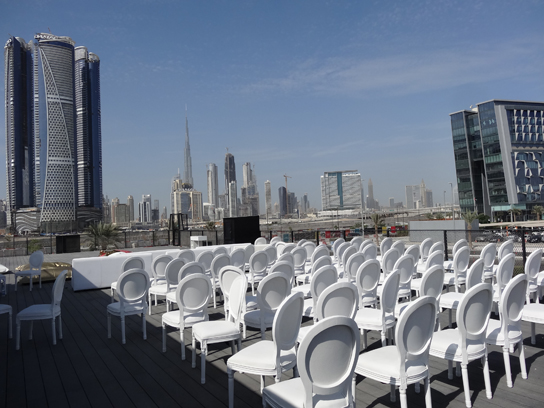
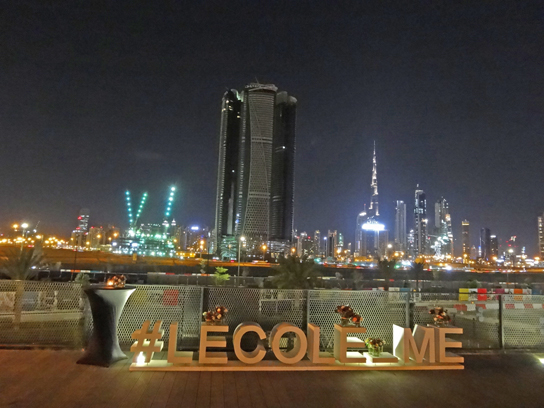
For three weeks, this area of the Dubai Design District was transformed to welcome the Nomadic Campus of l’Ecole Van Cleef & Arpels and the five temporary exhibits it hosted.

THE OTHER EXHIBITS OF THE NOMADIC SCHOOL
The Nomadic School of L’Ecole Van Cleef & Arpels hosted five different temporary exhibits, including ours. In a few photos, here are the other four.
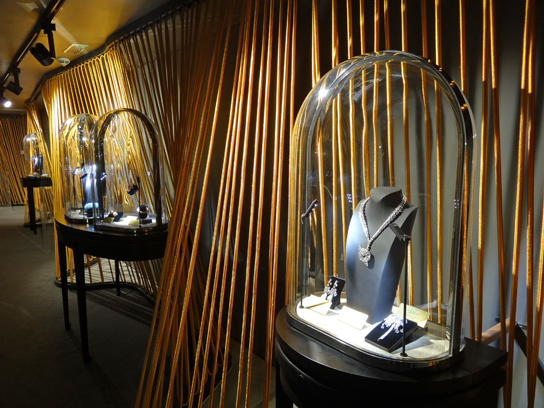
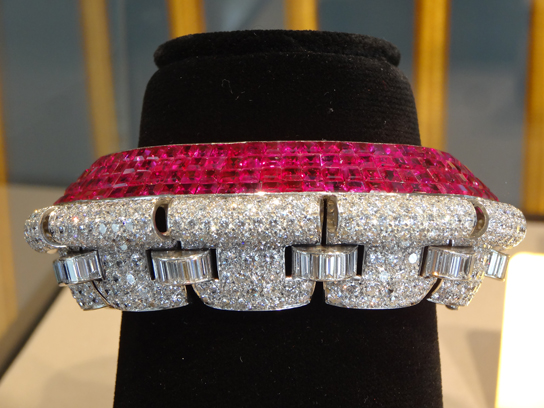
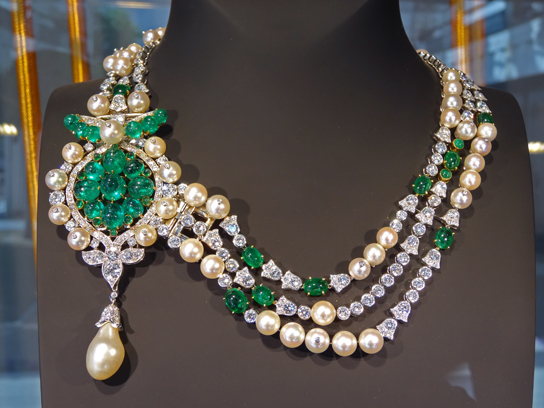
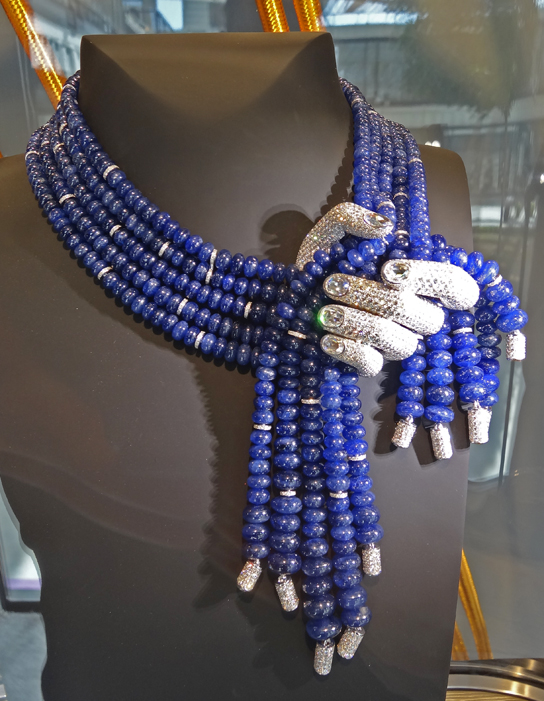
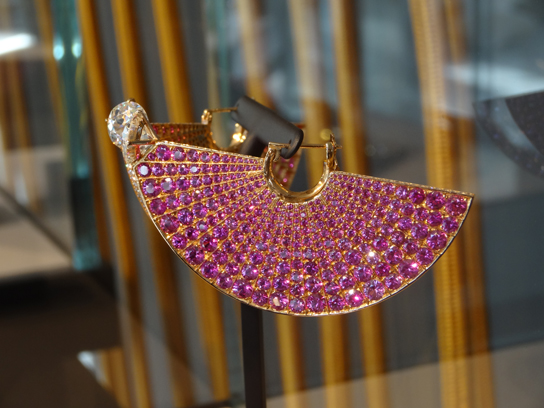
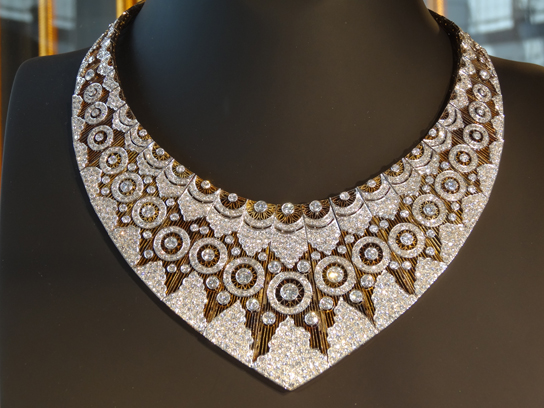
THROUGH THE EYES OF A CONNOISSEUR
A private collection of jewels from a Middle-Eastern conoisseur and jewelry lover.
PEARLS AND JEWELS OF THE GULF
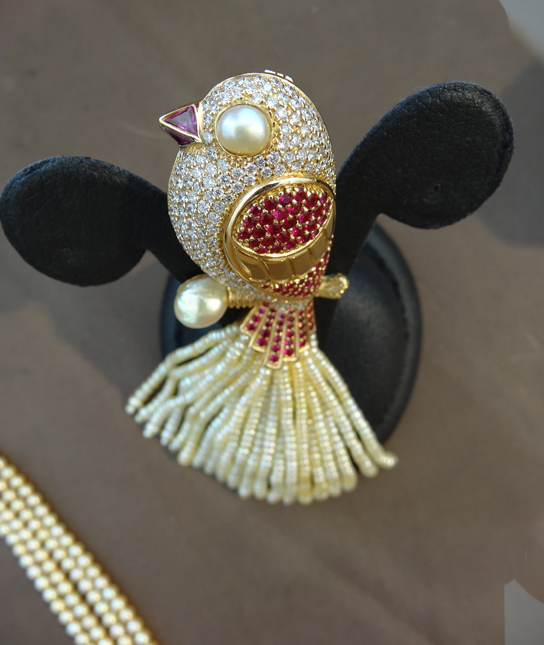
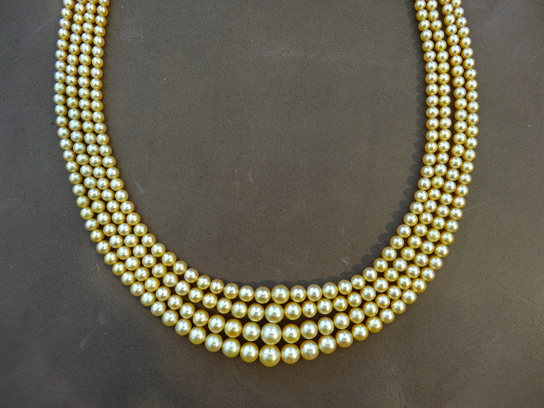
Through a long tradition of natural pearls used in jewelry, this exhibit retraces the origine of pearl diving and selling in the Gulf area.
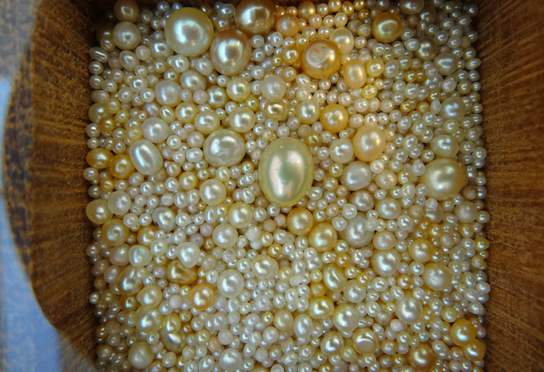
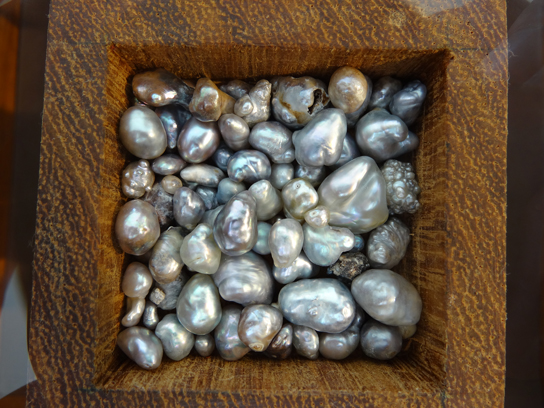
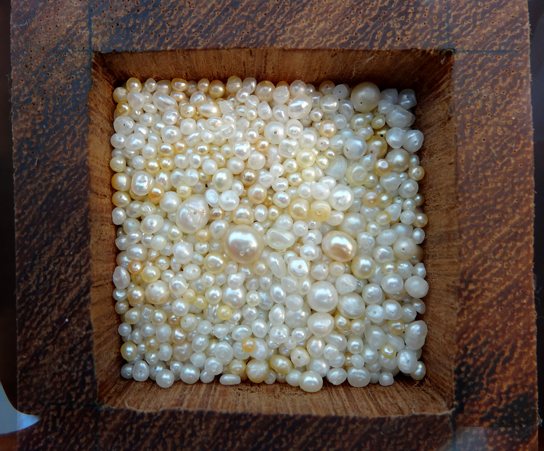
Some natural pearls from the Gulf. Photo: Mineralogy Museum MINES Paris PSL/ E. Gaillou.

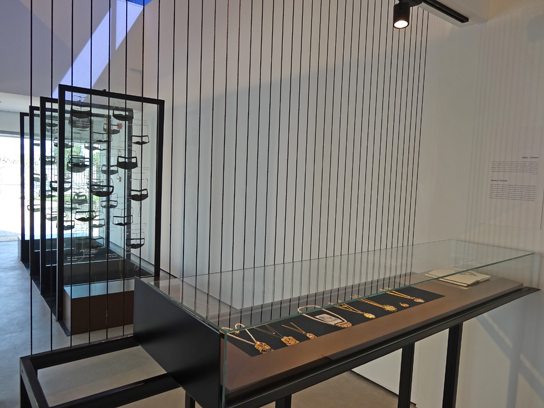
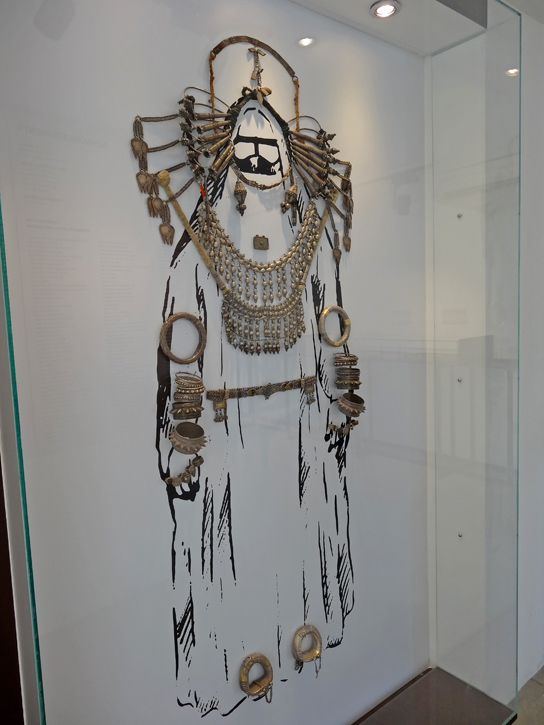
EMIRATI ADORNMENT: TANGIBLE & INTANGIBLE
This exhibit presents some Emirati ornaments thanks to a project started in 2011 untitled “Lest we forget” and that produces annual exhibitions.
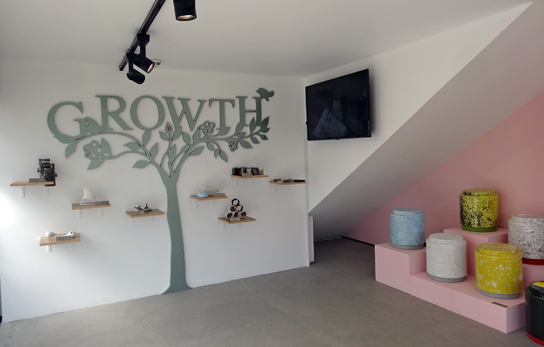
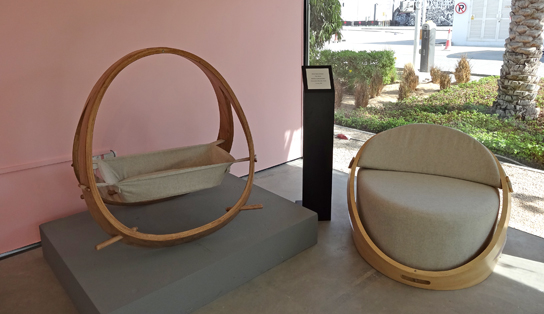
DESIGNER AWARD: GROWTH
A legacy program supported by Van Cleef & Arpels. Young designers had to create concepts around the theme of growth. Among the designers choosen, 8 were able to propose a project, and 3 were elected winners.
DUBAI AND ITS INCREDIBLE BUILDINGS
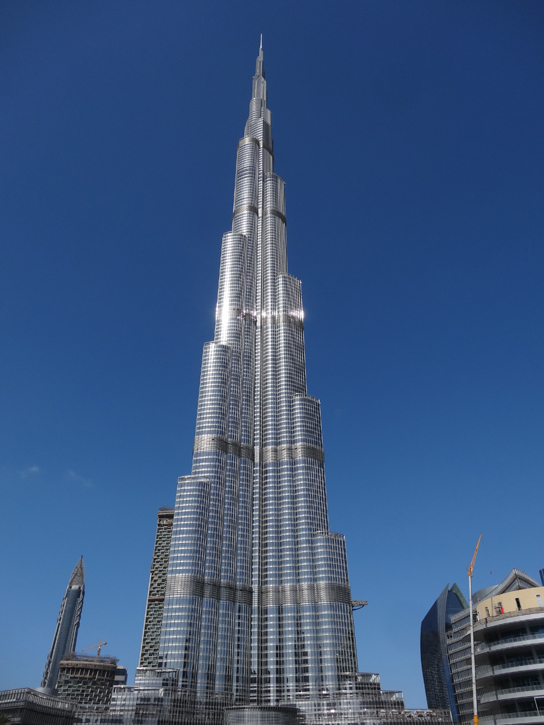
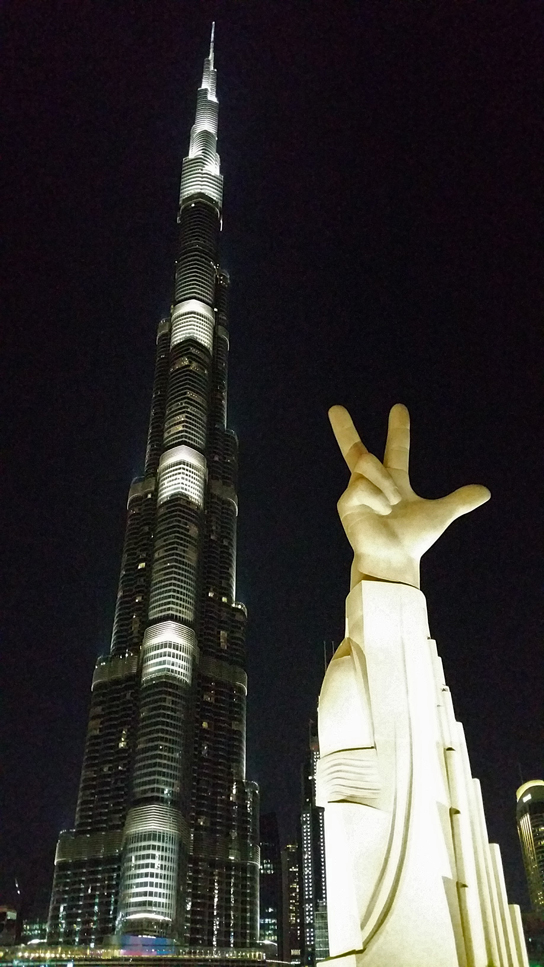
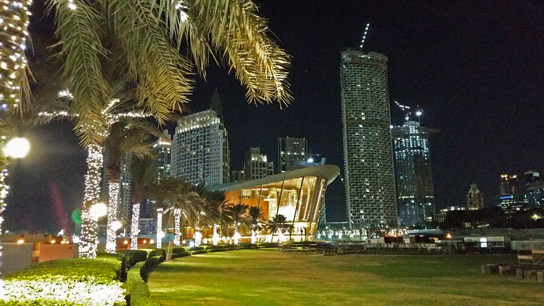
Hosted downtown Dubai, the campus was close by the downtown Burj Khalifa.