
2026 Cannes Climathon: Three I-BE³ Bachelor’s Students Commit to the Ecological Transition

Three students from the Bachelor I-BE³ program at Mines Paris – PSL participated in the Climathon in Cannes, which in 2026 focused on raising environmental awareness. Alongside other participants, they helped design concrete solutions to strengthen civic engagement and support adaptation to climate change. Their involvement benefited two projects: “Eco-Committed Neighborhood Label” and “The Climate Is Changing—We Must Adapt.”
The Climathon
A time for collective reflection in support of the ecological transition
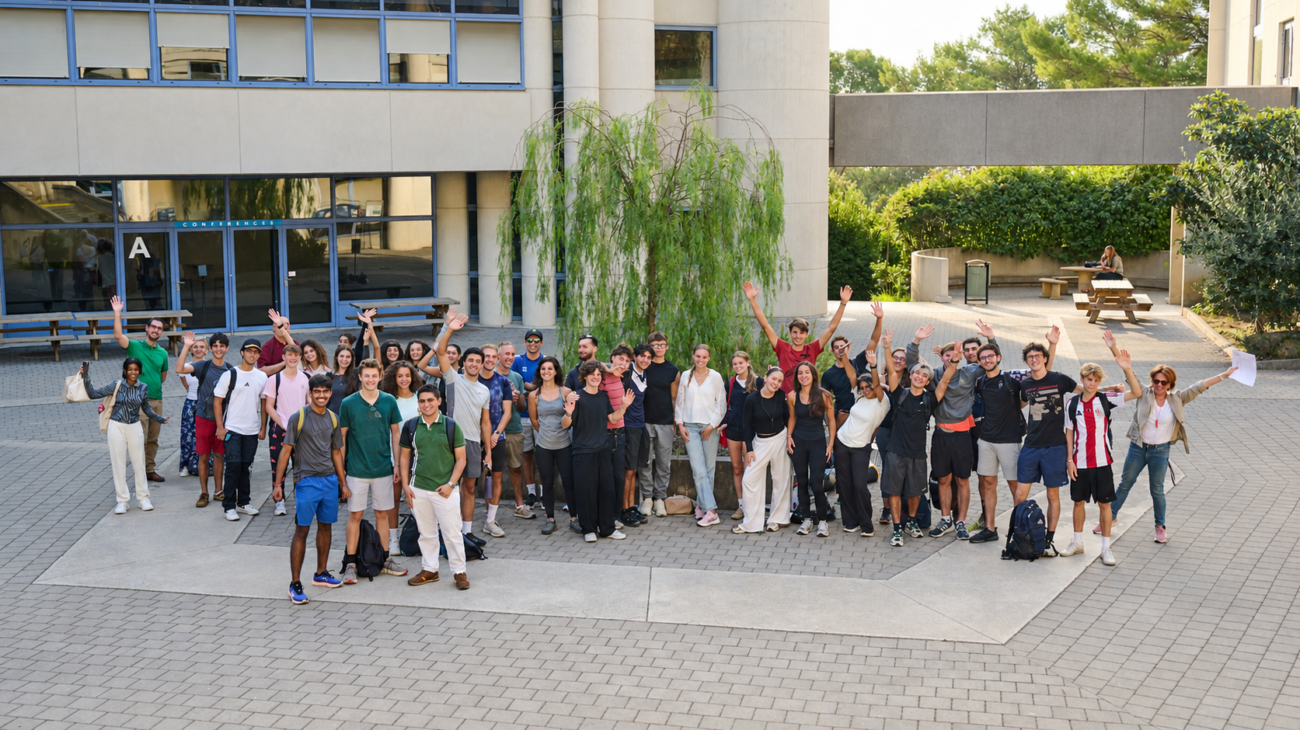
Organized by the City of Cannes, the 2026 Climathon brought together 35 people around a common goal: developing new approaches to raise public awareness of environmental issues. Discussions took place during four roundtable sessions, followed by working groups tasked with turning ideas into concrete proposals.
Three students from the I-BE³ Bachelor’s program at Mines Paris – PSL—Inès, Sami, and Mai—took part in this collaborative effort. Their participation allowed them to compare their ideas with those of citizens, professionals, and stakeholders committed to the ecological transition, while working on issues directly related to local environmental policies.

“Eco-Committed Neighborhood Label”
Bringing Residents Together Around Concrete Actions
As part of this group, Inès helped develop the “Eco-Committed Neighborhood Label” project. The goal is to mobilize residents, organizations, local businesses, companies, schools, and other local stakeholders around initiatives that support the ecological transition at the neighborhood level in Cannes.

The proposed initiative is based on nine themes: cleanliness, recycling, organic waste management, greening, biodiversity, sustainable transportation, renewable energy, outdoor sports, and sustainable tourism. Each neighborhood could choose one or two priority areas to launch an initial collective effort, then progress through a three-tier certification system.
The proposed approach involves several steps: conducting an assessment with local stakeholders, defining objectives and monitoring indicators, selecting priority actions, and organizing support for these actions through municipal services and partner organizations. Four pilot neighborhoods with different profiles could be involved in the initial phase.
By promoting citizen participation and highlighting local initiatives, this project aims to make the neighborhood a prime setting for experimentation and environmental engagement.
Inès, a student in the I-BE³ Bachelor’s program, shares her experience:
Participating in the Climathon was an excellent opportunity to collaborate with others, exchange ideas, and develop solutions to concrete environmental challenges. Being able to contribute to solutions at the local level and see my ideas potentially put into practice was a particularly rewarding experience. This experience also highlighted the importance of teamwork, since the solutions we proposed were the result of combining ideas from several participants.
“The climate is changing; we must adapt.”
Raising awareness among all audiences about climate issues
Sami and Mai have joined this working group dedicated to raising awareness about the consequences of climate change and ways to adapt to it. The project is based on the observation that while actions to reduce greenhouse gas emissions remain essential, they must be complemented by measures that enable people to better cope with the already noticeable effects of climate change, particularly heat waves.

The proposal targets three audiences: schoolchildren, businesses, and the general public. For students, the group plans to incorporate forum theater-style activities into the Sustainable Development Curriculum to facilitate discussion of real-life situations. Thermal comfort in a classroom or on a playground, for example, could serve as a starting point for comparing different possible solutions and examining their limitations.
For businesses, participatory workshops or educational tools accompanied by training sessions could be developed. For the general public, the project calls for the creation of a dedicated page on the City of Cannes’ website, featuring practical solutions, local initiatives, and short-form content such as podcasts or videos. Poster campaigns and digital publications—particularly those featuring QR codes—would direct the public to these resources.
The group also devised unconventional communication formats, using fictional scenarios to engage the public and encourage them to reflect on truly relevant solutions. The goal is to make the challenges of adaptation more accessible and to encourage people to take action.
The first planned milestones include integrating a module on climate change adaptation into the Sustainable Development Curriculum for the 2027–2028 school year and launching a dedicated webpage in the summer of 2027.
For Sami, this experience was, in particular, an opportunity to explore new ways of working and the potential of digital tools in designing environmental solutions:
Participating in the Cannes Climathon for the first time was a particularly enriching experience, both on a personal and environmental level. Those two days allowed me to deepen my understanding of current environmental issues, but above all to meet and exchange ideas with passionate, creative people who brought inspiring ideas to the table. It was also an opportunity to put my creativity, team spirit, and project management skills to good use, while exploring the potential of artificial intelligence to bring our ideas to life. This experience showed me just how much collective intelligence, combined with new technologies, can help generate concrete solutions to environmental challenges. It was an adventure that was as stimulating as it was inspiring—one I’d be delighted to repeat and one I highly recommend to anyone who wants to contribute, in their own way, to a more sustainable future!

Mai, for her part, emphasizes the richness of intergenerational dialogue and the importance of collectively developing solutions to environmental challenges.
The 2026 Cannes Climathon showed me just how important it is for different generations to work together. Three generations came together around the same table, each with their own commitment to the environment, their memories, and their hopes for the world we share. As we discussed and worked together, we realized that we shared the same determination to take action for future generations. For two days, I was surrounded by people whose minds and energy were entirely focused on bringing about change. Their commitment was contagious. As one of the youngest participants, I left with greater confidence, hope, and renewed motivation to continue this commitment.

Proposals Set to Continue Beyond the Climathon
Beyond the two days of work, the Climathon made it possible to formalize proposals accompanied by initial implementation strategies. The groups identified target audiences, potential partners, action plans, and deadlines to guide their ongoing deliberations.
The City of Cannes has indicated that it wishes to keep participants informed of the progress made on the projects and to allow them, if they wish, to continue contributing to them. This prospect opens up the possibility of extending the collaborative work begun during the event.

For students in the I-BE³ Bachelor’s program, this experience provides an opportunity to apply their skills, test their ideas against the realities of a specific region, and contribute to finding solutions to environmental challenges. It also highlights their commitment—in line with the socially engaged nature of their program—as well as the importance of collective intelligence and intergenerational collaboration in developing initiatives tailored to local needs.